1986 · Beck et al. — Comparison of Oral Lavage Methods for Preoperative Colonic Cleansing
Super-Abstract
A randomised comparison of two bowel preparation methods before colon surgery found that polyethylene glycol electrolyte lavage outperforms 10 % mannitol solution in cleansing quality, patient tolerance, and — critically — safety: mannitol produces combustible hydrogen gas levels in the colon, posing an electrosurgery fire risk. (Diseases of the Colon and Rectum, 1986.)
Commentary
This RCT-style surgical preparation study is relevant to the H₂ database for an unexpected reason: it measures colonic hydrogen gas levels during surgery and finds that mannitol — which is fermented by colonic bacteria — produces combustible concentrations of H₂. This is a safety concern for electrosurgery (cauterisation can ignite H₂-rich bowel gas). Two patients in the mannitol group had combustible H₂ levels; none in the polyethylene glycol group. The paper also documents the general principle that colonic bacteria ferment carbohydrates to produce H₂ — a mechanism directly relevant to the „gut as H₂ source“ hypothesis (see also Neale 1988, PMID 2849711). For the H₂ therapy context: this paper confirms that significant H₂ is produced endogenously in the colon and can reach clinically relevant concentrations. It is not a therapeutic H₂ study but provides indirect pharmacokinetic context.
Key quotes
- „Colonic hydrogen gas was sampled during surgery, and two patients in the mannitol group had combustible levels.“ — the safety finding: mannitol fermentation produces combustible H₂
- „Better cleansing, patient tolerance, and lower hydrogen gas level make polyethylene glycol electrolyte lavage the preferred method.“ — the practical conclusion
- „This study confirms that both 10 percent mannitol and polyethylene glycol electrolyte lavage are safe, effective methods of preoperative bowel cleansing.“ — the overall efficacy finding — with the caveat that mannitol poses a H₂ explosion risk
Our assessment
This is a randomised clinical trial of surgical bowel preparation methods, not an H₂ therapy study. Hydrogen gas appears as a safety hazard (colonic fermentation product of mannitol) and as a measured surgical risk variable. The finding is clinically important for surgical practice. For the H₂ therapy database, this paper provides indirect context: it confirms endogenous colonic H₂ production at potentially significant concentrations from fermentable carbohydrates — consistent with the gut-H₂ hypothesis. Limitations: n = 80 (large enough for the primary endpoint); primary outcomes are cleansing quality and patient tolerance, not H₂ physiology; the H₂ measurement is a secondary safety check, not the primary study aim.
Study design
- Type: randomised clinical trial · n: 80 surgical patients (40 per group) · Groups: 10 % mannitol solution vs. polyethylene glycol electrolyte lavage
- Result: polyethylene glycol superior in cleansing quality (90 % vs. 75 % optimal), patient tolerance, and H₂ safety; 2/40 mannitol patients had combustible colonic H₂ levels · H₂ therapy relevance: indirect — confirms significant endogenous colonic H₂ production from fermentable carbohydrates
Abstract
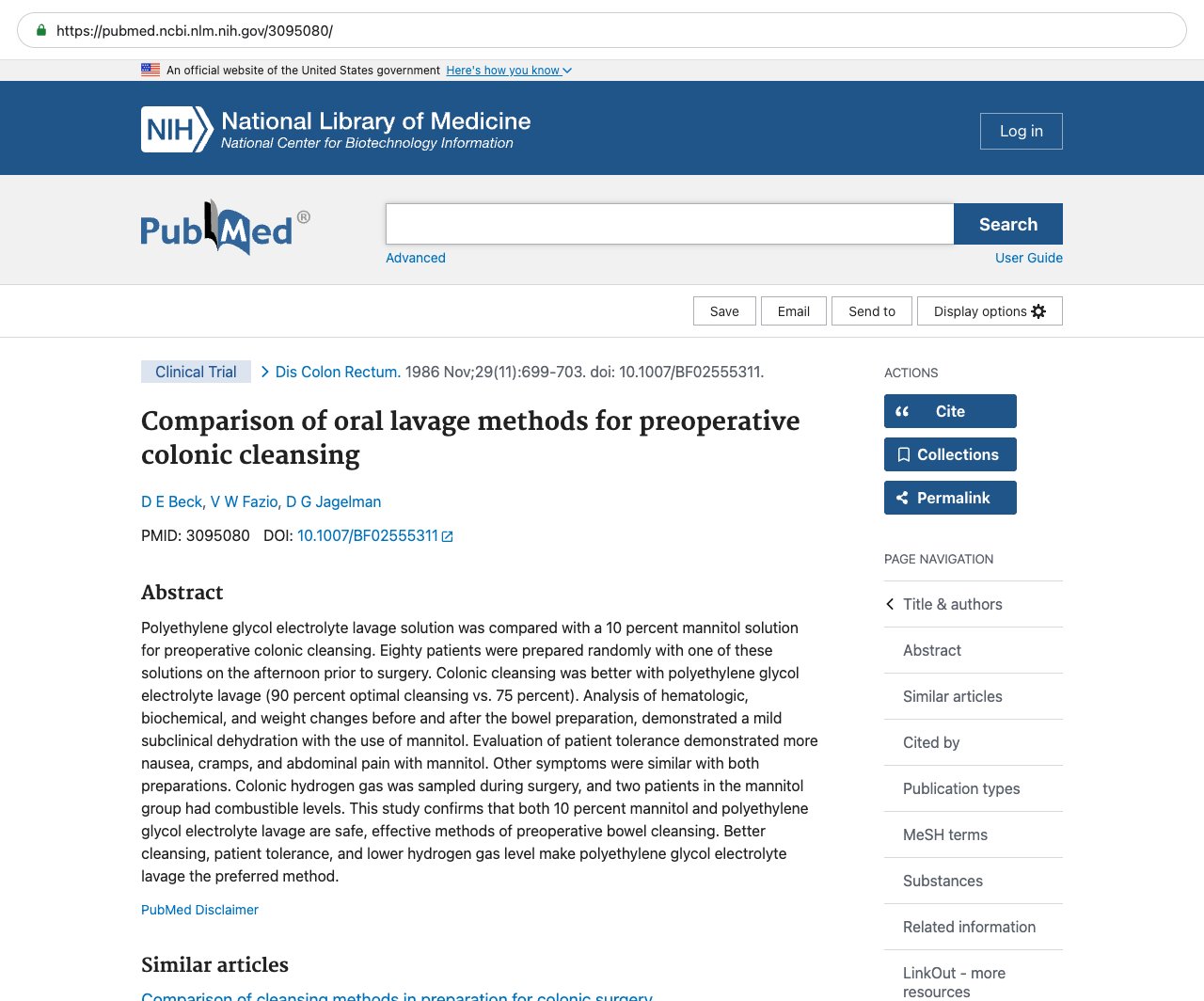
Polyethylene glycol electrolyte lavage solution was compared with a 10 percent mannitol solution for preoperative colonic cleansing. Eighty patients were prepared randomly with one of these solutions on the afternoon prior to surgery. Colonic cleansing was better with polyethylene glycol electrolyte lavage (90 percent optimal cleansing vs. 75 percent). Analysis of hematologic, biochemical, and weight changes before and after the bowel preparation, demonstrated a mild subclinical dehydration with the use of mannitol. Evaluation of patient tolerance demonstrated more nausea, cramps, and abdominal pain with mannitol. Other symptoms were similar with both preparations. Colonic hydrogen gas was sampled during surgery, and two patients in the mannitol group had combustible levels. This study confirms that both 10 percent mannitol and polyethylene glycol electrolyte lavage are safe, effective methods of preoperative bowel cleansing. Better cleansing, patient tolerance, and lower hydrogen gas level make polyethylene glycol electrolyte lavage the preferred method.
Source & links
Screenshot of the PubMed page
This page mirrors the published abstract (© the authors / publisher) for reference and citation. The canonical source is the PubMed record linked above. This is not medical advice.