1965 · Heimann — The use of hydrogen inhalation in the detection of intracardiac shunts.
Super-Abstract
This study evaluated hydrogen inhalation as a diagnostic method for detecting intracardiac shunts in cardiac patients. Inhaled H₂ gas, detected by a platinum electrode catheter positioned within the heart, produced indicator curves that allowed identification of abnormal cardiac shunts. (South African Medical Journal, 1965.)
Commentary
This is one of several 1960s publications evaluating the hydrogen indicator technique for cardiac shunt detection — an application that was being developed in parallel at multiple centres at this time. The technique relied on H₂'s ability to cross the pulmonary membrane rapidly, enter the blood, and be detected electrochemically by a platinum catheter. In the presence of a left-to-right shunt, oxygenated (H₂-containing) blood reaches the right heart earlier than it should, producing an early peak in the detection curve. This technique competed with dye-dilution methods and radiographic approaches; it offered advantages in simplicity and safety, particularly for paediatric patients. No abstract text was available for this article.
Key quotes
- „The use of hydrogen inhalation in the detection of intracardiac shunts.“ — title-level summary — no abstract available; H₂ as diagnostic cardiac tracer, 1965
Our assessment
This study has no relevance to H₂ therapy. It is a cardiac diagnostic methodology study employing hydrogen inhalation as an indicator for shunt detection. H₂ is an inert tracer exploiting physical diffusibility, not a therapeutic agent. No abstract was available; assessment based on title, journal, and the documented history of the hydrogen indicator method. Off-topic for a therapeutic H₂ database.
Study design
- Type: diagnostic methodology study, cardiac catheterisation · n: not stated · H₂ delivery: inhaled H₂ as indicator (platinum electrode detection) — NOT therapeutic
- Indication: intracardiac shunt detection · Result: indicator curves used to identify cardiac shunts; no abstract available
Source & links
Screenshot of the PubMed page
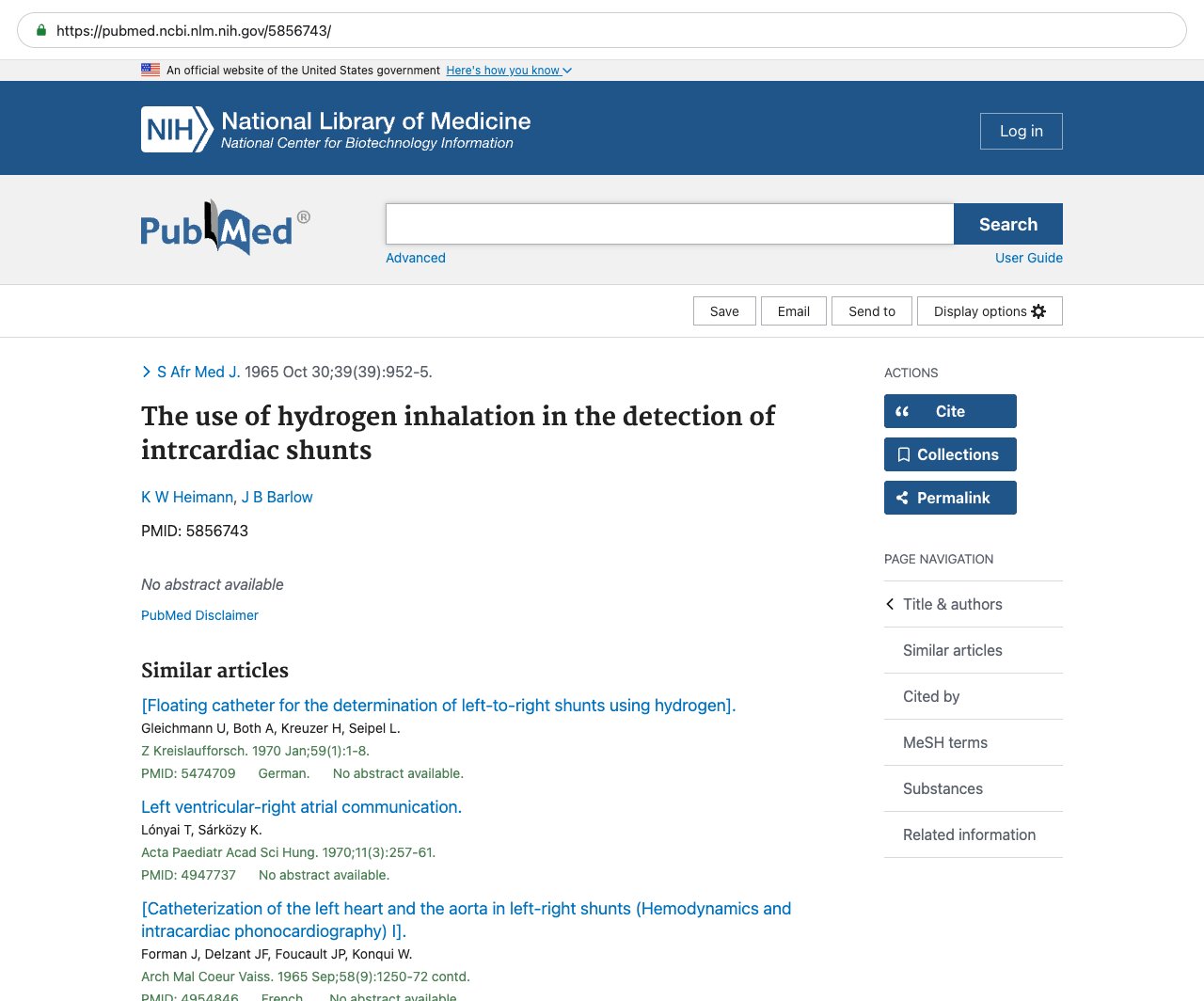
This page mirrors the published abstract (© the authors / publisher) for reference and citation. The canonical source is the PubMed record linked above. This is not medical advice.