1963 · HUGENHOLTZ — The clinical usefulness of hydrogen gas as an indicator of left-to-right shunts.
Super-Abstract
This study systematically evaluated the clinical utility of hydrogen gas inhalation as an indicator method for detecting left-to-right intracardiac shunts, comparing it with established diagnostic approaches of the era. The authors assessed sensitivity, reliability, and practical applicability of the technique across a clinical patient series. (Circulation, 1963.)
Commentary
Published in Circulation — a leading cardiology journal — this study represents a rigorous clinical evaluation of the hydrogen indicator method for cardiac shunt detection at a time when cardiac catheterisation was becoming the standard of care. The technique exploited H₂'s rapid diffusion across the alveolar membrane and its electrochemical detectability at platinum electrodes. A left-to-right shunt (blood flowing from the systemic to pulmonary circulation through an abnormal opening) causes oxygenated, H₂-rich blood to appear prematurely in the right heart, which the electrode detects. This is an entirely diagnostic study; H₂ is the tool, not the treatment. No abstract text was available for this article.
Key quotes
- „THE CLINICAL USEFULNESS OF HYDROGEN GAS AS AN INDICATOR OF LEFT-TO-RIGHT SHUNTS.“ — title-level summary — no abstract available; systematic clinical evaluation of H₂ as cardiac indicator in Circulation, 1963
Our assessment
This study has no relevance to H₂ therapy. It is a systematic clinical evaluation of hydrogen gas as a diagnostic indicator for intracardiac shunts, published in a major cardiology journal. H₂ serves as an inert haemodynamic tracer. No abstract was available; assessment based on title, journal (Circulation), DOI, and the well-documented history of the hydrogen indicator technique. Off-topic for a therapeutic H₂ database.
Study design
- Type: diagnostic methodology study, systematic clinical evaluation · n: not stated · H₂ delivery: inhaled H₂ as cardiac indicator (platinum electrode) — NOT therapeutic
- Indication: detection of left-to-right intracardiac shunts · Result: clinical utility of H₂ indicator technique evaluated; no abstract available — see DOI 10.1161/01.cir.28.4.542
Source & links
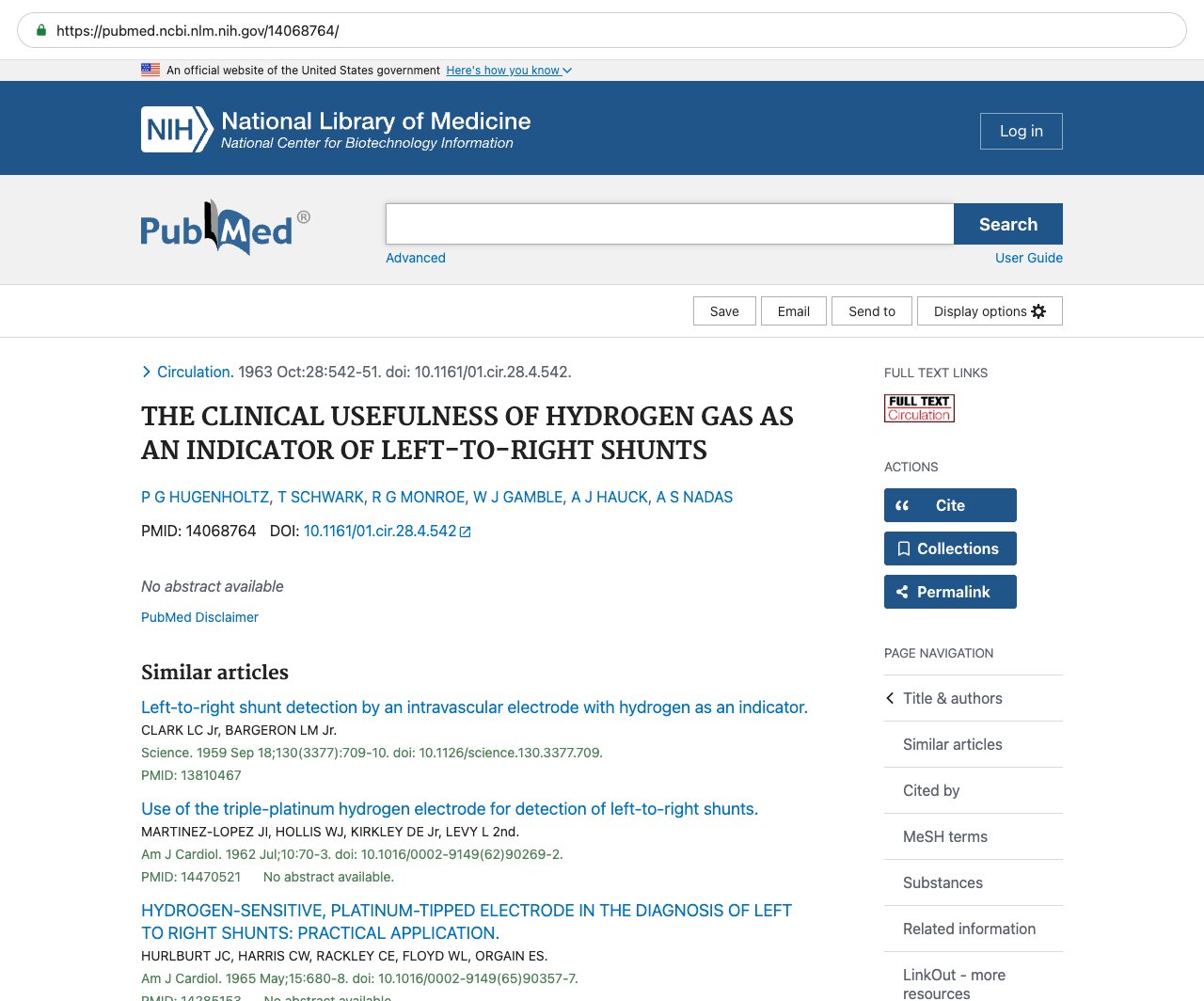
Screenshot of the PubMed page
This page mirrors the published abstract (© the authors / publisher) for reference and citation. The canonical source is the PubMed record linked above. This is not medical advice.