1969 · Klingenberg — Measurement of human uterine cervical blood flow by local hydrogen gas clearance.
Super-Abstract
This study measured blood flow in the human uterine cervix using local hydrogen gas clearance — an early attempt to quantify perfusion in a gynaecological tissue that is difficult to assess by other means. The technique offered local, quantitative perfusion data in obstetric/gynaecological contexts. (Acta Obstetricia et Gynecologica Scandinavica, 1969.)
Commentary
This study applies the hydrogen clearance technique — in which locally administered or inhaled H₂ is washed out by blood flow and the clearance curve used to calculate perfusion — to measure blood supply in the uterine cervix. The clinical relevance at the time would have included assessment of cervical vascularisation in conditions such as carcinoma, pregnancy changes, or chronic inflammatory states. H₂ is an inert tracer here, chosen for its physical properties (small molecule, uncharged, crosses membranes rapidly, detectable with platinum electrodes). This is not a study of H₂ therapy. No abstract text was available for this article.
Key quotes
- „Measurement of human uterine cervical blood flow by local hydrogen gas clearance.“ — title-level summary — no abstract available; H₂ used as perfusion tracer in gynaecological tissue
Our assessment
This study has no relevance to H₂ therapy. It is an obstetric/gynaecological physiology study using hydrogen gas clearance to measure local blood flow in the uterine cervix. H₂ functions as an inert diagnostic tracer. No abstract was available; assessment based on title, journal, and the hydrogen clearance method. Off-topic for a therapeutic H₂ database.
Study design
- Type: diagnostic methodology study, observational · n: not stated · H₂ delivery: local H₂ gas clearance (tracer method) — NOT therapeutic
- Indication: uterine cervical blood flow measurement · Result: quantitative perfusion data in cervical tissue; no abstract available — see DOI 10.3109/00016346909156661
Source & links
Screenshot of the PubMed page
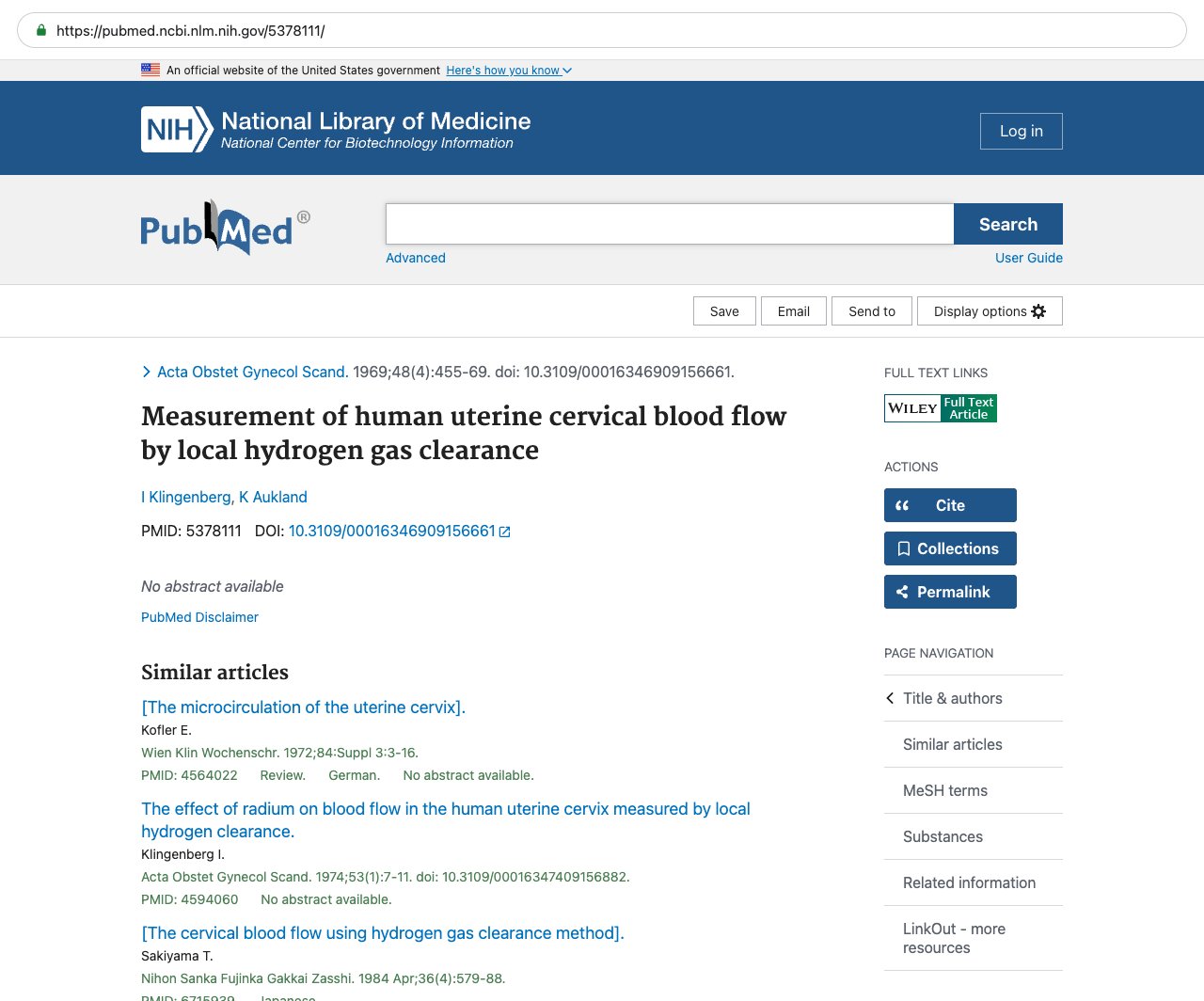
This page mirrors the published abstract (© the authors / publisher) for reference and citation. The canonical source is the PubMed record linked above. This is not medical advice.