2011 · Tachibe et al. — Digestibility, Fermentability, and Energy Value of Highly Cross-Linked Phosphate Tapioca Starch in Men
Super-Abstract
This study measures breath hydrogen to assess gut fermentation of a modified tapioca starch — it is a food science/nutrition study, not an H₂ therapy trial. Exhaled H₂ is used here as an indirect marker of colonic bacterial fermentation, a standard clinical nutrition method. No molecular hydrogen is administered therapeutically. (Journal of Food Science, 2011.)
Commentary
This is a food science study investigating the digestibility and colonic fermentability of a highly cross-linked starch. The „hydrogen“ in the methods is breath hydrogen — a standard clinical tool for measuring how much carbohydrate reaches the colon undigested and is fermented by bacteria. This technique is entirely unrelated to hydrogen therapy. The subjects did not receive hydrogen-rich water or any H₂ therapeutic intervention; they consumed a modified food starch. The study has no relevance to molecular hydrogen therapy.
Key quotes
- „the area under the excretion curve of breath hydrogen gas of HXLS was 93% smaller, and was almost the same as that of water only.“ — breath H₂ here measures fermentation resistance of a starch — not a therapeutic H₂ outcome
Our assessment
Off-topic for H₂ therapy. Breath hydrogen in this study is a fermentation marker, not a therapeutic agent or intervention. The study investigates modified food starch, not hydrogen medicine. No H₂ therapeutic intervention of any kind was applied. This paper appears to have been included in an H₂ database due to the keyword „breath hydrogen“ in the methods, which is a measurement tool here, not a treatment.
Study design
- Type: human nutrition/food science study · n: 10 healthy men · H₂ delivery: none — breath H₂ used only as a fermentation measurement marker
- Result: highly cross-linked tapioca starch showed 93% lower breath H₂ excretion than fructooligosaccharide, indicating low fermentability; blood glucose area under the curve 64% smaller than for unmodified starch
Abstract
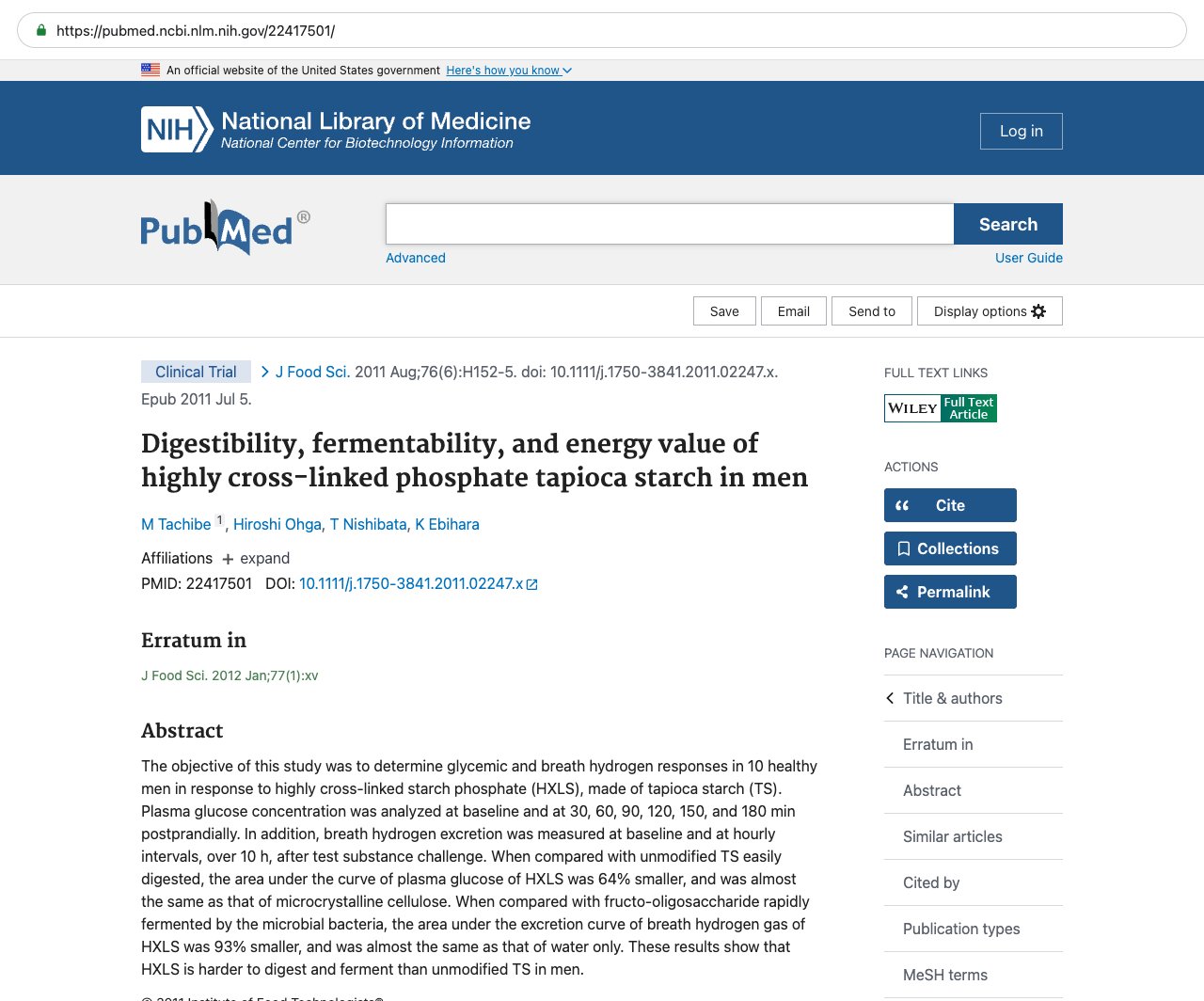
The objective of this study was to determine glycemic and breath hydrogen responses in 10 healthy men in response to highly cross-linked starch phosphate (HXLS), made of tapioca starch (TS). Plasma glucose concentration was analyzed at baseline and at 30, 60, 90, 120, 150, and 180 min postprandially. In addition, breath hydrogen excretion was measured at baseline and at hourly intervals, over 10 h, after test substance challenge. When compared with unmodified TS easily digested, the area under the curve of plasma glucose of HXLS was 64% smaller, and was almost the same as that of microcrystalline cellulose. When compared with fructo-oligosaccharide rapidly fermented by the microbial bacteria, the area under the excretion curve of breath hydrogen gas of HXLS was 93% smaller, and was almost the same as that of water only. These results show that HXLS is harder to digest and ferment than unmodified TS in men.
Source & links
Screenshot of the PubMed page
This page mirrors the published abstract (© the authors / publisher) for reference and citation. The canonical source is the PubMed record linked above. This is not medical advice.