2003 · Terai — Detection of flatus using a portable hydrogen gas analyzer.
Super-Abstract
A portable hydrogen gas analyzer was used to detect and measure intestinal gas (flatus) in human subjects. In this study, H₂ is employed as a diagnostic breath/gas marker of gut fermentation — not as a therapeutic agent administered to subjects. (Journal of Clinical Anesthesia, 2003.)
Commentary
This paper describes the technical use of a portable H₂ gas analyzer for detecting flatus. Hydrogen gas is naturally produced by bacterial fermentation in the colon and exhaled or expelled as flatus; measuring it helps characterize gut motility and fermentation status. The study does not involve administering molecular hydrogen to subjects for any therapeutic purpose. It belongs to the diagnostic breath-test literature rather than the H₂ therapy literature. The abstract was not available in the source data.
Our assessment
Assessment note: This study is not an H₂ therapy trial. Hydrogen gas here is solely a diagnostic biomarker — an endogenous product of colonic fermentation used to assess gut function. No H₂ was administered therapeutically. The abstract was not provided in the source data; a full reading of the original paper (DOI: 10.1016/j.jclinane.2003.03.001) is required before drawing any further conclusions. No efficacy claims about H₂ therapy can be derived from this work.
Study design
- Type: diagnostic/observational study · n: not specified in available data · H₂ delivery: none — H₂ measured as endogenous flatus biomarker only
- Result: abstract not available; study assessed feasibility of portable H₂ gas analysis for flatus detection
Source & links
Screenshot of the PubMed page
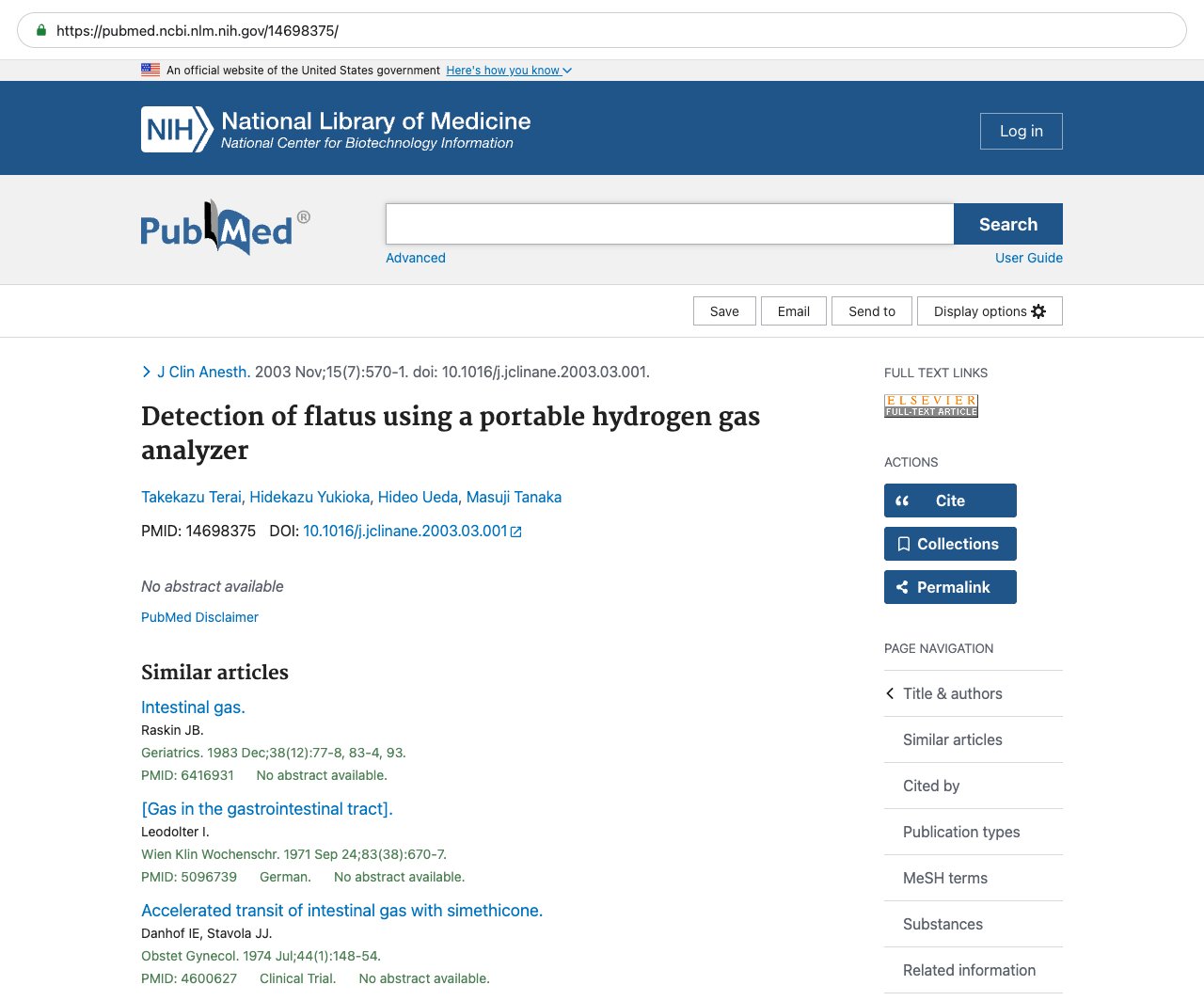
This page mirrors the published abstract (© the authors / publisher) for reference and citation. The canonical source is the PubMed record linked above. This is not medical advice.