2015 · Casanova et al. — Campylobacter concisus pseudo-outbreak caused by improved culture conditions.
Super-Abstract
A hospital in Bern noticed a sudden rise in Campylobacter concisus detections — but it turned out to be a pseudo-outbreak caused by switching to a hydrogen-enriched atmosphere in the lab, which made the bacterium grow far better. No real infection cluster existed; a change in microbiological culture conditions was the sole cause of the apparent surge.
Commentary
This paper documents a laboratory investigation, not a therapeutic hydrogen study. It illustrates how C. concisus — a hydrogen-requiring (capnophilic/microaerophilic) bacterium — thrives when the culture atmosphere is enriched with H₂. The clinical implication is a methodological one for microbiology labs: improved culture conditions can mimic an outbreak by uncovering cases that were previously missed. The study has no bearing on the use of molecular hydrogen as a health intervention in humans.
Key quotes
- „A change in culture conditions to a hydrogen-rich atmosphere enhancing growth of C. concisus was deemed responsible for this pseudo-outbreak.“ — the central finding: H₂ atmosphere in culture dishes — not real transmission — caused the apparent outbreak
- „No epidemiological links were found between the cases, and the Campylobacter isolates were clonally unrelated.“ — confirming it was not a real outbreak: no links, no common clone
Our assessment
This is a microbiological in-vitro/laboratory investigation. Hydrogen appears here solely as an ingredient of a bacterial growth atmosphere — not as a substance consumed by humans for health purposes. The study contributes to clinical microbiology methodology but has no relevance to molecular hydrogen therapy or supplementation.
Study design
- Type: laboratory/pseudo-outbreak investigation (in-vitro) · Setting: Bern University Hospital microbiology lab · H₂ role: component of enriched bacterial culture atmosphere (not a therapeutic agent)
- Result: the apparent surge in C. concisus isolates was entirely explained by the switch to a hydrogen-rich culture atmosphere; clonal analysis confirmed the absence of a true outbreak
Abstract
An unusual increase in the number of Campylobacter concisus isolates found in stool cultures provoked an outbreak investigation at Bern University Hospital. No epidemiological links were found between the cases, and the Campylobacter isolates were clonally unrelated. A change in culture conditions to a hydrogen-rich atmosphere enhancing growth of C. concisus was deemed responsible for this pseudo-outbreak.
Source & links
Screenshot of the PubMed page
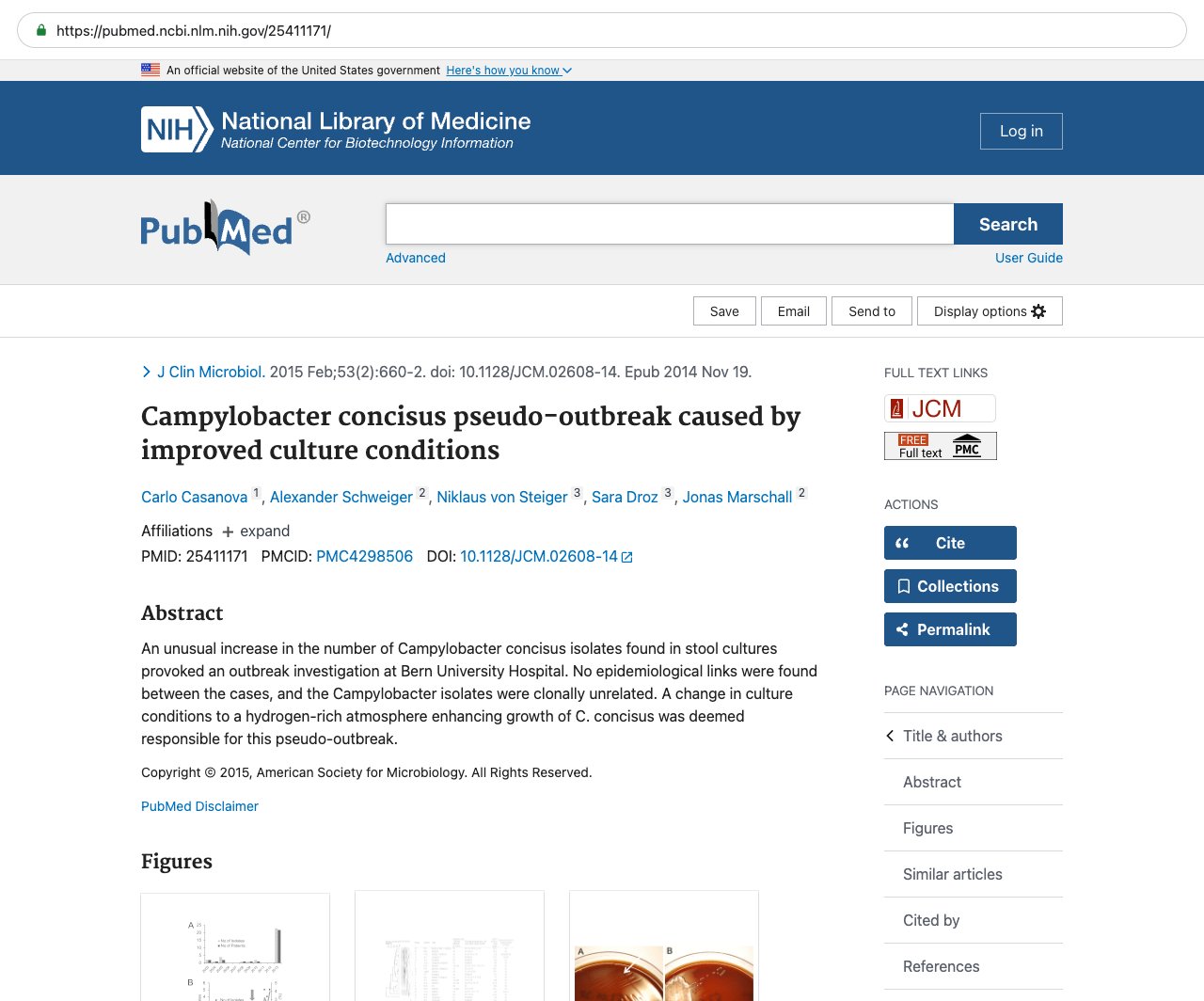
This page mirrors the published abstract (© the authors / publisher) for reference and citation. The canonical source is the PubMed record linked above. This is not medical advice.