1947 · FARKAS — On the activation of molecular hydrogen by Proteus vulgaris.
Super-Abstract
This 1947 paper investigated how the bacterium Proteus vulgaris activates molecular hydrogen (H₂) — an early study in microbial hydrogen metabolism. No abstract is available for this historical publication. The full text can be accessed via The Journal of Biological Chemistry. (The Journal of Biological Chemistry, 1947.)
Commentary
This is a historical in-vitro microbiology paper from 1947, predating modern hydrogen medicine by decades. It concerns the enzymatic activation of molecular hydrogen by Proteus vulgaris — a process mediated by hydrogenase enzymes in anaerobic bacteria. This line of research laid foundational knowledge about how microorganisms interact with H₂, which is tangentially relevant to understanding endogenous H₂ production in the gut. No abstract is available for this publication; the content description is based on the title alone and should be verified against the original article. No therapeutic claims about molecular hydrogen in humans can be derived from this work.
Key quotes
- „[No abstract available for this 1947 publication. Quotes cannot be reproduced without access to the original text.]“ — abstract unavailable — title-based description only
Our assessment
This is a historical in-vitro microbiology study with no available abstract. It documents early research into the biochemistry of microbial hydrogen activation — a foundational but highly specialized topic far removed from modern therapeutic H₂ applications. Honest limitation: With no abstract available, content cannot be independently verified beyond the title. This is not a human study; no clinical or therapeutic conclusions can be drawn. Interested readers should consult the original article in The Journal of Biological Chemistry (1947).
Study design
- Type: in-vitro microbiology study (historical, 1947) · Model: Proteus vulgaris (bacterium) · H₂ context: enzymatic activation of molecular hydrogen by bacterial hydrogenase
- Result: not determinable from title alone — no abstract available; original article required for details
Source & links
Screenshot of the PubMed page
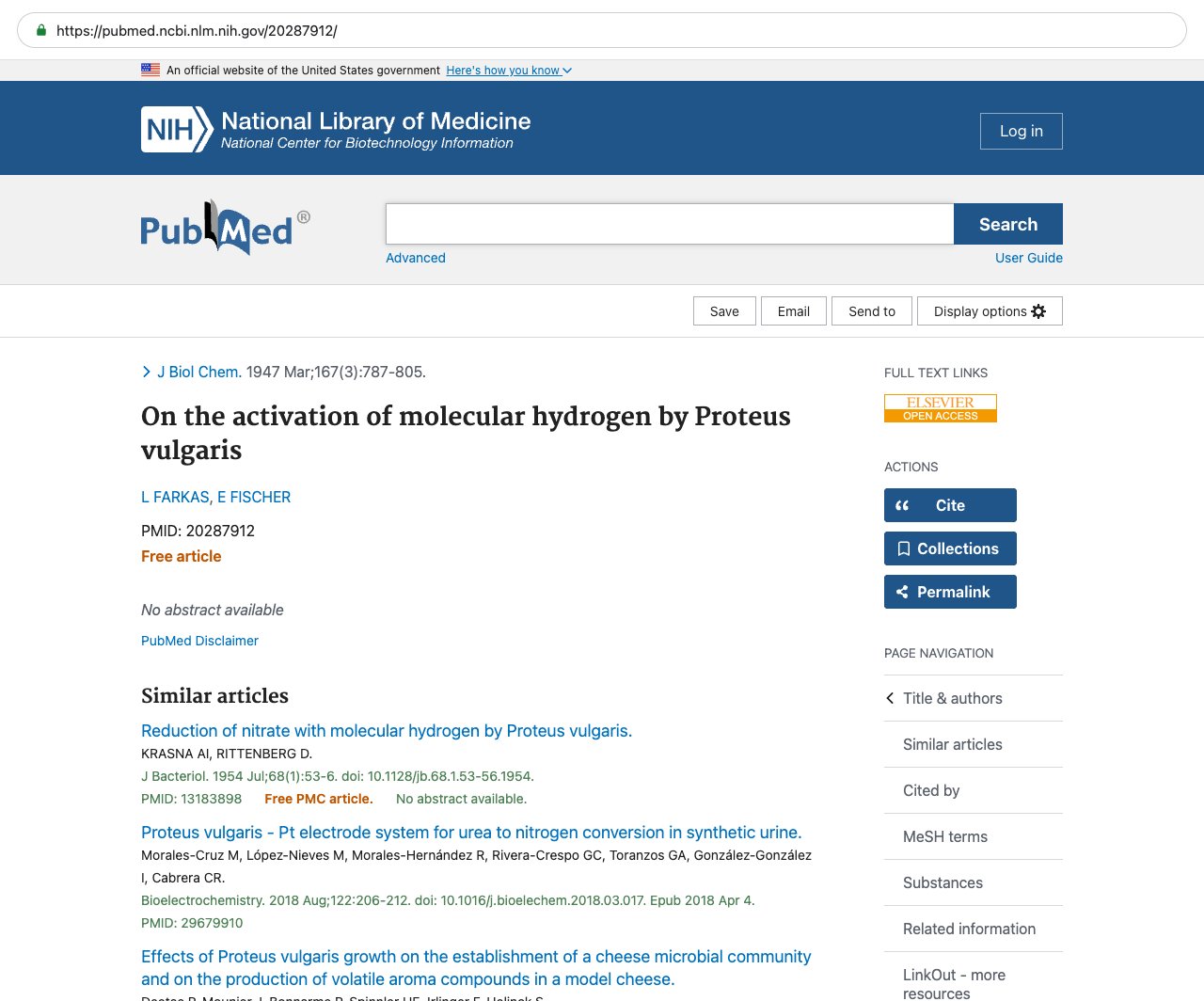
This page mirrors the published abstract (© the authors / publisher) for reference and citation. The canonical source is the PubMed record linked above. This is not medical advice.