2017 · Ostojic — Non-Gut Microbiota as a Source of Bioactive Hydrogen
Super-Abstract
This theoretical paper proposes that hydrogen-producing microorganisms outside the gastrointestinal tract — for example in the oral cavity, skin, or urogenital system — may contribute to the body's endogenous H₂ supply. No abstract is available; the full content can be accessed via the DOI. This is a theoretical/conceptual study, not an experiment.
Commentary
The gut microbiome is well established as a source of endogenous molecular hydrogen, produced by fermentation of dietary fibres. This commentary or theoretical article by Ostojic raises the question of whether non-gut microbial communities — residing in the oral cavity, respiratory tract, skin, or urogenital system — also produce biologically relevant amounts of H₂. If so, modulating these communities could be a way to influence systemic H₂ availability without dietary H₂ intake. This is an interesting conceptual extension of the H₂ biology field. However, no abstract content is available for this entry, which limits a thorough evaluation. The full argument, methodology, and evidence base can only be assessed from the original article (DOI: 10.1136/postgradmedj-2016-134411).
Key quotes
- „Non-gut microbiota as a source of bioactive hydrogen.“ — the title itself, which is the primary statement available — no abstract was provided
Our assessment
This is a theoretical/conceptual paper — no experimental data are available from the abstract entry. The concept of non-gut microbial H₂ production is scientifically plausible and worth exploring, but cannot be evaluated in depth without the full text. No clinical conclusions can be drawn. Interested readers should consult the original publication via DOI: 10.1136/postgradmedj-2016-134411.
Study design
- Type: theoretical/conceptual paper · Model: n/a (no experimental data available from abstract) · H₂ delivery: endogenous — hypothesised microbial production outside the gut
- Outcome: not assessable from abstract alone — no data provided; full text required for evaluation
Source & links
Screenshot of the PubMed page
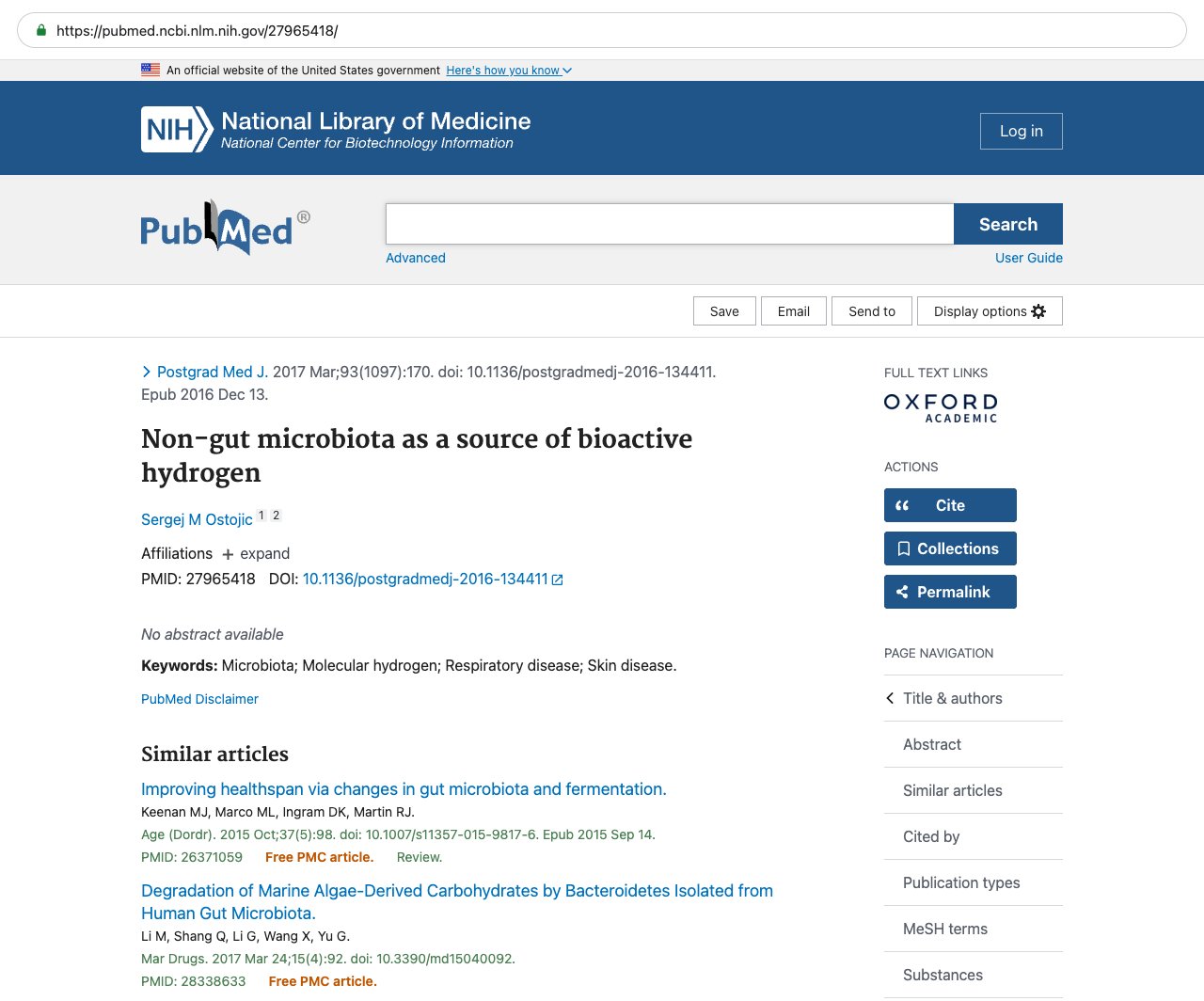
This page mirrors the published abstract (© the authors / publisher) for reference and citation. The canonical source is the PubMed record linked above. This is not medical advice.