2023 · Liu — Hydrogen gas ameliorates acute alcoholic liver injury via anti-inflammatory and antioxidant effects and regulation of intestinal microbiota
Super-Abstract
In a mouse model of acute alcoholic liver disease, H₂ inhalation reduced liver oxidative stress, inflammation, and fat accumulation, while also improving the composition of the gut microbiota and strengthening the intestinal barrier. A fecal transplant experiment confirmed that the reshaped microbiome itself contributes to the protective effect. These are animal findings; clinical validation is required.
Commentary
Alcoholic liver disease is a major public health burden with no approved targeted therapy. This study is notable for going beyond classical antioxidant and anti-inflammatory markers to also investigate the gut-liver axis. H₂ inhalation in alcohol-exposed mice increased beneficial bacteria (Lachnospiraceae, Clostridia) and decreased potentially harmful taxa (Prevotellaceae, Muribaculaceae), and reduced intestinal permeability. The fecal microbiota transplant experiment — where transferring the stool from H₂-treated mice also protected recipient mice from alcoholic liver injury — provides mechanistic evidence that microbiota remodelling is a causal, not merely correlative, part of the effect. The LPS/TLR4/NF-κB pathway was identified as the molecular link between gut-derived LPS and liver inflammation. These are mouse-specific findings; human gut microbiome composition and alcohol metabolism differ substantially.
Key quotes
- „H2 inhalation ameliorated liver injury, and attenuated liver oxidative stress, inflammation, and steatosis in an ALD mouse model.“ — core liver-protective finding
- „H2 inhalation improved gut microbiota, including increasing the abundance of Lachnospiraceae and Clostridia, and decreasing the abundance of Prevotellaceae and Muribaculaceae, and also improved intestinal barrier integrity.“ — microbiome and intestinal barrier effects
- „Fecal microbiota transplantation from mice that had undergone H2 inhalation significantly alleviated acute alcoholic liver injury.“ — causal evidence that the reshaped microbiome mediates protection
Our assessment
A mechanistically rich mouse study that links H₂ inhalation to the gut-liver axis — a relatively novel angle in H₂ research. The fecal transplant experiment adds causal weight. Limitations: acute alcohol model in mice, inhalation delivery (not a consumer-accessible route), and the large difference between mouse and human gut microbiomes. No human data. The authors note the clinical potential but state it as a hypothesis to be tested, not a conclusion.
Study design
- Type: controlled animal experiment · Model: mouse, acute alcoholic liver disease · H₂ delivery: H₂ gas inhalation
- Result: reduced liver injury markers, oxidative stress, inflammation, and steatosis; improved gut microbiota composition; strengthened intestinal barrier; LPS/TLR4/NF-κB pathway suppressed; fecal transplant from H₂-treated mice replicated liver protection in recipients
Abstract
Alcoholic liver disease (ALD) is a globally prevalent liver-related disorder characterized by severe oxidative stress and inflammatory liver damage, for which no effective treatment is currently available. Hydrogen gas (H2) has been demonstrated to be an efficient antioxidant in various diseases in animals as well as humans. However, the protective effects of H2 on ALD and its underlying mechanisms remain to be elucidated. The present study demonstrated that H2 inhalation ameliorated liver injury, and attenuated liver oxidative stress, inflammation, and steatosis in an ALD mouse model. Moreover, H2 inhalation improved gut microbiota, including increasing the abundance of Lachnospiraceae and Clostridia, and decreasing the abundance of Prevotellaceae and Muribaculaceae, and also improved intestinal barrier integrity. Mechanistically, H2 inhalation blocked activation of the LPS/TLR4/NF-κB pathway in liver. Notably, it was further demonstrated that the reshaped gut microbiota may accelerate alcohol metabolism, regulate lipid homeostasis and maintain immune balance by bacterial functional potential prediction (PICRUSt). Fecal microbiota transplantation from mice that had undergone H2 inhalation significantly alleviated acute alcoholic liver injury. In summary, the present study showed that H2 inhalation alleviated liver injury by reducing oxidative stress and inflammation, while also improving intestinal flora and enhancing the intestinal barrier. H2 inhalation may serve as an effective intervention for preventing and treating ALD in a clinical context.
Source & links
Screenshot of the PubMed page
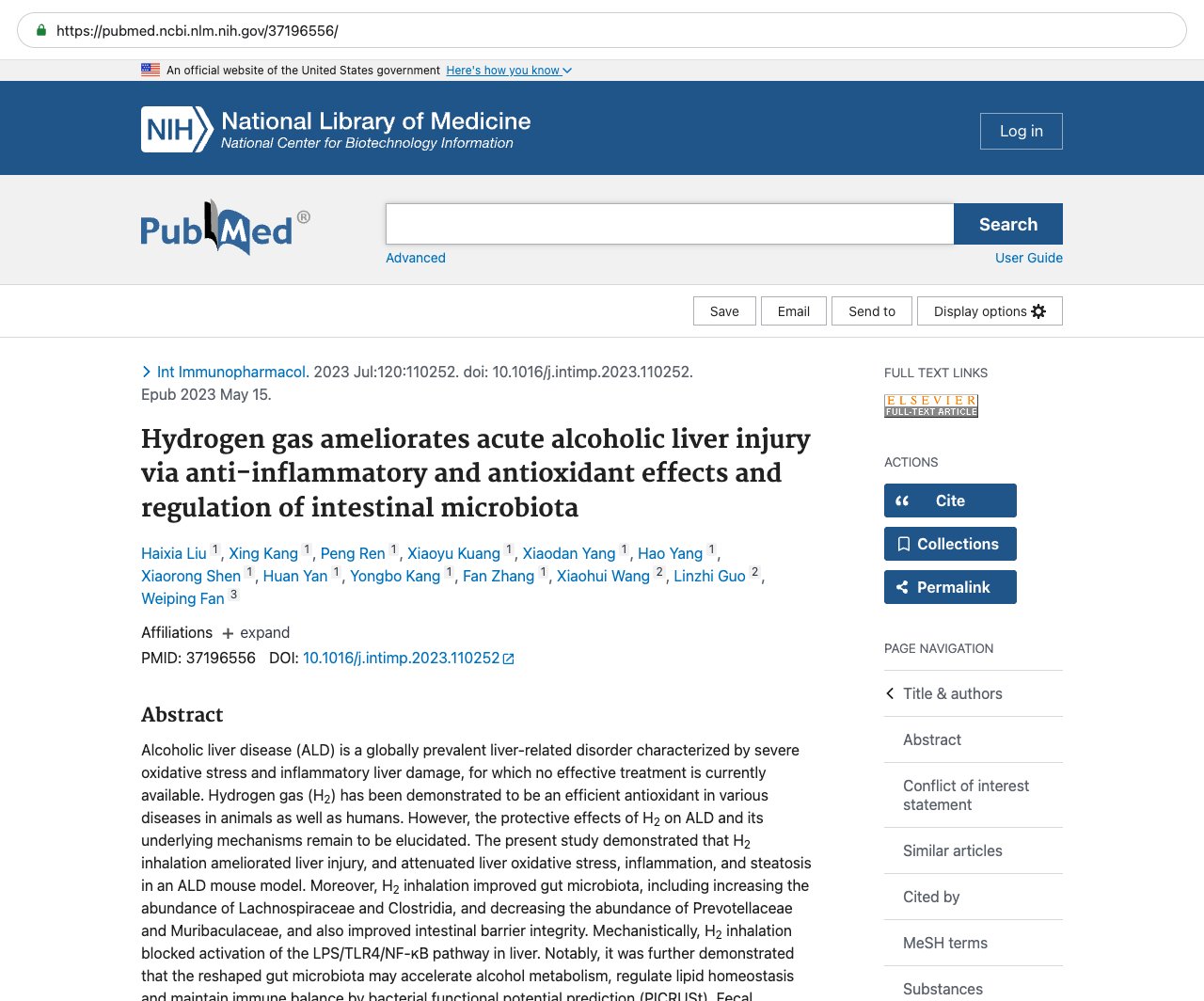
This page mirrors the published abstract (© the authors / publisher) for reference and citation. The canonical source is the PubMed record linked above. This is not medical advice.