2021 · Wang et al. — Hydrogen therapy as an effective and novel adjuvant treatment against COVID-19
Super-Abstract
This short theoretical commentary proposes hydrogen therapy as a potential adjuvant approach in COVID-19 treatment. No abstract or experimental data are available for this publication. The argument is based on the known anti-inflammatory and antioxidant properties of molecular hydrogen (H₂). (QJM: Monthly Journal of the Association of Physicians, 2021.)
Commentary
This is a brief opinion or letter piece — the abstract is not available in the indexed record. The authors argue from known H₂ biology (anti-inflammatory, antioxidant, cytoprotective) toward potential utility in COVID-19-associated inflammation and oxidative lung damage. At the time of publication (late 2020), a Chinese trial using H₂/O₂ inhalation in COVID-19 patients was underway (NCT04378712), so this commentary reflects a then-current discussion. Without access to the full text or abstract, the specific claims and evidence base cannot be independently evaluated here. For the full argument, please refer to the DOI: 10.1093/qjmed/hcaa301.
Key quotes
- „Hydrogen therapy as an effective and novel adjuvant treatment against COVID-19.“ — title as the only citable text — no abstract available
Our assessment
This is a theoretical commentary without available abstract. No experimental data are presented here; the piece appears to argue for H₂ therapy on the basis of pre-existing mechanistic knowledge. It cannot be used as clinical evidence for H₂ efficacy against COVID-19. A companion response letter (PMID 33151328) exists, indicating this was part of an academic exchange. Interested readers should consult the full text via DOI.
Study design
- Type: theoretical commentary / opinion letter · n: n/a · H₂ delivery: unspecified
- Result: no experimental data — abstract not available in indexed record
Source & links
Screenshot of the PubMed page
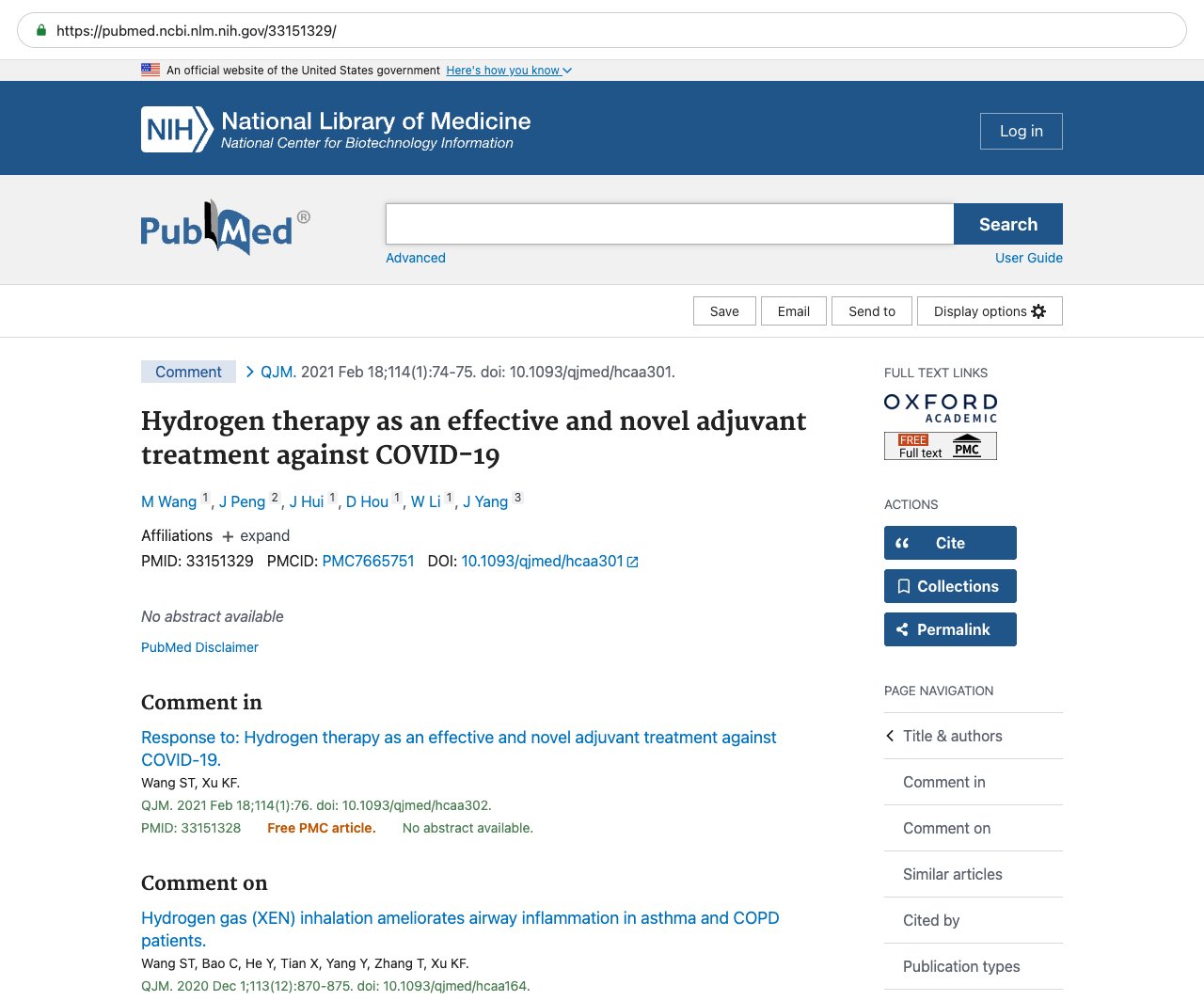
This page mirrors the published abstract (© the authors / publisher) for reference and citation. The canonical source is the PubMed record linked above. This is not medical advice.