2022 · Zhao — Effectiveness and safety of hydrogen inhalation as an adjunct treatment in Chinese type 2 diabetes patients: A retrospective, observational, double-arm, real-life clinical study
Super-Abstract
Hydrogen inhalation as an adjunct improved blood sugar control in type 2 diabetes. In a large real-life study (n = 1,088), over 6 months the H₂ group lowered long-term blood sugar HbA1c more (−0.94% vs. −0.46%) and had fewer side effects — all values p < 0.001. (Frontiers in Endocrinology, 2022.)
Commentary
Type 2 diabetes is a widespread disease in which oxidative stress and insulin resistance play central roles — exactly where hydrogen acts mechanistically. This study is interesting because, with 1,088 patients, it is unusually large and comes from real clinical practice. It is a retrospective observational study: patients who inhaled hydrogen in addition to their normal diabetes medication were compared with those who did not — and the two groups were matched 1:1 with propensity-score matching to make them comparable. The numbers over six months are clear: long-term blood sugar HbA1c fell by 0.94% in the H₂ group versus 0.46% in the control, fasting glucose by 22.7 versus 11.7 mg/dl, plus improvements in cholesterol, insulin resistance (HOMA-IR) and beta-cell function (HOMA-β) — all with p < 0.001. Notably, the H₂ group even had fewer side effects such as hypoglycemia, vomiting and dizziness. To be honest in the assessment: it is not a randomized study but retrospective and observational — despite matching, unknown differences between the groups can influence the results. But the large case number and the consistent, significant effect make it a strong signal for H₂ in diabetes adjunct treatment.
Key quotes
- „Compared to the control group, subjects in HI group maintained greater improvement in the level of HbA1c (-0.94% vs -0.46%), FPG (-22.7 mg/dL vs -11.7 mg/dL) ... with all p< 0.001 post the treatment.“ — markedly better blood sugar control with H₂ inhalation
- „Patients in HI group was observed a lower incidence of several AEs including hypoglycemia (2.0% vs 6.8%), vomiting (2.6% vs 7.4%), constipation (1.7% vs 4.4%) and giddiness (3.3% vs 6.3%).“ — fewer side effects in the H₂ group
- „HI as an adjunct therapy ameliorates glycemic control, lipid metabolism, insulin resistance and AE incidence of T2DM patients after 6-month treatment.“ — the authors' conclusion
Our assessment
One of the strongest human signals for H₂ in type 2 diabetes — above all because of the case number unusually large for this field (n = 1,088) and the consistent, highly significant effect across several metabolic parameters. Diabetes is a commercially and medically highly relevant indication; the data support positioning H₂ as an adjunct therapy. Limitation, stated honestly: it is a retrospective observational study without randomization — despite propensity-score matching, residual confounding and selection effects remain possible (those who inhale may be more health-conscious/adherent). Causal proof would require a prospective RCT. As a complementary, low-side-effect measure alongside standard medical therapy, however, the signal is remarkably robust.
Study design
- Type: retrospective, observational, two-arm real-life study (1:1 propensity-score matching) · n: 1,088 · Duration: 6 months · H₂ delivery: hydrogen inhalation in addition to conventional diabetes medication
- Result: HbA1c −0.94% vs. −0.46%; FPG −22.7 vs. −11.7 mg/dl; total cholesterol −12.9 vs. −4.4 mg/dl; HOMA-IR −0.76 vs. −0.17; HOMA-β +8.2% vs. +1.98% (all p < 0.001); fewer adverse events (hypoglycemia 2.0% vs. 6.8% among others)
Abstract
AIM: To analyze the effectiveness and safety of hydrogen inhalation (HI) therapy as an adjunct treatment in Chinese type 2 diabetes mellitus (T2DM) patients in a real-life clinical setting. METHODS: This observational, non-interventional, retrospective, double-arm, 6-month clinical study included T2DM patients receiving conventional anti-diabetes medication with or without HI initiation from 2018 to 2021. Patients were assigned to the HI group or non-HI group (control group) after 1:1 propensity score matching (PSM). The mean change in glycated hemoglobin (HbA1c) after 6 months in different groups was evaluated primarily. The secondary outcome was composed of the mean change of fasting plasma glucose (FPG), weight, lipid profile, and homeostasis model assessment. Logistics regression was performed to evaluate the likelihood of reaching different HbA1c levels after 6-month treatment between the groups. Adverse event (AE) was also evaluated in patients of both groups. RESULTS: In total, 1088 patients were selected into the analysis. Compared to the control group, subjects in HI group maintained greater improvement in the level of HbA1c (-0.94% vs -0.46%), FPG (-22.7 mg/dL vs -11.7 mg/dL), total cholesterol (-12.9 mg/dL vs -4.4 mg/dL), HOMA-IR (-0.76 vs -0.17) and HOMA-β (8.2% vs 1.98%) with all p< 0.001 post the treatment. Logistics regression revealed that the likelihood of reaching HbA1c< 7%, ≥ 7% to< 8% and > 1% reduction at the follow-up period was higher in the HI group, while patients in the control group were more likely to attain HbA1c ≥ 9%. Patients in HI group was observed a lower incidence of several AEs including hypoglycemia (2.0% vs 6.8%), vomiting (2.6% vs 7.4%), constipation (1.7% vs 4.4%) and giddiness (3.3% vs 6.3%) with significance in comparison to the control group. CONCLUSION: HI as an adjunct therapy ameliorates glycemic control, lipid metabolism, insulin resistance and AE incidence of T2DM patients after 6-month treatment, presenting a noteworthy inspiration to existing clinical diabetic treatment.
Source & links
Screenshot of the PubMed page
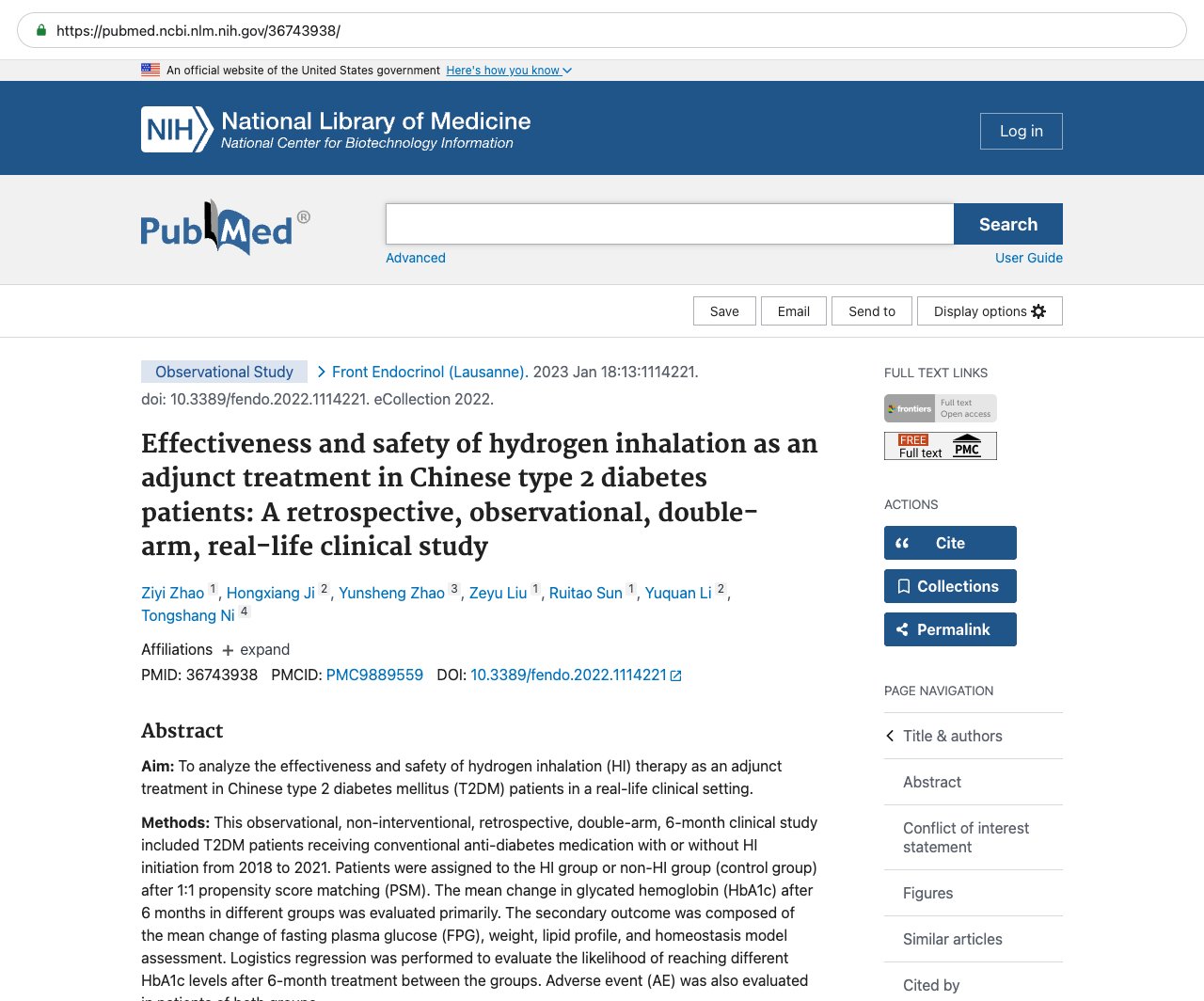
This page mirrors the published abstract (© the authors / publisher) for reference and citation. The canonical source is the PubMed record linked above. This is not medical advice.