2021 · Htun et al. — Hydrogen and Therapeutic Gases for Neonatal Hypoxic-Ischemic Encephalopathy: Potential Neuroprotective Adjuncts in Translational Research
Super-Abstract
Neonatal hypoxic-ischemic encephalopathy (HIE) — brain injury in newborns caused by oxygen deprivation — remains without a fully effective treatment, and molecular hydrogen has emerged as a promising neuroprotective candidate. This review evaluates the evidence from translational animal models: hydrogen inhalation, alone or combined with therapeutic hypothermia, shows short- and long-term neuroprotection in neonatal HIE models. No large human trials exist yet.
Commentary
HIE affects approximately 1–2 per 1,000 live births in high-income countries and remains a leading cause of neonatal death and long-term neurodevelopmental disability. The current standard of care — therapeutic hypothermia — is only partially protective and must begin within 6 hours of birth. This review surveys therapeutic gases (hydrogen, xenon, nitrous oxide, argon, and others) with particular focus on hydrogen's established neuroprotective profile in adult disease models (ischemia, traumatic brain injury, neurodegeneration). The authors note that H₂ is safe and feasible based on animal and some adult human data, but that neonatal-specific trials are scarce. Key mechanistic rationale: oxidative stress is a central driver of HIE injury, and H₂ selectively neutralizes the most damaging reactive oxygen species without disrupting normal redox signaling. The translational gap between animal models and neonatal humans is explicitly acknowledged as a major limitation.
Key quotes
- „Hydrogen ventilation as a single agent or in combination with therapeutic hypothermia shows short- and long-term neuroprotection in neonatal translational HIE models.“ — the main finding from animal studies — not yet confirmed in human neonates
- „Animal and human studies have verified the safety and feasibility of molecular hydrogen.“ — safety is established; efficacy in human neonates is not
- „The optimal target severity for therapeutic interventions should be well established to improve outcomes.“ — an open research question: which HIE severity benefits most
Our assessment
This is a carefully framed translational review identifying hydrogen as a biologically plausible candidate for neonatal HIE. The mechanistic rationale (oxidative stress → selective H₂ scavenging) is sound and consistent with broader H₂ literature. Critical limitations to state honestly: all neuroprotection findings cited are from animal models (mainly rodent); no adequately powered randomized controlled trials in human neonates are yet available. The review is not a clinical recommendation. Translating from neonatal rat or piglet models to human premature or term newborns involves substantial uncertainty. This paper appropriately flags these gaps rather than overstating the evidence.
Study design
- Type: narrative review (translational focus) · n: n/a (animal and early human feasibility data synthesized) · H₂ delivery: inhalation (ventilated hydrogen gas), sometimes combined with therapeutic hypothermia
- Models: neonatal rodent and large-animal HIE models; some adult human safety data referenced · Result: consistent neuroprotection signal in animal models; human neonatal RCT evidence absent; safety profile considered acceptable based on adult data
Abstract
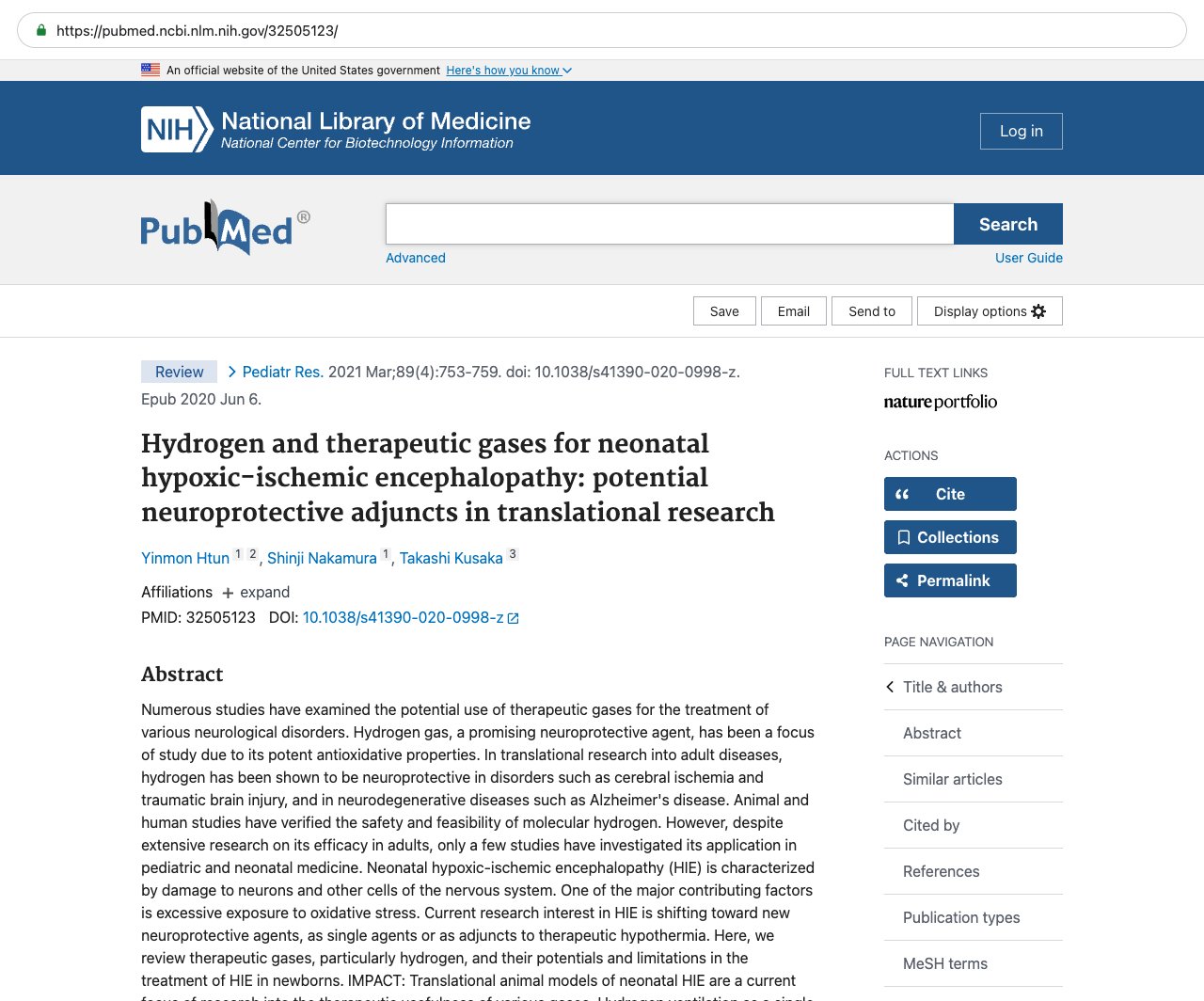
Numerous studies have examined the potential use of therapeutic gases for the treatment of various neurological disorders. Hydrogen gas, a promising neuroprotective agent, has been a focus of study due to its potent antioxidative properties. In translational research into adult diseases, hydrogen has been shown to be neuroprotective in disorders such as cerebral ischemia and traumatic brain injury, and in neurodegenerative diseases such as Alzheimer's disease. Animal and human studies have verified the safety and feasibility of molecular hydrogen. However, despite extensive research on its efficacy in adults, only a few studies have investigated its application in pediatric and neonatal medicine. Neonatal hypoxic-ischemic encephalopathy (HIE) is characterized by damage to neurons and other cells of the nervous system. One of the major contributing factors is excessive exposure to oxidative stress. Current research interest in HIE is shifting toward new neuroprotective agents, as single agents or as adjuncts to therapeutic hypothermia. Here, we review therapeutic gases, particularly hydrogen, and their potentials and limitations in the treatment of HIE in newborns. IMPACT: Translational animal models of neonatal HIE are a current focus of research into the therapeutic usefulness of various gases. Hydrogen ventilation as a single agent or in combination with therapeutic hypothermia shows short- and long-term neuroprotection in neonatal translational HIE models. The optimal target severity for therapeutic interventions should be well established to improve outcomes.
Source & links
Screenshot of the PubMed page
This page mirrors the published abstract (© the authors / publisher) for reference and citation. The canonical source is the PubMed record linked above. This is not medical advice.