2021 · Huang et al. — Molecular Hydrogen Application in Stroke: Bench to Bedside
Super-Abstract
This review summarises experimental and clinical evidence on molecular hydrogen (H₂) therapy in stroke, covering both animal models and human studies. The authors discuss neuroprotective mechanisms of H₂ against stroke-related brain injury and trace findings from basic research toward early clinical application. (Current Pharmaceutical Design, 2021.)
Commentary
Stroke remains one of the leading causes of death and disability worldwide, with very few acute treatment options. This review by Huang and colleagues surveys experimental work in rodent and other animal models of ischaemic and haemorrhagic stroke, as well as the limited clinical investigations in stroke patients. H₂ is positioned as a novel medical gas with multiple neuroprotective properties: antioxidant, anti-inflammatory, anti-apoptotic, and potentially modulating autophagy and mitochondrial function. The review discusses how H₂ crosses the blood-brain barrier rapidly (owing to its small size and lipophilicity), making it theoretically suited for acute neuroprotection — an advantage conventional drugs often lack. Early clinical signals from pilot studies are referenced, though larger randomised controlled trials remain scarce. The authors present the „bench to bedside” framing as aspirational: promising preclinical findings do not yet translate to proven clinical benefit.
Key quotes
- „Molecular hydrogen is emerging as a novel medical gas with therapeutic potential for various neurological diseases, including stroke.“ — positioning H₂ as a candidate neuroprotective agent
- „We reviewed the experimental and clinical findings of the effects of molecular hydrogen therapy in stroke patients and models.“ — scope of the review: both animal models and human data
- „The underlying neuroprotective mechanisms against stroke pathology were also discussed.“ — mechanistic analysis is a key component of this review
Our assessment
This is a narrative review — it summarises existing evidence rather than generating new data. The field of H₂ in stroke is scientifically interesting: H₂ can penetrate brain tissue rapidly, and its antioxidant/anti-inflammatory properties are directly relevant to ischaemia-reperfusion injury. However, the abstract is brief and does not provide specific effect sizes or study counts. Clinical trials in stroke are logistically demanding, and this review appears to cover a still-early evidence base. The „bench to bedside” framing implies potential, not proven clinical efficacy. Human data in stroke remain limited compared to preclinical literature.
Study design
- Type: narrative review · n: n/a (literature synthesis — animal models and clinical studies) · H₂ delivery: not specified in abstract (multiple routes in source studies)
- Result: narrative synthesis of neuroprotective mechanisms; experimental and early clinical data reviewed; no pooled effect sizes provided
Abstract
Stroke is a major cause of mortality and morbidity worldwide. Effective treatments are limited. Molecular hydrogen is emerging as a novel medical gas with therapeutic potential for various neurological diseases, including stroke. We reviewed the experimental and clinical findings of the effects of molecular hydrogen therapy in stroke patients and models. The underlying neuroprotective mechanisms against stroke pathology were also discussed.
Source & links
Screenshot of the PubMed page
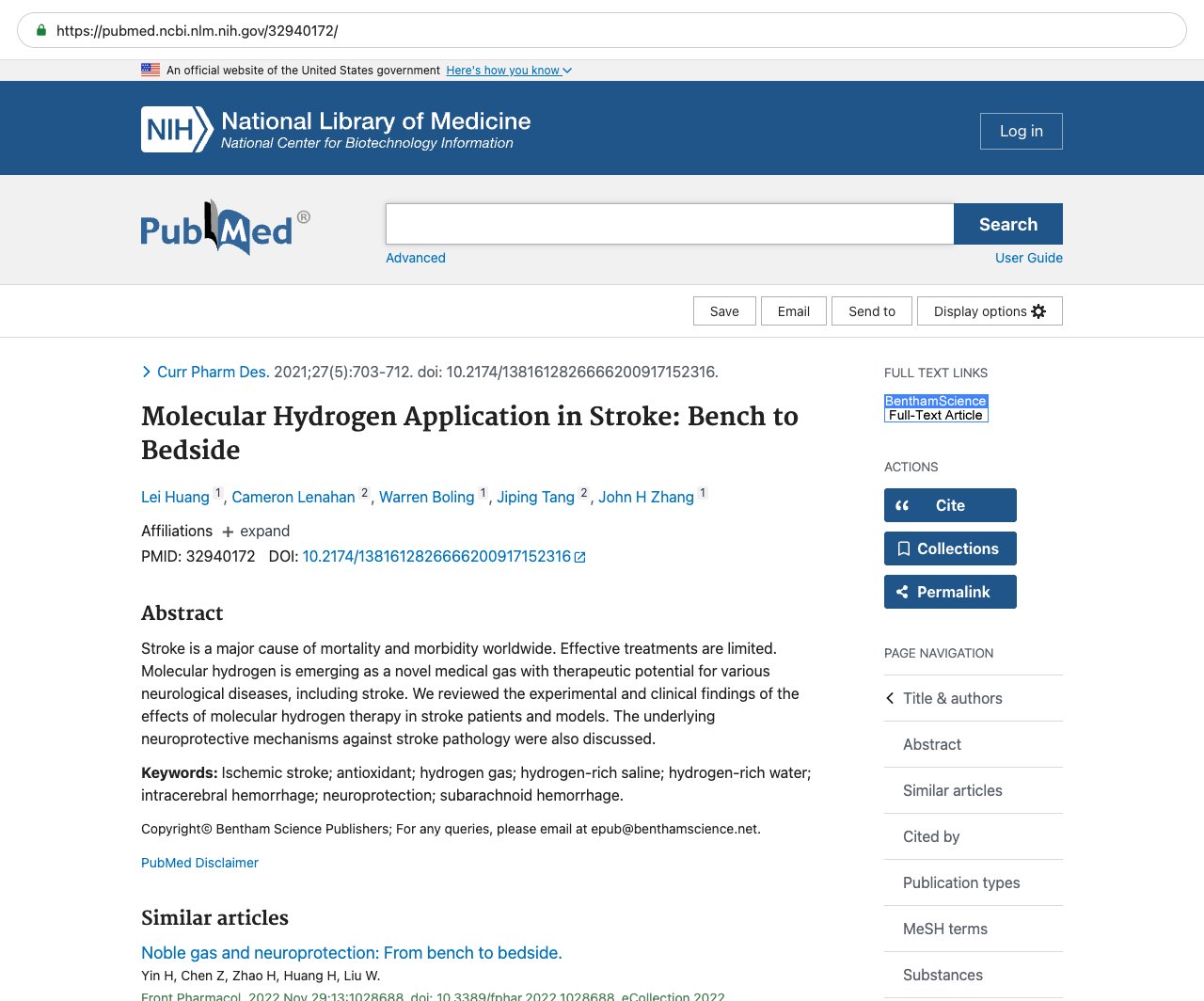
This page mirrors the published abstract (© the authors / publisher) for reference and citation. The canonical source is the PubMed record linked above. This is not medical advice.