2024 · James et al. — The Synergistic Potential of Hydrogen Inhalation and Hyperbaric Oxygen Therapy
Super-Abstract
This review article in the Journal of Vascular Surgery examines whether combining hydrogen inhalation with hyperbaric oxygen therapy (HBOT) could produce synergistic therapeutic benefits. The authors discuss the distinct and potentially complementary mechanisms of both gas therapies. As no abstract text is available in this record, the full scope of the analysis cannot be summarised here — please consult the original article via the DOI.
Commentary
Both H₂ inhalation and HBOT are established areas of medical gas research, with their own distinct mechanistic profiles: HBOT drives hyperoxic tissue saturation and wound healing, while H₂ selectively scavenges the most reactive oxygen species without disrupting beneficial ROS signalling. A review exploring their combination is conceptually interesting — HBOT can paradoxically increase oxidative stress at high pressures, which H₂ might partially buffer. However, because no abstract is available in this database record, the specific conclusions, scope, and quality of evidence synthesised by the authors cannot be assessed here. Readers interested in this topic should access the original publication directly.
Key quotes
- „The synergistic potential of hydrogen inhalation and hyperbaric oxygen therapy.“ — the full abstract is not available in this record — this is the article title used as placeholder
Our assessment
This is a review article (no new experimental data). Its specific conclusions cannot be fully evaluated here because the abstract is not available in this record. The topic — combining H₂ inhalation with HBOT — is scientifically relevant and mechanistically plausible, but the quality of the synthesis, breadth of evidence, and any clinical conclusions require direct review of the original text. No therapeutic claims can be derived from this summary.
Study design
- Type: review article · n: n/a (literature synthesis) · H₂ delivery: inhalation (discussed in combination with HBOT)
- Note: abstract not available in this record; design and specific findings cannot be verified without accessing the full publication (DOI: 10.1016/j.jvs.2023.11.067)
Source & links
Screenshot of the PubMed page
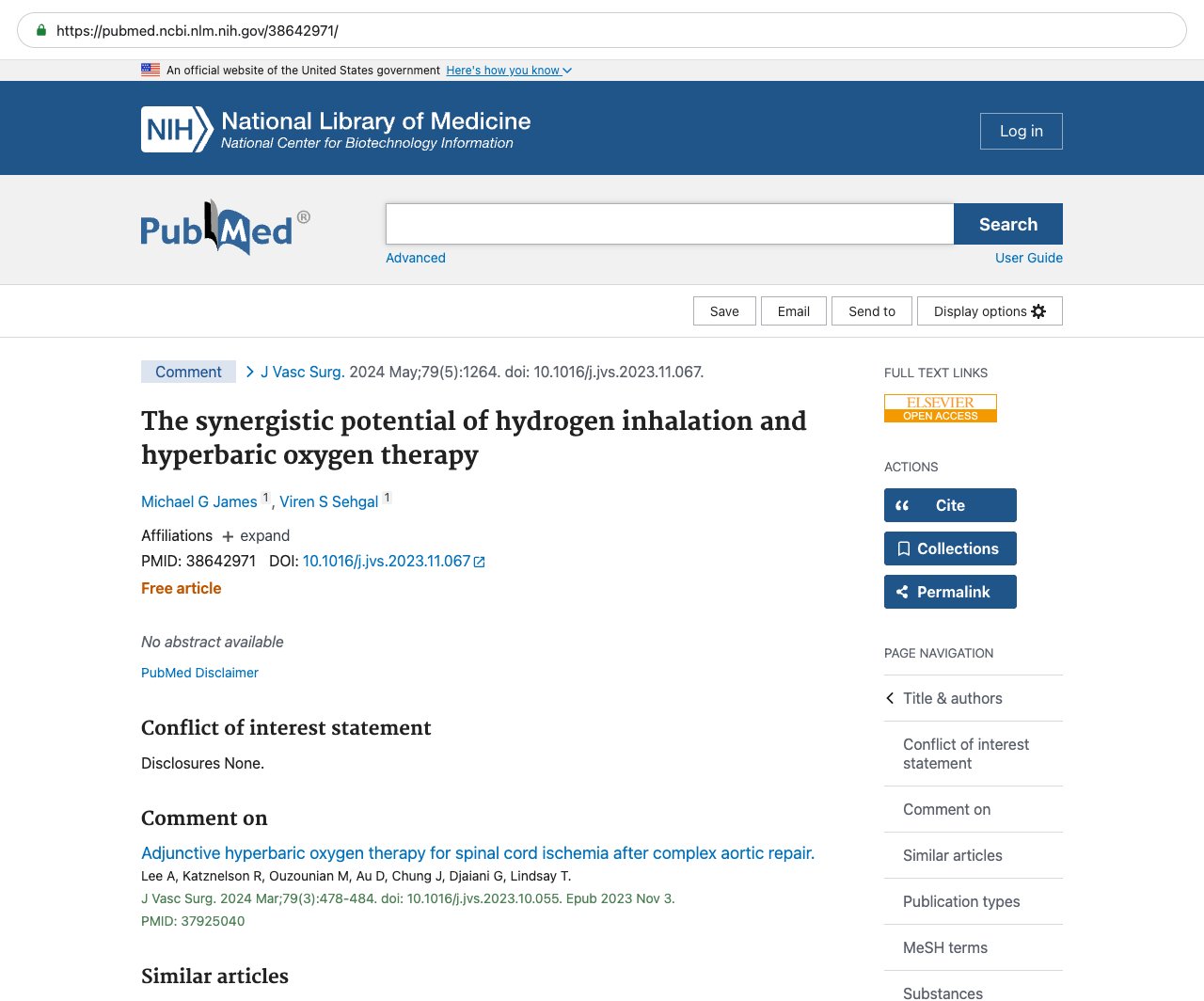
This page mirrors the published abstract (© the authors / publisher) for reference and citation. The canonical source is the PubMed record linked above. This is not medical advice.