1990 · Mitarai — Correlation between gastric microcirculation and mucosal injury after surgical therapy of esophageal varices.
Super-Abstract
Surgery for esophageal varices can substantially reduce blood flow to the stomach lining, and the degree of this reduction correlates directly with post-operative mucosal damage. This animal study used hydrogen gas clearance — a blood flow measurement technique — to show that transection surgery cuts gastric mucosal flow by up to 30%, while a shunt procedure preserves it much better. (Nihon Geka Gakkai zasshi, 1990.)
Commentary
In this study, hydrogen gas was used purely as a diagnostic tracer to measure regional blood flow via the hydrogen gas clearance method — not as a therapeutic agent. The technique involves inhaling hydrogen gas and then measuring its electrical clearance from tissues via a contact electrode; faster clearance indicates higher blood flow. The study compared two surgical approaches for esophageal varices (transection vs. left gastric vena caval shunt) in patients with portal hypertension and found that the choice of surgery significantly impacts gastric mucosal perfusion. This is a methodological and surgical study; any mention of H₂ refers to the measurement technique, not H₂ therapy.
Key quotes
- „the transection group showed a reduction of mucosal flow by approximately 30% during surgery, and 20% for 4 weeks after operation.“ — quantified perfusion drop after transection surgery
- „Postoperative mucosal injury was endoscopically and histologically found in almost all patients who showed a reduction rate of more than 20%.“ — direct link between reduced blood flow and mucosal damage
- „active protection against possible gastric mucosal lesion should be kept in mind in the setting of surgical therapy for esophageal varices.“ — clinical implication: surgeons must protect gastric mucosa
Our assessment
This is an animal/clinical observation study using H₂ gas purely as a blood-flow measurement tracer — there is no therapeutic H₂ application. The finding that >20% reduction in mucosal flow predicts post-operative mucosal injury is clinically relevant for surgical planning. Important context for H₂ research: the hydrogen gas clearance method was a widely-used flow measurement technique in the 1980s–90s; this paper belongs to that methodological tradition, not to molecular hydrogen therapy research.
Study design
- Type: observational animal/clinical study · n: 55 patients (33 cirrhotic, 10 idiopathic portal hypertension, 12 controls); 20 with esophageal varices randomised to two surgery types · H₂ use: hydrogen gas clearance as blood-flow measurement technique (not therapeutic)
- Result: transection group: mucosal flow reduced ~30% intraoperatively, ~20% at 4 weeks; shunt group: flow reduction <10%; post-operative mucosal injury in almost all patients with >20% flow reduction
Abstract
The correlation between gastric microcirculation and mucosal injury was studied in patients who underwent surgery for esophageal varices. Both mucosal and submucosal blood flow at the lower esophagus, gastric body and antrum was measured using hydrogen gas clearance method through endoscopy in 55 patients including 33 cirrhotics, 10 idiopathic portal hypertensive patients and 12 controls. In 20 cases with esophageal varices, 10 patients were treated with transabdominal esophageal transection (transection group) and 10 with left gastric vena caval shunt (shunt group). The patients with portal hypertension, showed a reduced blood flow in gastric mucosa but increased flow in the submucosa, as compared with the controls. When comparing the postoperative changes in gastric mucosal flow between the two groups, the transection group showed a reduction of mucosal flow by approximately 30% during surgery, and 20% for 4 weeks after operation. In shunt group, the mucosal flow was well preserved with reduction rate less than 10%. Postoperative mucosal injury was endoscopically and histologically found in almost all patients who showed a reduction rate of more than 20%. This study suggests that active protection against possible gastric mucosal lesion should be kept in mind in the setting of surgical therapy for esophageal varices.
Source & links
Screenshot of the PubMed page
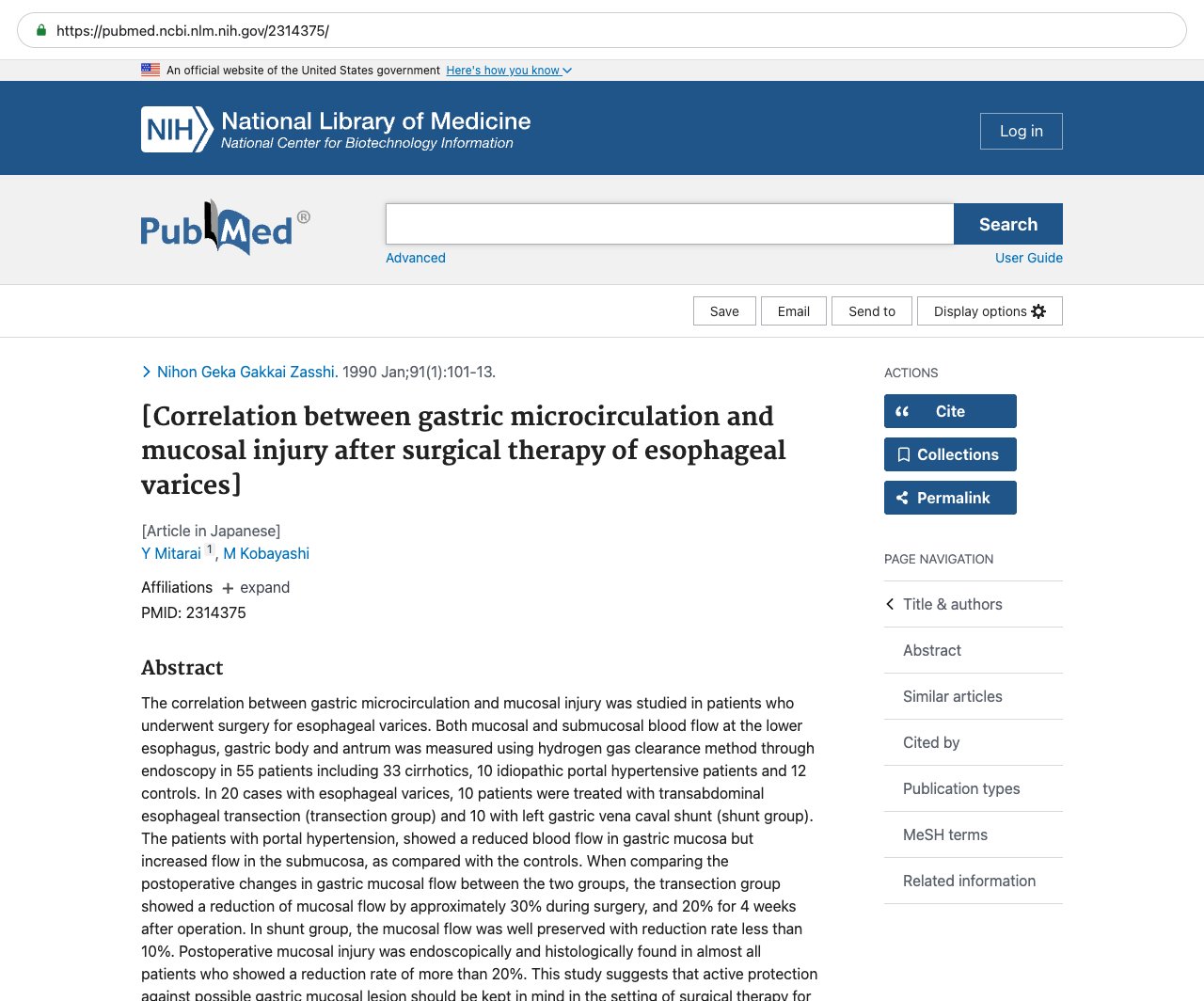
This page mirrors the published abstract (© the authors / publisher) for reference and citation. The canonical source is the PubMed record linked above. This is not medical advice.