1982 · Murakami — Contact electrode method in hydrogen gas clearance technique: a new method for determination of regional gastric mucosal blood flow in animals and humans.
Super-Abstract
A new contact electrode method for hydrogen gas clearance was developed to measure regional gastric mucosal blood flow non-destructively, tested in both animal models and human subjects. The abstract of this publication is not available in the source database. For full details, please consult the original publication in Gastroenterology (1982) via the DOI or your institution's library. (Gastroenterology, 1982.)
Commentary
This paper describes a technical innovation in the hydrogen gas clearance method — specifically the use of a contact electrode applied endoscopically to measure regional gastric mucosal blood flow without tissue removal. Hydrogen gas clearance was a widely-used physiological measurement technique in this era: patients or animals inhale a small amount of H₂, and an electrode measures how quickly it disappears from the local tissue, which reflects perfusion rate. This is a methodological paper; hydrogen gas is used purely as a diagnostic tracer, not as a therapeutic agent. No abstract text is available to quote from directly.
Key quotes
- „Contact electrode method in hydrogen gas clearance technique: a new method for determination of regional gastric mucosal blood flow in animals and humans.“ — title describes the technical contribution: contact electrode enables regional, non-destructive measurement
Our assessment
This is a methodological study introducing a technical improvement to hydrogen gas clearance blood flow measurement. H₂ is a diagnostic tracer, not a therapeutic molecule. Note: the abstract is not available in the source database; the above summary is based solely on the title and bibliographic context. No therapeutic conclusions can be drawn, and readers are referred to the original publication for details.
Study design
- Type: animal + human methodological study · H₂ role: inert gas tracer for blood flow measurement via contact electrode clearance (not therapeutic)
- Result: abstract unavailable — see original publication in Gastroenterology, 1982 for full data
Source & links
Screenshot of the PubMed page
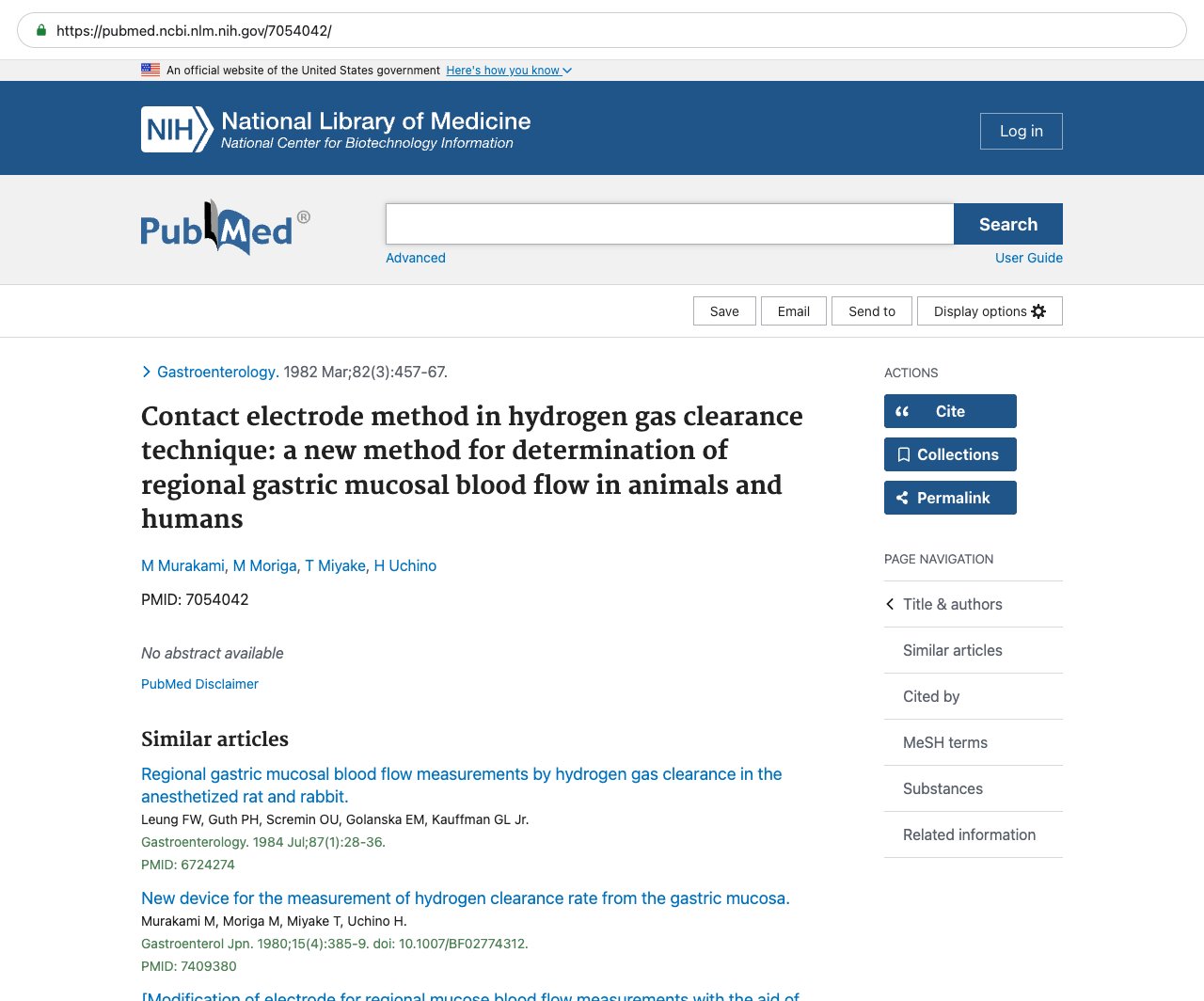
This page mirrors the published abstract (© the authors / publisher) for reference and citation. The canonical source is the PubMed record linked above. This is not medical advice.