1999 · Särnblad — Lactose intolerance in children. An analysis of hydrogen gas in exhaled air simplifies and improves diagnosis.
Super-Abstract
This review article, published in the Swedish medical journal Läkartidningen, discusses the hydrogen breath test as a diagnostic tool for lactose intolerance in children. The exhaled hydrogen gas method is presented as a simpler and more reliable alternative for diagnosing lactose malabsorption. No abstract is available in the indexed record. (Läkartidningen, 1999.)
Commentary
This is a review article in Swedish (Läkartidningen), addressing diagnostic use of the hydrogen breath test in paediatric gastroenterology. The hydrogen here is produced by colonic bacteria fermenting unabsorbed lactose — not molecular H₂ as a therapeutic agent. Exhaled H₂ measurement is a well-established clinical test. The original text is in Swedish and no English abstract is available in the database record; detailed content cannot be assessed without access to the full publication.
Key quotes
- „An analysis of hydrogen gas in exhaled air simplifies and improves diagnosis.“ — from the title — the diagnostic principle of the H₂ breath test
Our assessment
This is a review article on clinical diagnostics — specifically the hydrogen breath test for lactose intolerance in children. The „hydrogen“ is a diagnostic marker (produced by gut bacteria), not a therapeutic agent. No abstract is available; content cannot be fully assessed. The article is in Swedish with no English translation on record. This paper is not relevant to H₂ therapy or supplementation.
Study design
- Type: review / clinical commentary · Subject: hydrogen breath test for lactose intolerance diagnosis in children · H₂ role: diagnostic biomarker (bacterial fermentation product), not therapeutic
- Note: no abstract available in the indexed record; full text in Swedish — detailed assessment not possible without the original publication
Source & links
Screenshot of the PubMed page
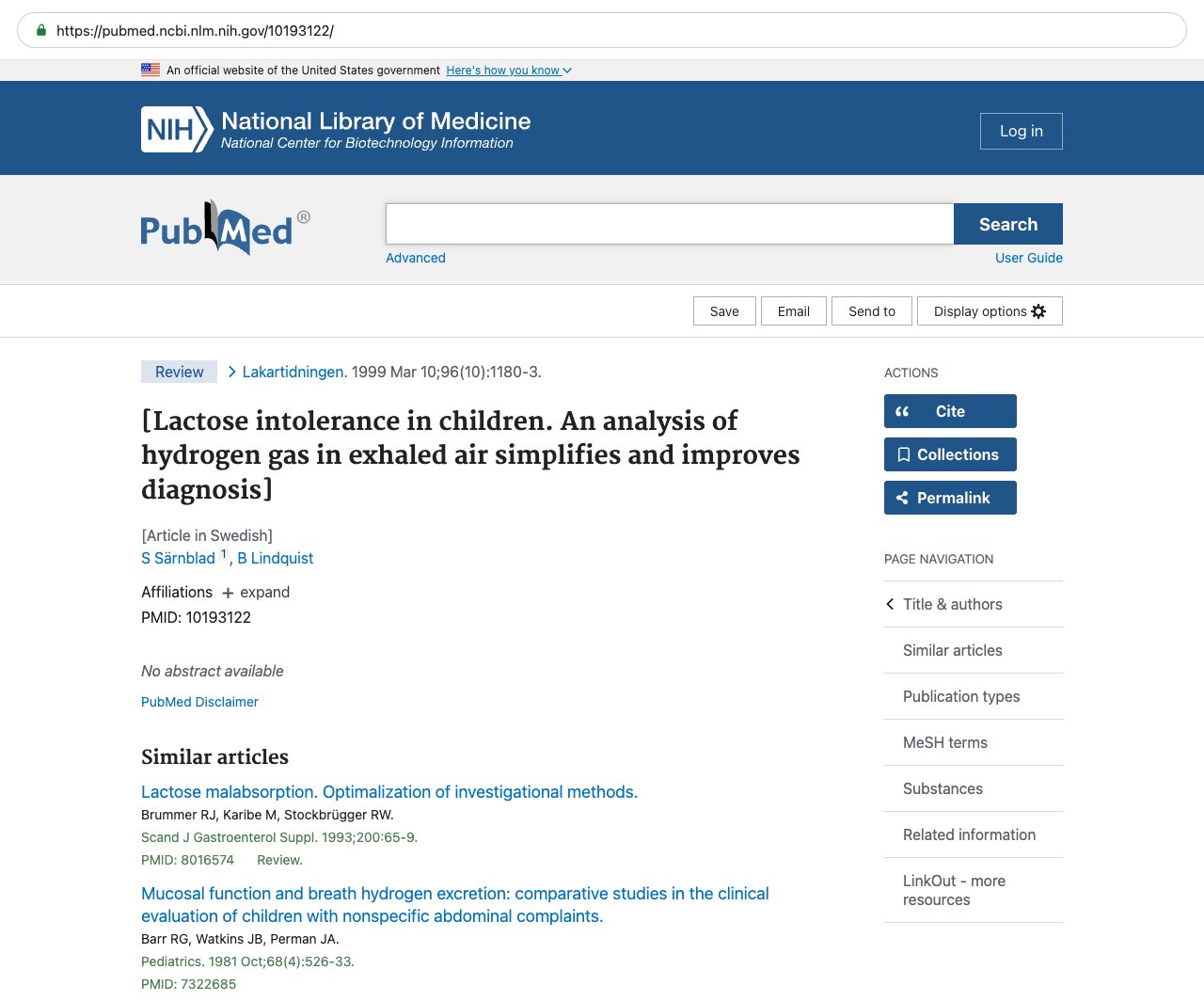
This page mirrors the published abstract (© the authors / publisher) for reference and citation. The canonical source is the PubMed record linked above. This is not medical advice.