1986 · Sato — Hemodynamics of the gastric mucosa and gastric ulceration in rats and in patients with gastric ulcer.
Super-Abstract
A spectrophotometric method for non-invasive assessment of gastric mucosal oxygen supply was validated against hydrogen gas clearance and other blood flow techniques, and applied to study how microcirculation affects ulcer formation in rat stress models and ulcer healing in human patients. This animal and clinical observation study uses H₂ clearance purely as a reference measurement method, not as a therapeutic agent. (Digestive Diseases and Sciences, 1986.)
Commentary
This paper describes a spectrophotometric technique for assessing gastric mucosal oxygenation and hemodynamics non-invasively, and validates it against established methods including hydrogen gas clearance and aminopyrine clearance. Hydrogen gas clearance here is a reference standard for blood flow measurement, used to verify the new optical technique's accuracy. The study then applies these methods to understand how impaired gastric microcirculation contributes to stress ulcer formation in rats and how blood flow patterns relate to ulcer healing in humans. There is no therapeutic application of hydrogen gas in this work.
Key quotes
- „The microcirculation is the fundamental nutrient supply and waste removal system of all tissues.“ — foundational rationale for studying gastric microcirculation
- „The technique permitted further clarification of the roles of the gastric microcirculation, mucosal oxygenation, and acid secretion in the pathogenesis of stress ulcers.“ — the new method reveals mechanism of stress ulcer formation
- „correlation studies between spectrophotometric data and other techniques for measuring gastric blood flow (hydrogen gas clearance and aminopyrine clearance methods and direct electromagnetic flowmeter techniques)“ — H₂ clearance used as validation reference, not therapeutic agent
Our assessment
This is an animal and clinical observational study using H₂ gas clearance as one of several validated reference methods for blood flow measurement. No therapeutic H₂ is involved. The paper contributes to understanding gastric mucosal blood flow in ulcer pathophysiology but has no bearing on molecular hydrogen therapy. Note: this is an animal study (rats) plus human observational data — results cannot be directly extrapolated to human therapeutic interventions.
Study design
- Type: animal study (rat stress ulcer model) + human observational study (gastric ulcer patients) · H₂ role: hydrogen gas clearance used as validation reference for spectrophotometric blood flow technique (not therapeutic)
- Result: spectrophotometric data correlated with H₂ clearance, aminopyrine clearance, and electromagnetic flowmeter; impaired mucosal microcirculation associated with stress ulcer pathogenesis in rats; blood flow patterns informative for ulcer healing monitoring in human patients
Abstract
The microcirculation is the fundamental nutrient supply and waste removal system of all tissues. Recent improvements in spectrophotometric technique have made possible the noninvasive assessment of oxygen supply and utilization in the gastric mucosa. The authors have utilized such methods to assess gastric mucosal hemodynamics. The technique permitted further clarification of the roles of the gastric microcirculation, mucosal oxygenation, and acid secretion in the pathogenesis of stress ulcers in the stomach of rats. Furthermore, it provided important information on the function of gastric mucosal hemodynamics in the healing of gastric ulcers in man. The technique is described along with the authors' correlation studies between spectrophotometric data and other techniques for measuring gastric blood flow (hydrogen gas clearance and aminopyrine clearance methods and direct electromagnetic flowmeter techniques) and the prevention of ulcerogenesis.
Source & links
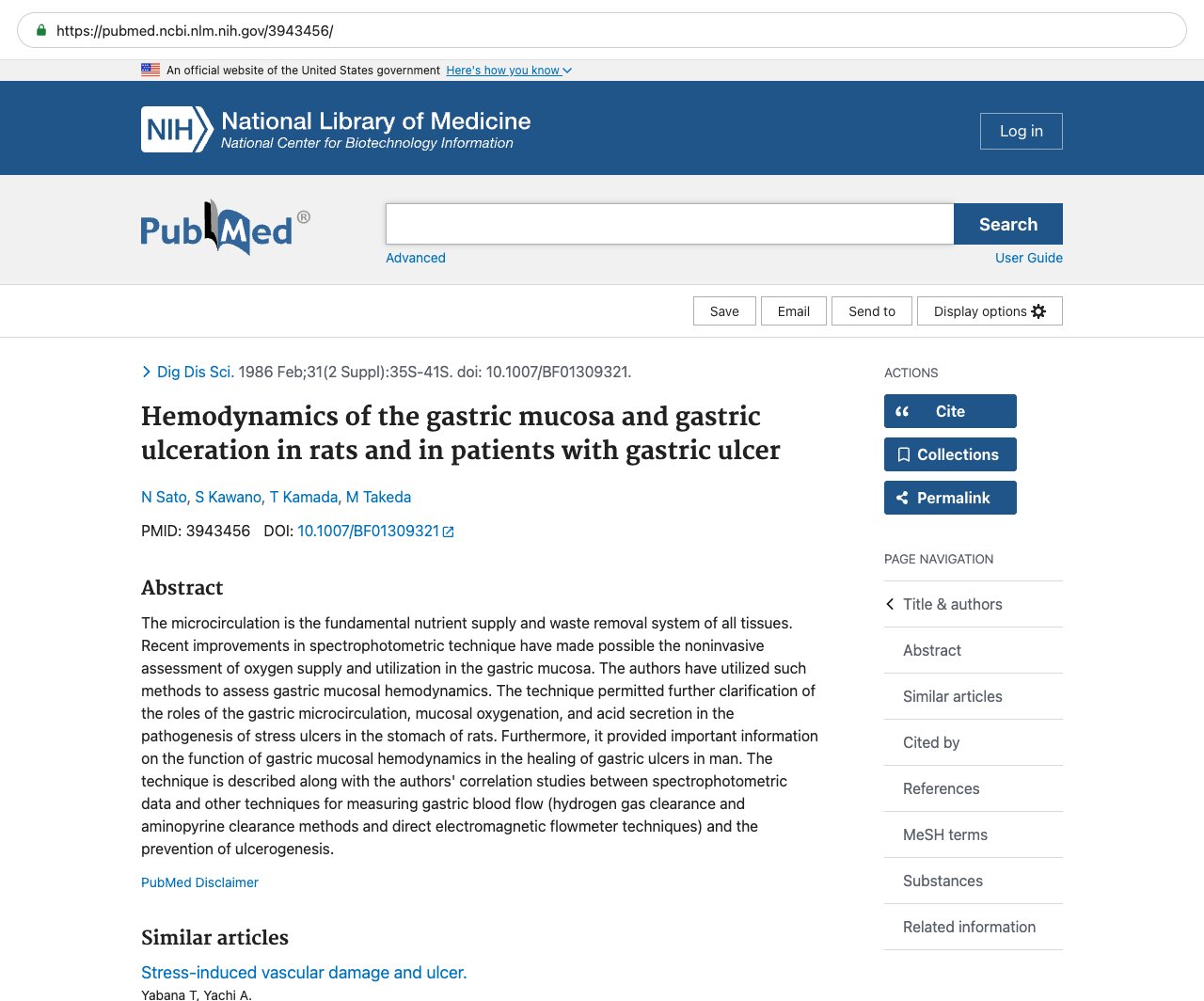
Screenshot of the PubMed page
This page mirrors the published abstract (© the authors / publisher) for reference and citation. The canonical source is the PubMed record linked above. This is not medical advice.