1984 · Toyama — Experimental and Clinical Studies on Esophago-Gastric Hemodynamics Before and After Devascularization for Esophageal Varices
Super-Abstract
This 1984 surgical study examined how esophago-gastric mucosal blood flow and tissue oxygen tension change after devascularization surgery for esophageal varices — using hydrogen gas clearance as a measurement tool in both dogs and humans. The key finding: the impact of extended devascularization on blood flow is smaller in cirrhotic patients than in normal animals, suggesting collateral circulation offers some protection. H₂ here is purely a diagnostic tracer. (Nihon Geka Gakkai Zasshi, 1984.)
Commentary
This study combines animal experimentation (dogs with and without portal hypertension) and clinical human data (10 cirrhotic patients). The hydrogen gas clearance method was used to measure mucosal blood flow before and after devascularization surgery — a procedure intended to control bleeding from esophageal varices. The animal data revealed a dramatic difference: normal dogs lost 73% of gastric cardia blood flow after extended devascularization and died within 4 days of gastric necrosis, while portal hypertensive dogs lost only 28.5% and survived. The human data showed a 25.7% reduction, consistent with the portal hypertension model. This study is a surgical physiology paper. H₂ is used as a clearance tracer — not therapeutically. The database classification as „liver“ and „cardiovascular“ reflects the surgical context accurately.
Key quotes
- „Remarkable reduction of a 73% in gastric cardia was recognized on normal dogs just after extended devascularization, and those dogs died of severe gastric necrosis within 4 days after surgery.“ — the dramatic animal control finding: normal anatomy cannot tolerate extensive devascularization
- „Reduction of a 25.7% in the cardia was recognized on cirrhotic patients. These results suggest that influences of extended devascularization on esophago-gastric hemodynamics would be a small in cirrhotic patients with esophageal varices.“ — the clinical translation: cirrhosis-related collaterals protect against ischemia post-surgery
Our assessment
Important caveat: H₂ is used here exclusively as a diagnostic tracer (clearance method), not as a therapeutic agent. This is a surgical physiology study combining animal and human data. The animal part (26 normal dogs + 8 portal hypertensive dogs) is not a human study — the human component comprises 10 cirrhotic patients. Limitations: small human sample (n = 10); mixed animal/human design; no long-term human follow-up; the animal model differences may not fully translate to human physiology. Not evidence for H₂ therapy.
Study design
- Type: combined animal experiment + clinical observational study · n (human): 10 cirrhotic patients with esophageal varices · n (animal): 34 mongrel dogs (26 normal, 8 portal hypertensive) · H₂ delivery: inhaled H₂ gas as diagnostic tracer only
- Measured: mucosal blood flow (H₂ clearance) and tissue PtO₂ before/after devascularization
- Result: normal dogs: 73% blood flow reduction → gastric necrosis → death within 4 days; portal hypertensive dogs: 28.5% reduction → survived; human cirrhotic patients: 25.7% reduction in cardia → suggests acceptable hemodynamic impact in cirrhosis
Abstract
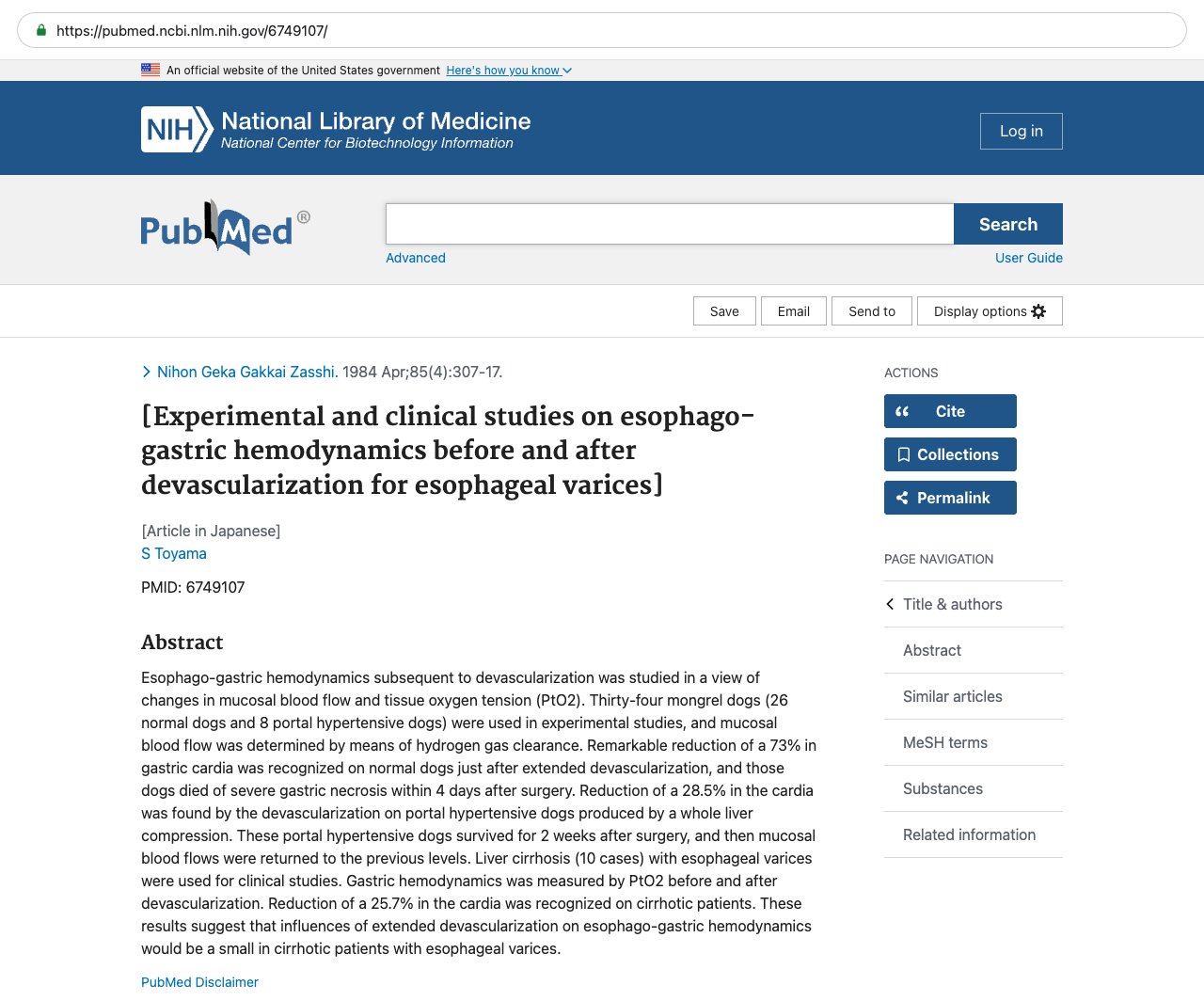
Esophago-gastric hemodynamics subsequent to devascularization was studied in a view of changes in mucosal blood flow and tissue oxygen tension (PtO2). Thirty-four mongrel dogs (26 normal dogs and 8 portal hypertensive dogs) were used in experimental studies, and mucosal blood flow was determined by means of hydrogen gas clearance. Remarkable reduction of a 73% in gastric cardia was recognized on normal dogs just after extended devascularization, and those dogs died of severe gastric necrosis within 4 days after surgery. Reduction of a 28.5% in the cardia was found by the devascularization on portal hypertensive dogs produced by a whole liver compression. These portal hypertensive dogs survived for 2 weeks after surgery, and then mucosal blood flows were returned to the previous levels. Liver cirrhosis (10 cases) with esophageal varices were used for clinical studies. Gastric hemodynamics was measured by PtO2 before and after devascularization. Reduction of a 25.7% in the cardia was recognized on cirrhotic patients. These results suggest that influences of extended devascularization on esophago-gastric hemodynamics would be a small in cirrhotic patients with esophageal varices.
Source & links
Screenshot of the PubMed page
This page mirrors the published abstract (© the authors / publisher) for reference and citation. The canonical source is the PubMed record linked above. This is not medical advice.