2024 Biomedicine & pharmacotherapy = Biomedecine & pharmacotherapie Pilot / Observational Human H₂ therapy Unspecified
2024 · Xie — A novel intervention of molecular hydrogen on the unbalance of the gut microbiome in opioid addiction: Experimental and human studies.
Super-Abstract
Molecular hydrogen appears to reduce morphine-seeking behaviour in animal models and, in humans with opioid addiction, improved gut microbiome balance, reduced depression and anxiety symptoms — suggesting a gut-brain axis mechanism. Both animal experiments and a human cohort component were conducted. (Biomedicine and Pharmacotherapy, 2024.)
Commentary
The gut-brain axis is one of the more active areas of addiction neuroscience, and this study takes an unusual angle: using H₂ to modulate the gut microbiome as a lever against opioid craving. In mice, H₂ enhanced extinction of morphine-conditioned place preference and reduced reinstatement — behaviourally meaningful endpoints. The 16S rRNA sequencing showed specific microbiome shifts and downstream changes in short-chain fatty acids (SCFAs). The human component (opioid-addicted individuals) showed improvements in mood and microbiome features — but the abstract gives no sample size, no control group details, and no statistical specifics for the human arm. This limits how much weight can be placed on the human findings. The animal mechanistic work is the stronger part of this paper.
Key quotes
- „molecular hydrogen could enhance the extinction of morphine-related behavior, reducing morphine reinstatement.“ — the core animal finding: H₂ supports extinction and reduces relapse behaviour
- „molecular hydrogen improved symptoms of depression and anxiety, as well as gut microbial features, in individuals with opioid addiction.“ — the human-arm finding: mood and microbiome improvements in addicted individuals
- „Gut microbes may be a potential mechanism behind the therapeutic effects of molecular hydrogen on morphine addiction.“ — the proposed gut-brain axis mechanism
Our assessment
An intriguing mechanistic hypothesis with solid animal data and an underpowered human component. The SCFA and microbiome sequencing data add specificity to the gut-brain axis claim. Limitations: the human arm's sample size, control conditions, and statistical analysis are not described in the abstract — making the human findings essentially unassessable from available information; conditioned place preference in rodents does not translate directly to human addiction outcomes; H₂ delivery method in humans is not specified. The animal data are internally consistent but preliminary. Needs a properly powered, controlled human trial.
Study design
- Type: combined animal (mouse CPP model) + human cohort study · H₂ delivery: not specified in abstract (animal and human arms)
- Animal arm: morphine-conditioned place preference (CPP) model; H₂ enhanced extinction, reduced reinstatement; 16S rRNA microbiome sequencing + GC-MS for serum SCFAs
- Human arm: opioid-addicted individuals; reported improvements in depression, anxiety, and gut microbiome — sample size and controls not specified in abstract
Abstract
The gut-brain axis mediates the interaction pathway between microbiota and opioid addiction. In recent years, many studies have shown that molecular hydrogen has therapeutic and preventive effects on various diseases. This study aimed to investigate whether molecular hydrogen could serve as pharmacological intervention agent to reduce risks of reinstatement of opioid seeking and explore the mechanism of gut microbiota base on animal experiments and human studies. Morphine-induced conditioned place preference (CPP) was constructed to establish acquisition, extinction, and reinstatement stage, and the potential impact of H2 on the behaviors related to morphine-induced drug extinction was determined using both free accessible and confined CPP extinction paradigms. The effects of morphine on microbial diversity and composition of microbiota, as well as the subsequent changes after H2 intervention, were assessed using 16 S rRNA gene sequencing. Short-Chain Fatty Acids (SCFAs) in mice serum were detected by gas chromatography-mass spectrometry (GC-MS). Meanwhile, we also conducted molecular hydrogen intervention and gut microbiota testing in opioid-addicted individuals. Our results revealed that molecular hydrogen could enhance the extinction of morphine-related behavior, reducing morphine reinstatement. Gut microbes may be a potential mechanism behind the therapeutic effects of molecular hydrogen on morphine addiction. Additionally, molecular hydrogen improved symptoms of depression and anxiety, as well as gut microbial features, in individuals with opioid addiction. This study supports molecular hydrogen as a novel and effective intervention for morphine-induced addiction and reveals the mechanism of gut microbiota.
Source & links
Screenshot of the PubMed page
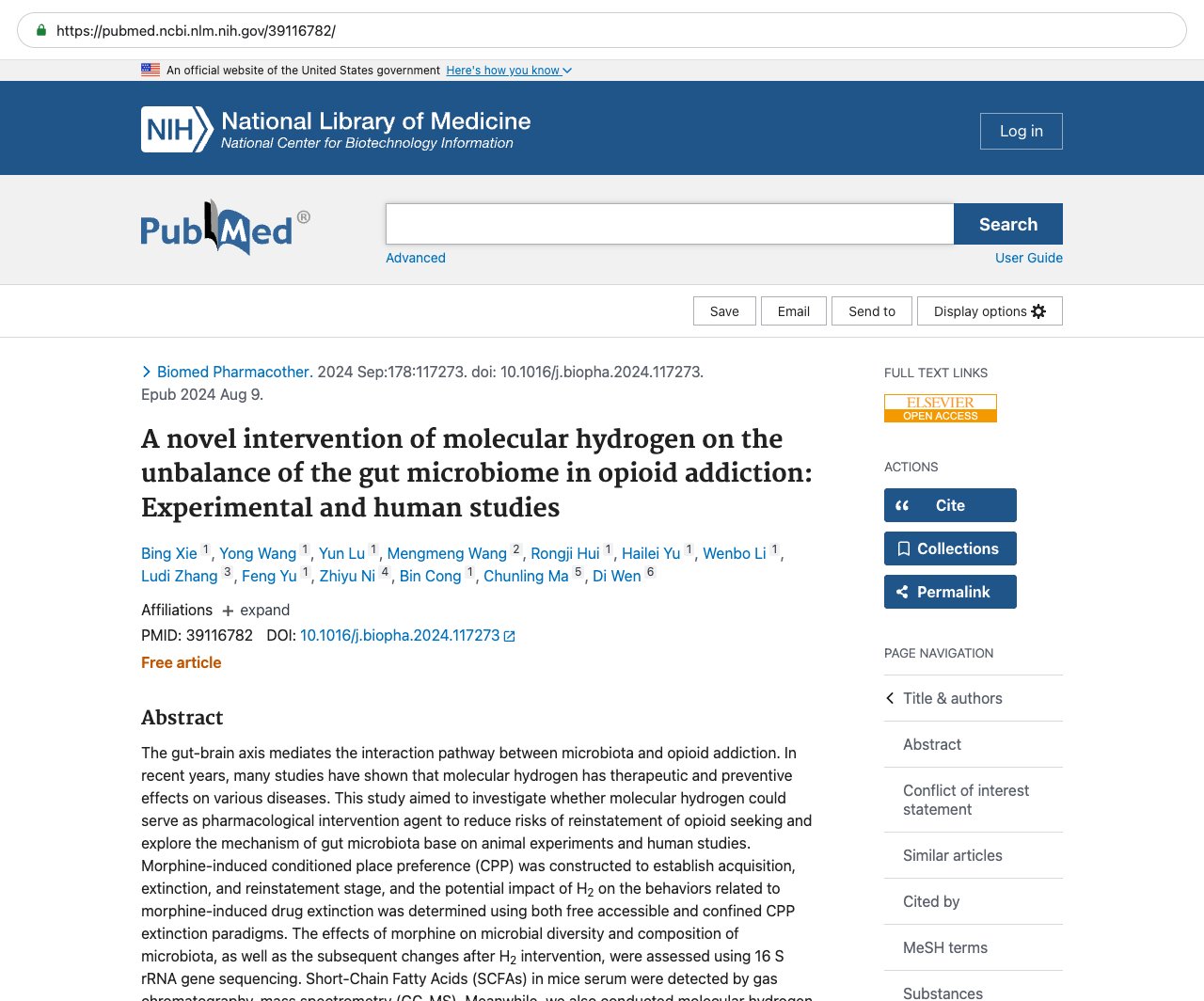
This page mirrors the published abstract (© the authors / publisher) for reference and citation. The canonical source is the PubMed record linked above. This is not medical advice.