2002 · Acuña Castroviejo et al. — Melatonin, mitochondrial homeostasis and mitochondrial-related diseases
Super-Abstract
This review covers melatonin's antioxidant role in protecting mitochondria from reactive oxygen species (ROS), and its potential relevance to neurodegenerative and neuromuscular diseases. Molecular hydrogen (H₂) appears only in the context of the „hydrogen hypothesis“ of eukaryotic evolution — a theoretical evolutionary model entirely unrelated to H₂ supplementation. This is a theoretical/review paper; no clinical evidence is presented.
Commentary
This review focuses on melatonin as a mitochondria-protective antioxidant and its relevance to mitochondria-related diseases. The sole mention of molecular hydrogen is in the introductory exposition of the „hydrogen hypothesis“ — a model proposed by Martin and Müller (1998) suggesting that the proto-eukaryotic cell arose from a symbiosis between an H₂-dependent anaerobic host and an H₂-producing proteobacterium. In this evolutionary hypothesis, H₂ is a metabolic by-product driving the initial symbiosis that gave rise to mitochondria. This is a theoretical evolutionary concept with no bearing on supplementation or biological H₂ effects. The bulk of the paper reviews mitochondrial genome control, energy production, ROS generation, apoptosis, and experimental evidence for melatonin's protective effects in mitochondrial pathologies. No H₂ intervention is described or discussed. This review is categorised here because of its indexing under hydrogen-related biochemistry.
Key quotes
- „The recently described „hydrogen hypothesis' invokes metabolic symbiosis as the driving force for a symbiotic association between an anaerobic, strictly hydrogen-dependent organism (the host) and an eubacterium (the symbiont) that is able to respire, but which generates molecular hydrogen as an end product of anaerobic metabolism.“ — H₂ here is part of an evolutionary hypothesis about eukaryotic origins — not a health intervention
- „Melatonin is now known as a powerful antioxidant and increasing experimental evidence shows its beneficial effects against oxidative stress-induced macromolecular damage and diseases, including those in which mitochondrial function is affected.“ — the paper's core focus: melatonin as mitochondrial antioxidant
- „Mitochondria are involved in programmed cell death.“ — mitochondrial function beyond energy production: apoptosis regulation
Our assessment
A theoretical/narrative review about melatonin and mitochondrial biology. Molecular hydrogen is mentioned only as part of an evolutionary origin hypothesis for eukaryotic cells — the „hydrogen hypothesis“ of endosymbiosis. This paper provides no evidence about H₂ supplementation, H₂ antioxidant effects, or any therapeutic H₂ application. It is a review, not a new experiment, and its H₂ content is purely evolutionary-theoretical.
Study design
- Type: narrative review · Domain: mitochondrial biology, neuroscience, antioxidant pharmacology · H₂ context: „hydrogen hypothesis“ of eukaryotic endosymbiosis (evolutionary theory only)
- Scope: mitochondrial genome, ROS production, uncoupling, apoptosis, melatonin antioxidant mechanisms, mitochondrial disease relevance (neurodegenerative/neuromuscular)
Abstract
The recently described 'hydrogen hypothesis' invokes metabolic symbiosis as the driving force for a symbiotic association between an anaerobic, strictly hydrogen-dependent organism (the host) and an eubacterium (the symbiont) that is able to respire, but which generates molecular hydrogen as an end product of anaerobic metabolism. The resulting proto-eukaryotic cell would have acquired the essentials of eukaryotic energy metabolism, evolving not only aerobic respiration, but also the cost of oxygen consumption, i.e., generation of reactive oxygen species (ROS) and oxidative damage. Mitochondria contain their own genome with a modified genetic code that is highly conserved among mammals. Control of gene expression suggests that transcription of certain mitochondrial genes may be regulated in response to the redox potential of the mitochondrial membrane. Mitochondria are involved in energy production and conservation, and they have an uncoupling mechanism to produce heat instead of ATP. Also, mitochondria are involved in programmed cell death. Increasing evidence suggests the participation of mitochondria in neurodegenerative and neuromuscular diseases involving alterations in both nuclear (nDNA) and mitochondrial (mtDNA) DNA. Melatonin is now known as a powerful antioxidant and increasing experimental evidence shows its beneficial effects against oxidative stress-induced macromolecular damage and diseases, including those in which mitochondrial function is affected. This review summarizes the data and mechanisms of action of melatonin in relation to mitochondrial pathologies.
Source & links
Screenshot of the PubMed page
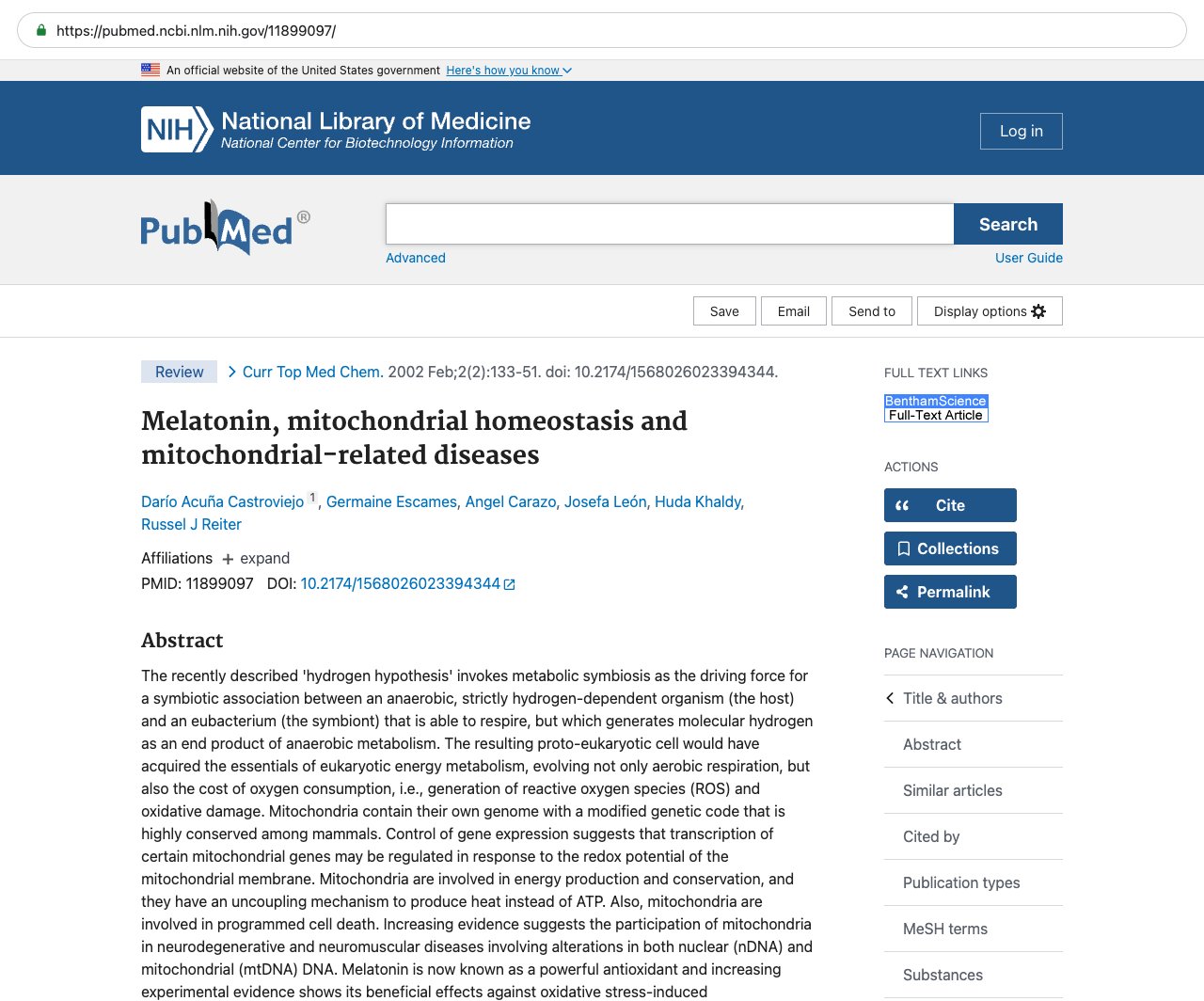
This page mirrors the published abstract (© the authors / publisher) for reference and citation. The canonical source is the PubMed record linked above. This is not medical advice.