2021 · LeBaron et al. — An H₂-Infused, Nitric Oxide-Producing Functional Beverage as a Neuroprotective Agent for TBIs and Concussions
Super-Abstract
Traumatic brain injuries (TBIs) and concussions currently lack effective medical treatments, and this paper argues that a combination of molecular hydrogen and nitric oxide — delivered via a functional beverage — could address multiple aspects of TBI pathophysiology simultaneously. This is an in-vitro/theoretical paper presenting a scientific rationale; no controlled clinical trial was conducted. The beverage discussed is a specific product, but the science reviewed covers general H₂ and nitric oxide biology.
Commentary
TBIs are a major public health problem, affecting millions annually in sports and everyday life. The pathophysiology involves oxidative stress, inflammation, mitochondrial dysfunction, ion dysregulation, cerebral blood flow reduction, and blood-brain barrier disruption. No single drug has been successfully approved for TBI. This paper reviews the mechanistic rationale for why H₂ (which crosses the blood-brain barrier due to its small size and nonpolar nature) and nitric oxide (NO, which regulates cerebral blood flow) could be synergistic: H₂ would reduce oxidative stress and inflammation, while NO — if delivered at physiologically appropriate levels — could restore blood flow and reduce ischemia. The paper also notes that excessive inducible nitric oxide synthase (iNOS) activation causes paradoxical NO depletion where it is needed. H₂ is proposed to regulate NO metabolism, potentially resolving this imbalance. Important caveat: the paper reports preliminary indications from unpublished or informal observations about a specific commercial beverage, which does not constitute clinical evidence. The review of the underlying H₂ and NO biology is scientifically grounded, but the specific product claims are not supported by controlled trial data.
Key quotes
- „Its small molecular size and nonpolar nature allow it to easily diffuse through the blood-brain barrier, cell membranes and subcellular compartments.“ — why H₂ is mechanistically suited to reach the brain — unlike most drugs
- „Hydrogen regulates nitric oxide production and metabolism, which enhances its benefits while reducing its harms.“ — the proposed H₂–NO interaction: a biologically plausible synergy hypothesis
- „We report preliminary indications that Hydro Shot may be a meaningful adjuvant treatment for TBIs.“ — the authors' own qualification: these are preliminary indications only, not proven clinical outcomes
Our assessment
The mechanistic review of H₂ and nitric oxide in TBI context is scientifically well-grounded and draws on a substantial body of literature on H₂ neuroprotection in cell and animal models. Honest limitations: this is an in-vitro/theoretical paper presenting a hypothesis; no randomized clinical trial data on H₂ or this specific beverage in human TBI patients is available. The preliminary indications cited are not from peer-reviewed controlled trials. LeBaron has known conflicts of interest in the hydrogen beverage space. This paper should be read as a biologically motivated hypothesis, not as clinical evidence for TBI treatment.
Study design
- Type: in-vitro / mechanistic review with preliminary product observations · n: no controlled trial; cell-based mechanistic data + literature review · H₂ delivery: H₂-infused beverage (aqueous H₂ consumption)
- Focus: TBI pathophysiology (oxidative stress, inflammation, NO dysregulation, BBB disruption) · Result: mechanistic rationale for H₂ + NO synergy proposed; preliminary indications from product use reported anecdotally; no controlled efficacy data
Abstract
Traumatic brain injuries (TBIs) are a leading cause of death and disability. Sports-related TBIs are estimated to be more than several million per year. The pathophysiology of TBIs involves high levels of inflammation, oxidative stress, dysregulation of ion homeostasis, mitochondrial dysfunction, and apoptosis. There is also a reduction in cerebral blood flow, leading to hypoxia and reduced removal of metabolic waste, which further exacerbates the injury. There is currently no recognized effective medical treatment or intervention for TBIs, which may in part be due to the difficulty of drug delivery through the blood-brain barrier. Molecular hydrogen has recently emerged as a neuroprotective medical gas against cerebral infarction and neurodegenerative diseases including TBIs. Its small molecular size and nonpolar nature allow it to easily diffuse through the blood-brain barrier, cell membranes and subcellular compartments. Hydrogen has been shown to exert selective anti-inflammatory, antioxidant, and anti-apoptotic effects by regulating various transcription factors and protein phosphorylation cascades. Nitric oxide is another well-recognized medical gas that plays divergent roles in protecting from and in the recovery of TBIs, as well as in contributing to their pathophysiology and injury. Excessive activation of inducible nitric oxide synthase leads to excess inflammation and oxidative/nitrosative damage as well as a paradoxical nitric oxide depletion in the locations it is needed. Hydrogen regulates nitric oxide production and metabolism, which enhances its benefits while reducing its harms. A novel H2-infused, nitric oxide producing beverage, Hydro Shot, may have important neuroprotective benefits for TBIs. We report preliminary indications that Hydro Shot may be a meaningful adjuvant treatment for TBIs.
Source & links
Screenshot of the PubMed page
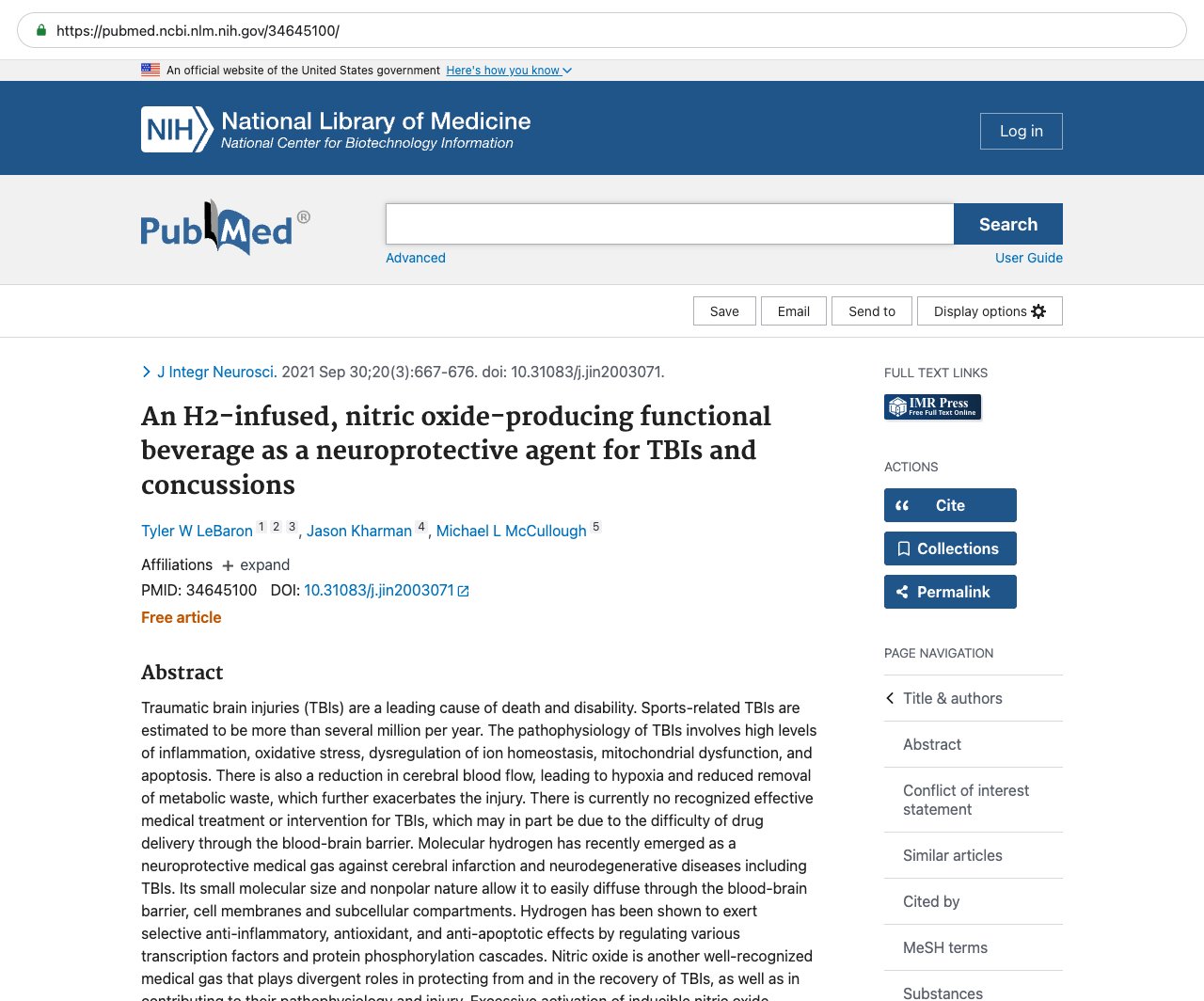
This page mirrors the published abstract (© the authors / publisher) for reference and citation. The canonical source is the PubMed record linked above. This is not medical advice.