2006 · Asaturian et al. — Temporary Clipping and Cerebral Blood Flow in Patients with Cerebral Aneurysms
Super-Abstract
This neurosurgery study uses the H₂-inhalation clearance technique to measure regional cerebral blood flow during aneurysm surgery — it is not an H₂ therapy study. H₂ gas serves purely as a measurement tracer for intraoperative blood flow monitoring. The study examines whether temporary vessel clipping during aneurysm surgery causes dangerous ischemia. (Zhurnal voprosy neirokhirurgii imeni N. N. Burdenko, 2006.)
Commentary
The H₂-inhalation clearance technique is a well-established intraoperative blood flow measurement method in neurosurgery. A small amount of H₂ gas is inhaled or delivered, and the clearance rate from brain tissue (measured with electrodes) reflects regional cerebral blood flow. This is a physiological measurement tool — analogous to using radioactive tracers in PET scans — and has nothing to do with molecular hydrogen therapy. The study's clinical question is whether temporary clipping of brain arteries during aneurysm surgery causes ischemia severe enough to cause complications. The finding that reperfusion after clip removal causes hyperemia is relevant to neurosurgical technique but not to H₂ medicine.
Key quotes
- „Regional cerebral blood flow (RCBF) was measured with cerebral aneurysms by the H2-inhalation technique during intraoperative occlusion test in 15 patients.“ — H₂-inhalation used as an intraoperative blood flow measurement tool, not as therapy
- „Reperfusion at the removal of a clip from the internal carotid and middle cerebral artery induced a significant hyperemia (298 +/- 55 ml/100 g x min).“ — key finding: reperfusion hyperemia after temporary clipping — no H₂ therapeutic relevance
Our assessment
Off-topic for H₂ therapy. H₂-inhalation in this study is a standard intraoperative blood flow measurement technique (H₂ clearance), not a therapeutic intervention. No H₂ was administered for therapeutic purposes. The study is a neurosurgery paper on cerebral blood flow dynamics during aneurysm surgery. Its presence in an H₂ therapy database is a metadata classification error based on the word „H2-inhalation“ in the measurement methods.
Study design
- Type: observational intraoperative study · n: 15 patients with cerebral aneurysms · H₂ delivery: none therapeutically — H₂ inhalation used only as a cerebral blood flow measurement tracer
- Result: temporary clipping caused critical RCBF reduction in most patients; reperfusion induced hyperemia (298 ± 55 mL/100 g × min); no increase in postoperative complications linked to temporary clipping
Abstract
Regional cerebral blood flow (RCBF) was measured with cerebral aneurysms by the H2-inhalation technique during intraoperative occlusion test in 15 patients. Temporary clipping was followed by a decrease of RCBF below the critical values in most patients. Reperfusion at the removal of a clip from the internal carotid and middle cerebral artery induced a significant hyperemia (298 +/- 55 ml/100 g x min). At the same time, there was no increase in the frequency of postoperative complications due to temporary clipping. This suggests that their development is related to the duration of cerebral ischemia and the state of the blood-brain barrier.
Source & links
Screenshot of the PubMed page
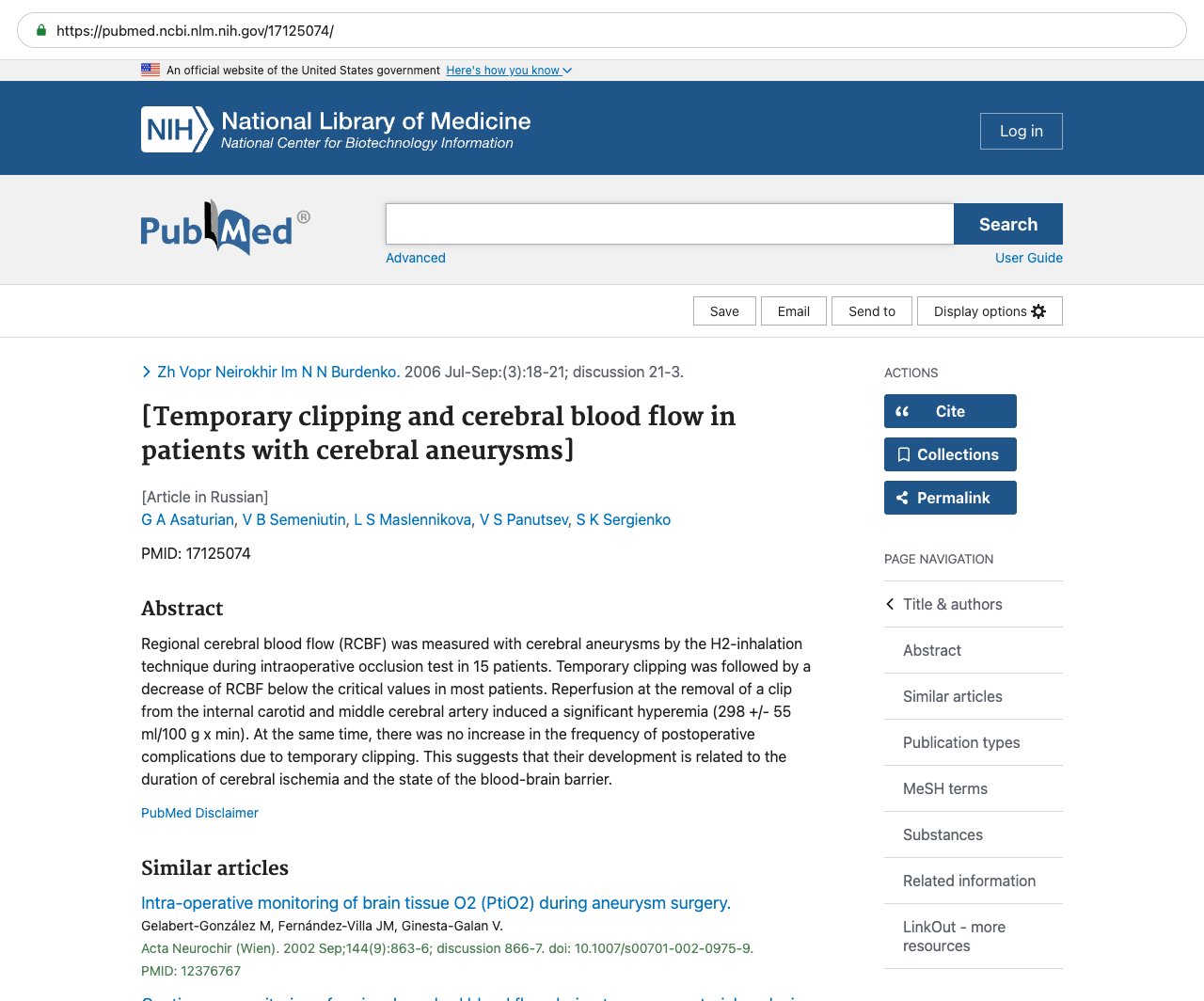
This page mirrors the published abstract (© the authors / publisher) for reference and citation. The canonical source is the PubMed record linked above. This is not medical advice.