2021 · Bajgai et al. — Role of Molecular Hydrogen in Skin Diseases and its Impact in Beauty.
Super-Abstract
Oxidative stress and chronic inflammation are central drivers of skin diseases such as psoriasis, atopic dermatitis, and skin ageing; molecular hydrogen (H₂) may offer a therapeutic approach by targeting these mechanisms. This review summarises current knowledge on H₂'s role in dermatology and cosmetic skin health. (Current Pharmaceutical Design, 2021.)
Commentary
Bajgai and colleagues approach skin health from an oxidative stress angle, positioning H₂ as an intervention that counteracts the reactive oxygen and nitrogen species generated by environmental, physical, chemical, and biological stressors. The review covers both clinical skin conditions (psoriasis, atopic dermatitis) and aesthetic concerns (skin ageing, collagen disruption). The dual focus on medical dermatology and cosmetic beauty science is notable. The evidence base, while plausible mechanistically, relies heavily on preclinical data. Human clinical evidence in dermatology is limited and not the primary focus of this review.
Key quotes
- „An increase in oxidants beyond the antioxidant capacity of its defense system causes oxidative stress and chronic inflammation in the body.“ — the disease pathway linking environmental stressors to skin conditions
- „Molecular hydrogen exhibits a therapeutic effect against skin diseases via its effects on oxidative stress.“ — the proposed mechanism of action for H₂ in dermatology
- „Molecular hydrogen might be an effective treatment modality for the prevention and treatment of skin-related illnesses.“ — a cautious conclusion — the word 'might' signals appropriate epistemic humility
Our assessment
This is a narrative review combining dermatology, cosmetic science, and H₂ biology. The mechanistic argument is plausible but the clinical evidence base for H₂ in skin conditions is thin. Honest limitation: the „beauty“ framing introduces a non-clinical perspective that may inflate the perceived relevance of limited data. Human clinical trials in H₂ dermatology are very few; most cited evidence is from laboratory or animal studies. The review is useful as a hypothesis-generating document, not as clinical evidence.
Study design
- Type: narrative review (dermatology + cosmetic science) · n: n/a (literature synthesis; primarily preclinical) · H₂ delivery: unspecified (various across cited studies)
- Result: mechanistic rationale for H₂ in skin disease and ageing described; psoriasis and atopic dermatitis highlighted as relevant indications; clinical evidence sparse; collagen preservation proposed as cosmetic mechanism
Abstract
In today's society, healthy skin and a beautiful appearance are considered the foundation of general well-being. The skin is the largest organ of the body and plays an important role in protecting it against various hazards such as environmental, physical, chemical, and biological hazards. These factors include mediators that lead to oxidation reactions that produce reactive oxygen/nitrogen species and additional oxidants in the skin cells. An increase in oxidants beyond the antioxidant capacity of its defense system causes oxidative stress and chronic inflammation in the body. This response can cause further disruption of collagen fibers and hinder the functioning of skin cells that may result in the development of various skin diseases including psoriasis, atopic dermatitis, and aging. In this review, we summarized the present information related to the role of oxidative stress in the pathogenesis of dermatological disorders, and its impact on physical beauty and the daily lives of patients. We also discussed how molecular hydrogen exhibits a therapeutic effect against skin diseases via its effects on oxidative stress. Furthermore, findings from this summary review indicate that molecular hydrogen might be an effective treatment modality for the prevention and treatment of skin-related illnesses.
Source & links
Screenshot of the PubMed page
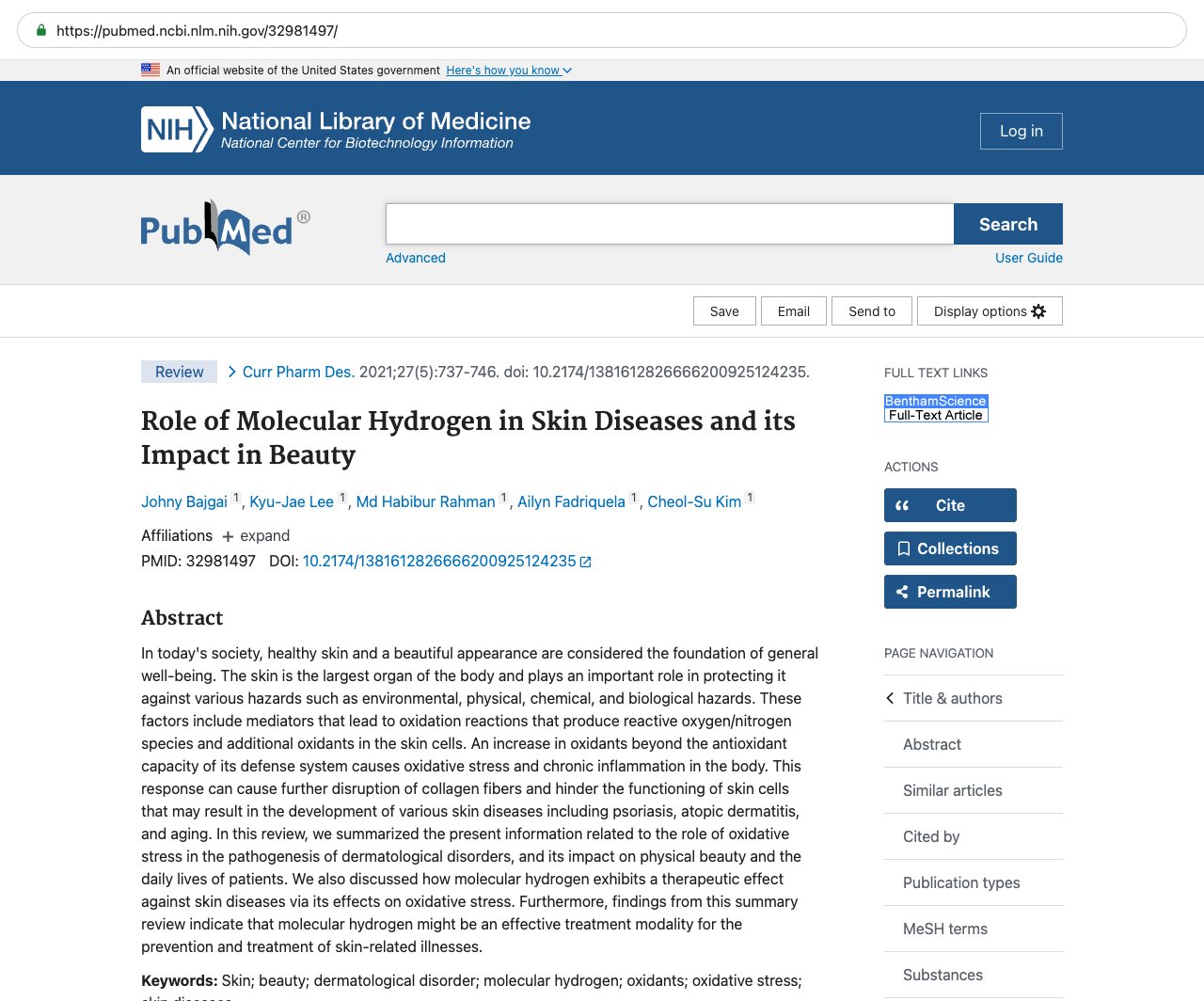
This page mirrors the published abstract (© the authors / publisher) for reference and citation. The canonical source is the PubMed record linked above. This is not medical advice.