2024 · Chen — Molecular Hydrogen Therapy in Aneurysmal SAH With RA and Newly-diagnosed SLE, Complicated With Acute Ischemic Infarction: A Case Report of Improved Immune Markers Including Tr1 Cells, Breg Cells and TIM3 Expression on Tc Cells.
Super-Abstract
A 44-year-old woman with a ruptured brain aneurysm, rheumatoid arthritis, and newly diagnosed lupus remained unconscious despite surgery, immunosuppressants, and plasmapheresis — until daily hydrogen capsules were added. After starting H₂ therapy, key immune markers normalised (Treg and Breg cells rose, anti-dsDNA turned negative), and her clinical status stabilised. (In Vivo, 2024.)
Commentary
This case report describes an exceptionally complex clinical situation: aneurysmal subarachnoid haemorrhage layered on top of two autoimmune diseases and an acute ischaemic infarction. The patient was not responding to a full conventional treatment regimen. The addition of hydrogen capsules coincided with measurable immune phenotype shifts and clinical stabilisation. While such single-case reports cannot establish causation — the timing could be coincidental, and natural disease course cannot be excluded — the documented immune markers (Treg, Breg, TIM3 on Tc cells, anti-dsDNA conversion) are biologically plausible targets for H₂'s known anti-inflammatory and immunomodulatory properties. The value of this report lies in generating a hypothesis for controlled studies, not in proving efficacy.
Key quotes
- „The patient began daily treatment with hydrogen capsules, resulting in increased in Treg cells, Breg cells, increased TIM3+ expression on Tc cells, and the conversion of anti-dsDNA from positive to negative.“ — the observed immune shifts after H₂ initiation
- „Her clinical symptoms stabilized without adverse effects.“ — clinical outcome and safety observation
- „This case highlights the potential benefits of molecular hydrogen therapy in managing aneurysmal SAH with underlying autoimmune disease, warranting further research.“ — the authors' cautious conclusion: hypothesis-generating, not proof of efficacy
Our assessment
A hypothesis-generating case report from a highly unusual combination of diagnoses. The immune phenotype data is specific and measurable, lending some biological credibility, but no causal conclusion can be drawn from a single case. Confounders abound: ongoing immunosuppressants, plasmapheresis, natural disease trajectory, and regression to the mean. Limitations: n=1; no control; concurrent intensive therapy; no washout; unclear H₂ dose and duration before stabilisation. Should be read as a signal, not a finding.
Study design
- Type: single case report · n: 1 (44-year-old female) · H₂ delivery: daily hydrogen capsules (dose not specified)
- Diagnoses: aneurysmal SAH + rheumatoid arthritis + newly diagnosed SLE + acute ischaemic infarction · Background therapy: embolisation, immunosuppressants, NOAC, plasmapheresis
- Observed outcome: rise in Treg and Breg cells, increased TIM3+ on Tc cells, anti-dsDNA conversion to negative, clinical stabilisation — no adverse effects reported
Abstract
BACKGROUND/AIM: Most nontraumatic subarachnoid hemorrhages (SAHs) are caused by ruptured saccular aneurysms, often resulting in a devastating clinical event characterized by high mortality and significant morbidity among survivors. Numerous studies have confirmed the neuroprotective effects of the molecular hydrogen due to its unique biological properties. CASE REPORT: We present the case of a 44-year-old female with aneurysmal SAH with rheumatoid arthritis (RA) and newly diagnosed systemic lupus erythematosus (SLE), complicated by acute ischemic infarction. Despite surgical, pharmacological and non-pharmacological interventions, including embolization of the aneurysm, immunosuppressant, non-vitamin K antagonist oral anticoagulant (NOAC), and plasmapheresis, loss of consciousness continued. The patient began daily treatment with hydrogen capsules, resulting in increased in Treg cells, Breg cells, increased TIM3+ expression on Tc cells, and the conversion of anti-dsDNA from positive to negative. Her clinical symptoms stabilized without adverse effects. CONCLUSION: This case highlights the potential benefits of molecular hydrogen therapy in managing aneurysmal SAH with underlying autoimmune disease, warranting further research.
Source & links
Screenshot of the PubMed page
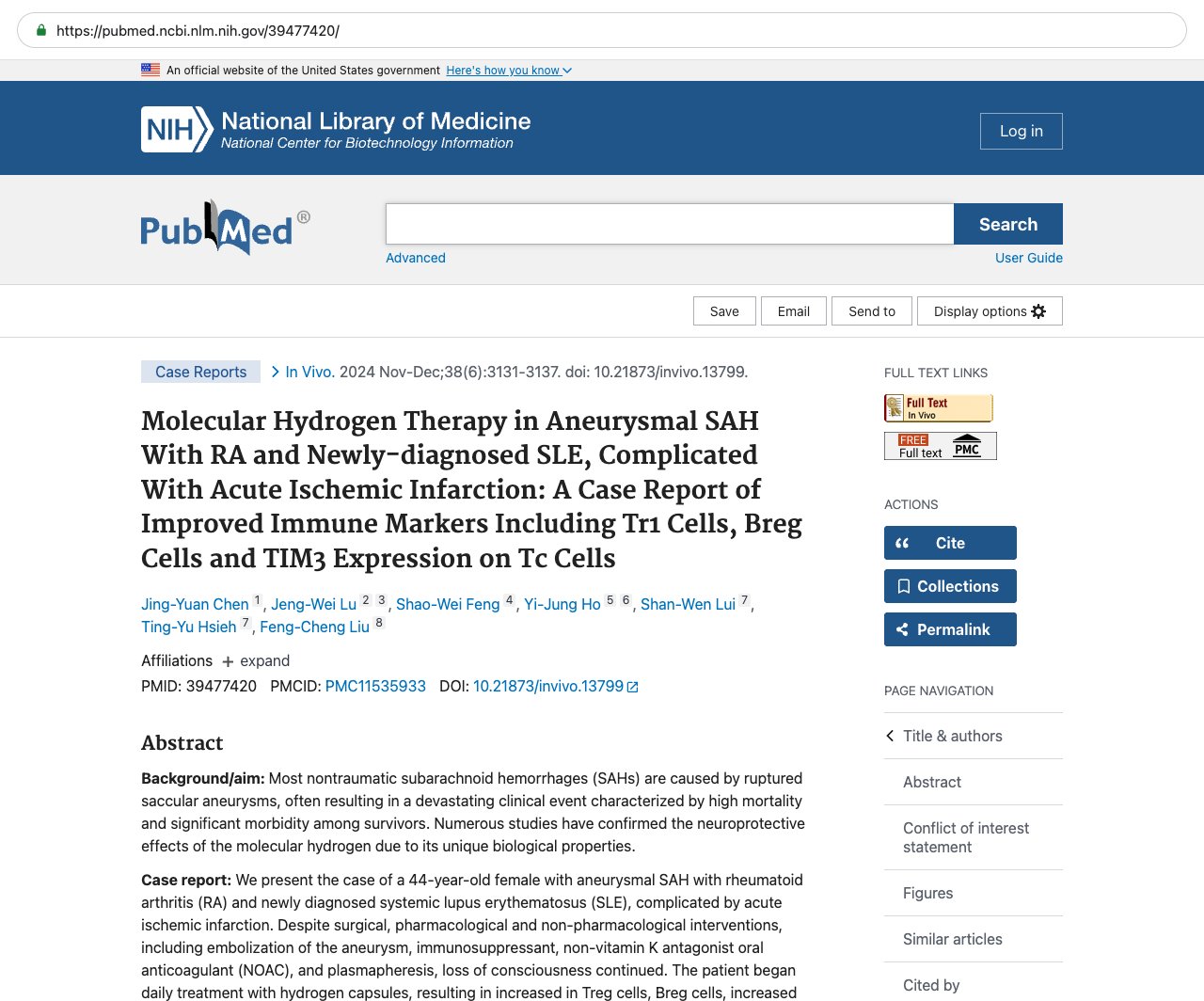
This page mirrors the published abstract (© the authors / publisher) for reference and citation. The canonical source is the PubMed record linked above. This is not medical advice.