2021 · Domoki — Hydrogen-induced Neuroprotection in Neonatal Hypoxic-ischemic Encephalopathy.
Super-Abstract
In animal models of neonatal hypoxic-ischemic encephalopathy (HIE) — a leading cause of brain damage in newborns — molecular hydrogen (H₂) has consistently shown neuroprotective effects, including preserved neurovascular function, neuronal survival, and cognitive outcomes. This review examines the preclinical evidence and identifies key gaps before clinical use can be considered. (Current Pharmaceutical Design, 2021.)
Commentary
This review by Domoki is focused and preclinically honest. Neonatal HIE is a condition where therapeutic hypothermia (whole-body cooling) is the only established treatment, yet it provides incomplete protection. H₂ has emerged as a candidate adjunct due to its antioxidant, anti-apoptotic, and anti-inflammatory properties. Domoki surveys rodent and piglet models, finding that H₂ neuroprotection is robust across model types. Crucially, the review explicitly flags that the additive benefit of combining H₂ with therapeutic hypothermia has not yet been demonstrated — a gap that must be closed before clinical translation. The review is methodologically careful about this open question.
Key quotes
- „Hydrogen exerted unequivocal neuroprotective actions shown by preserved neurovascular function, neuronal viability, and neurocognitive functions in virtually all model species and hypoxic-ischemic insult types tested.“ — the consistency of preclinical neuroprotective findings across models
- „The additive neuroprotective effect of hydrogen and therapeutic hypothermia has not yet been demonstrated, thus such studies are warranted to promote the clinical testing of molecular hydrogen as an adjunct neuroprotective treatment of HIE.“ — the critical gap honestly stated: no proof yet that H₂ adds benefit on top of standard cooling
- „Administration of hydrogen started in most studies after the hypoxic-ischemic insult enhancing the translational value of the findings.“ — an important methodological strength: post-insult treatment mirrors real clinical scenarios
Our assessment
This is a preclinical review. All evidence cited is from animal models (rodents and piglets) — not from human neonates. The findings are encouraging: H₂ neuroprotection is reproducible and consistent across models, including the clinically relevant piglet. However, no human clinical trials in neonatal HIE with H₂ are cited as completed. The explicit honest statement that H₂ + hypothermia combination has not been tested is an important caveat. Clinical translation requires both combination safety data and efficacy data. Do not interpret this review as evidence that H₂ treats brain injury in newborns.
Study design
- Type: narrative review of preclinical studies · n: n/a (literature synthesis; animal models only) · H₂ delivery: various (unspecified across cited animal studies)
- Result: consistent neuroprotective effects in rodent and piglet HIE models; dominant mechanisms: antioxidant, anti-apoptotic, anti-inflammatory; combination with therapeutic hypothermia not yet tested; no human clinical trial data
Abstract
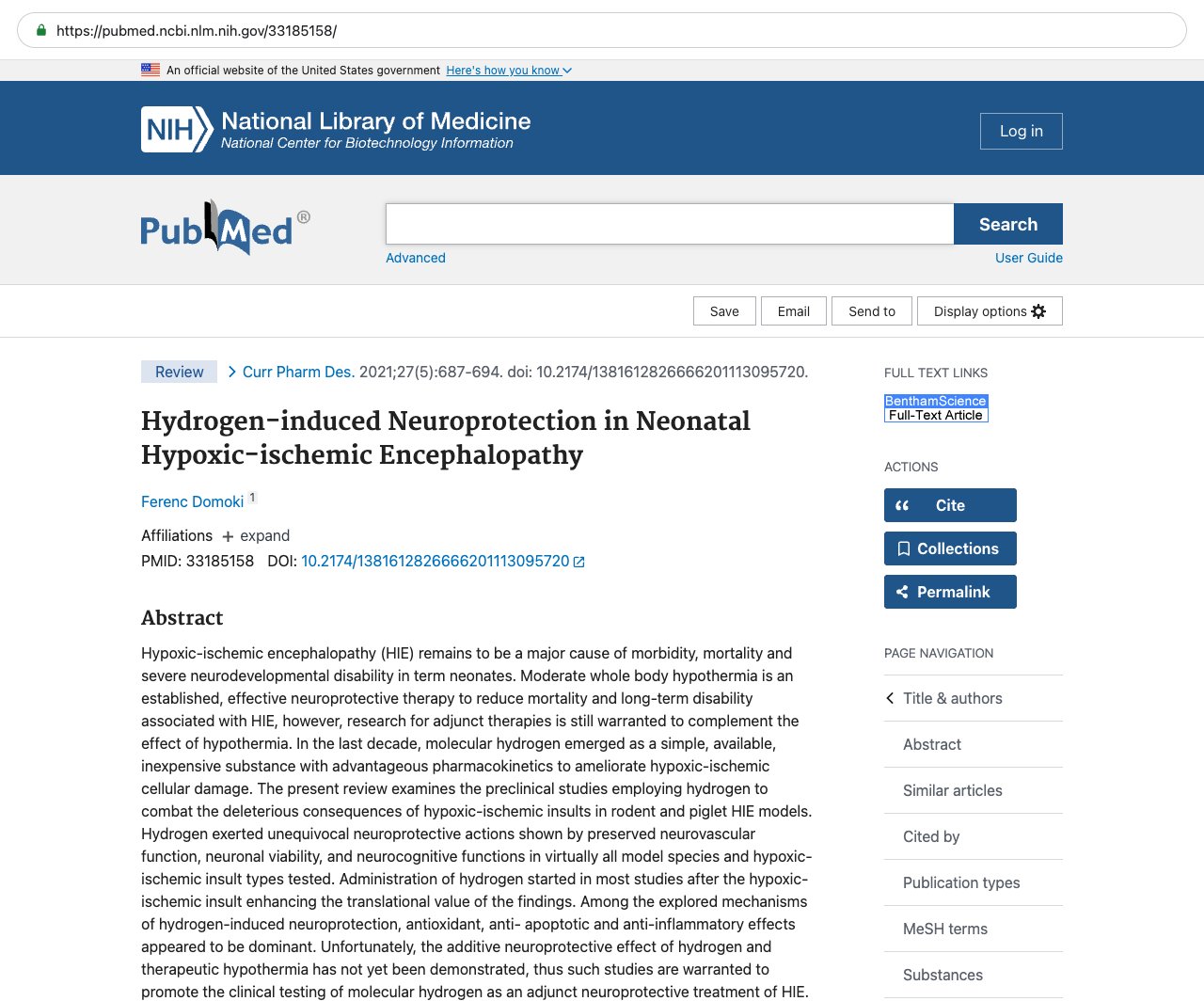
Hypoxic-ischemic encephalopathy (HIE) remains to be a major cause of morbidity, mortality and severe neurodevelopmental disability in term neonates. Moderate whole body hypothermia is an established, effective neuroprotective therapy to reduce mortality and long-term disability associated with HIE, however, research for adjunct therapies is still warranted to complement the effect of hypothermia. In the last decade, molecular hydrogen emerged as a simple, available, inexpensive substance with advantageous pharmacokinetics to ameliorate hypoxic-ischemic cellular damage. The present review examines the preclinical studies employing hydrogen to combat the deleterious consequences of hypoxic-ischemic insults in rodent and piglet HIE models. Hydrogen exerted unequivocal neuroprotective actions shown by preserved neurovascular function, neuronal viability, and neurocognitive functions in virtually all model species and hypoxic-ischemic insult types tested. Administration of hydrogen started in most studies after the hypoxic-ischemic insult enhancing the translational value of the findings. Among the explored mechanisms of hydrogen-induced neuroprotection, antioxidant, anti- apoptotic and anti-inflammatory effects appeared to be dominant. Unfortunately, the additive neuroprotective effect of hydrogen and therapeutic hypothermia has not yet been demonstrated, thus such studies are warranted to promote the clinical testing of molecular hydrogen as an adjunct neuroprotective treatment of HIE.
Source & links
Screenshot of the PubMed page
This page mirrors the published abstract (© the authors / publisher) for reference and citation. The canonical source is the PubMed record linked above. This is not medical advice.