2021 · Hughes — Reshaping of bacterial molecular hydrogen metabolism contributes to the outgrowth of commensal E. coli during gut inflammation
Super-Abstract
During intestinal inflammation, certain gut bacteria — including E. coli — gain a competitive advantage by ramping up their ability to consume molecular hydrogen (H₂). This in-vitro and mouse-model study shows that bacterial hydrogenases are not just bystanders but active participants in the microbial reshaping that occurs in inflammatory bowel disease. The research does not address therapeutic H₂ supplementation in humans.
Commentary
This study takes a microbiome-centric view of molecular hydrogen: rather than examining H₂ as a supplement, it asks what happens to H₂ that is naturally produced in the gut. The authors reanalysed published metagenomic datasets from IBD patients and colitis mouse models and found a systematic enrichment of H₂-consuming (hydrogenase-encoding) bacterial genes under inflammatory conditions. Using E. coli knockout mutants lacking hydrogenase-1 and hydrogenase-2, they demonstrated that these enzymes confer a genuine fitness advantage in the inflamed gut — at least in part by coupling H₂ oxidation to the respiration of inflammation-derived electron acceptors (such as tetrathionate or nitrate). The work is mechanistically elegant but remains entirely preclinical: it illuminates microbial ecology, not therapeutic H₂ dosing.
Key quotes
- „E. coli mutants lacking hydrogenase-1 and hydrogenase-2 displayed decreased fitness during colonization of the inflamed cecum and colon.“ — direct evidence that hydrogenases help E. coli outcompete other bacteria during colitis
- „Utilization of molecular hydrogen was in part dependent on respiration of inflammation-derived electron acceptors.“ — mechanistic link: inflammation produces alternative electron acceptors that enable H₂ oxidation
- „This work highlights the contribution of hydrogenases to alterations of the gut microbiota in the context of non-infectious colitis.“ — overarching conclusion: H₂ metabolism shapes the dysbiotic microbiome in IBD
Our assessment
An important mechanistic finding for microbiome research: it explains, at least partially, why Enterobacteriaceae bloom during intestinal inflammation. This is, however, a preclinical study (cell culture + mouse colitis model), and its findings relate to the bacterial consumption of endogenous gut H₂ — not to therapeutic administration of exogenous H₂ to humans. The data cannot be used to derive clinical recommendations. The metagenomics reanalysis of human IBD datasets is suggestive but correlative; causality in humans remains unproven.
Study design
- Type: in-vitro + mouse model (preclinical) · Model: E. coli hydrogenase knockout mutants; murine colitis (DSS/AOM) · H₂ role: endogenous gut-produced H₂ (not supplemented)
- Key finding: hydrogenase-1 and -2 deficient E. coli showed reduced colonisation fitness in inflamed cecum/colon; H₂ utilisation was linked to inflammation-derived electron acceptors
- Human relevance: metagenomic analysis of IBD datasets showed enrichment of hydrogenase genes — correlation only, no causal or therapeutic inference
Abstract
The composition of gut-associated microbial communities changes during intestinal inflammation, including an expansion of Enterobacteriaceae populations. The mechanisms underlying microbiota changes during inflammation are incompletely understood. Here, we analyzed previously published metagenomic datasets with a focus on microbial hydrogen metabolism. The bacterial genomes in the inflamed murine gut and in patients with inflammatory bowel disease contained more genes encoding predicted hydrogen-utilizing hydrogenases compared to communities found under non-inflamed conditions. To validate these findings, we investigated hydrogen metabolism of Escherichia coli, a representative Enterobacteriaceae, in mouse models of colitis. E. coli mutants lacking hydrogenase-1 and hydrogenase-2 displayed decreased fitness during colonization of the inflamed cecum and colon. Utilization of molecular hydrogen was in part dependent on respiration of inflammation-derived electron acceptors. This work highlights the contribution of hydrogenases to alterations of the gut microbiota in the context of non-infectious colitis.
Source & links
Screenshot of the PubMed page
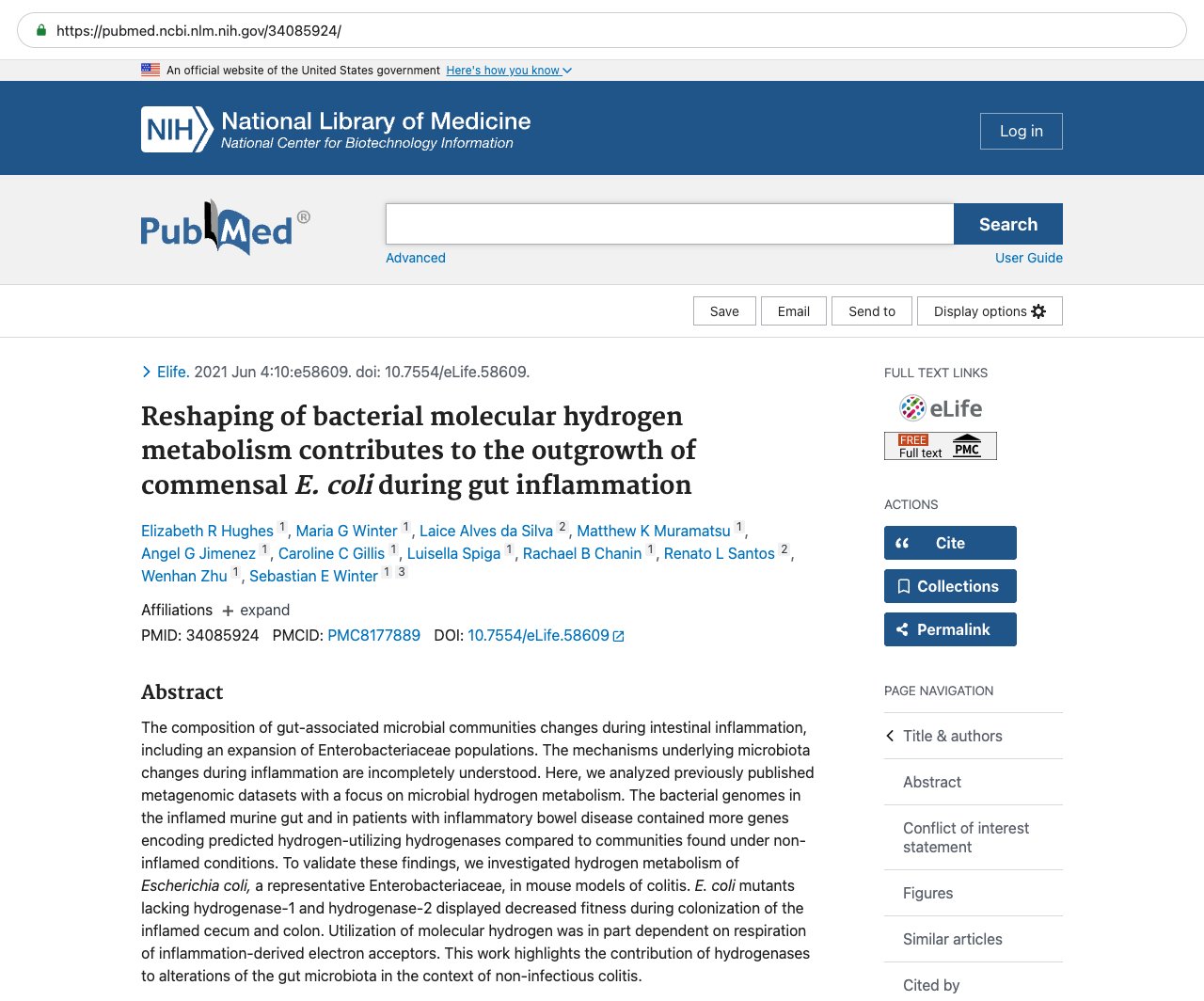
This page mirrors the published abstract (© the authors / publisher) for reference and citation. The canonical source is the PubMed record linked above. This is not medical advice.