2018 · Hylemon — Metabolism of hydrogen gases and bile acids in the gut microbiome
Super-Abstract
This review examines how gut bacteria produce and consume molecular hydrogen (H₂) during fermentation, and how these processes interact with bile acid metabolism. H₂ generation is a normal part of anaerobic gut ecology — it influences microbial community structure and host physiology. The paper does not investigate therapeutic H₂ administration in humans or animals. (FEBS Letters, 2018.)
Commentary
Hylemon and colleagues focus on the fundamental microbiology of H₂ in the gut: how fermentative organisms produce it, how hydrogenotrophic microbes (methanogens, acetogens, sulphate-reducers) consume it, and how this gas economy shapes the microbiome. A specific highlight is the behaviour of Eggerthella lenta — a bacterium that appears to use bile acid hydroxyl-group oxidations as an electron donor for reductive acetogenesis, but only when H₂ levels are low. This is a basic science paper; the connection to therapeutic hydrogen ingestion is indirect and the authors do not draw clinical conclusions about hydrogen supplementation.
Key quotes
- „H2 generation and oxidation coupled to CO2 reduction to methane or acetate help maintain the structure of the gut microbiome.“ — endogenous H₂ as a structural element of gut ecology
- „At low H2 levels, E. lenta is proposed to use NADH from bile acid hydroxyl group oxidations to reduce CO2 to acetate.“ — key mechanistic finding: H₂ levels influence bile acid metabolism by E. lenta
- „Bile acids are synthesized by hepatocytes from cholesterol in the liver and are important regulators of host metabolism.“ — contextualising why bile acid metabolism matters for the host
Our assessment
This is a basic-science review about microbial physiology, not a therapeutic H₂ study. It clarifies an important distinction: the H₂ discussed here is endogenous — produced by gut bacteria — rather than H₂ administered therapeutically. The findings are scientifically interesting for understanding how gut H₂ partial pressure shapes microbial communities and indirectly modulates bile acid metabolism, but they do not provide evidence that drinking hydrogen-rich water or inhaling H₂ produces the same effects. Translational relevance to clinical H₂ supplementation is speculative at this stage.
Study design
- Type: narrative review · n: n/a (microbiology literature synthesis) · H₂ delivery: endogenous microbial production — not therapeutic administration
- Result: descriptive overview of H₂ and bile acid metabolism in the gut microbiome; no efficacy data for H₂ supplementation; key mechanistic hypothesis around E. lenta redox coupling
Abstract
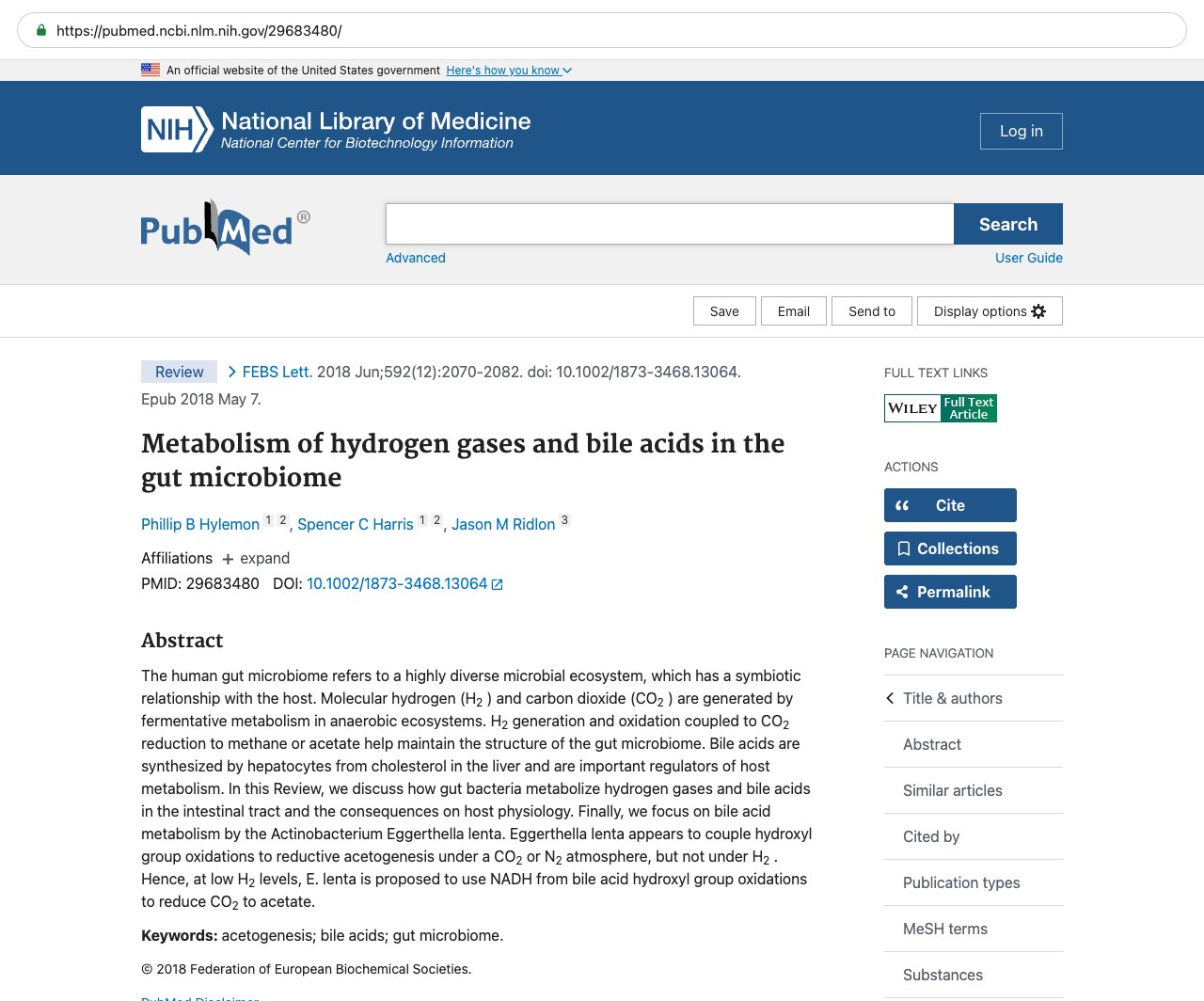
The human gut microbiome refers to a highly diverse microbial ecosystem, which has a symbiotic relationship with the host. Molecular hydrogen (H2 ) and carbon dioxide (CO2 ) are generated by fermentative metabolism in anaerobic ecosystems. H2 generation and oxidation coupled to CO2 reduction to methane or acetate help maintain the structure of the gut microbiome. Bile acids are synthesized by hepatocytes from cholesterol in the liver and are important regulators of host metabolism. In this Review, we discuss how gut bacteria metabolize hydrogen gases and bile acids in the intestinal tract and the consequences on host physiology. Finally, we focus on bile acid metabolism by the Actinobacterium Eggerthella lenta. Eggerthella lenta appears to couple hydroxyl group oxidations to reductive acetogenesis under a CO2 or N2 atmosphere, but not under H2 . Hence, at low H2 levels, E. lenta is proposed to use NADH from bile acid hydroxyl group oxidations to reduce CO2 to acetate.
Source & links
Screenshot of the PubMed page
This page mirrors the published abstract (© the authors / publisher) for reference and citation. The canonical source is the PubMed record linked above. This is not medical advice.