2019 · Kröninger — Energy Conservation in the Gut Microbe Methanomassiliicoccus luminyensis Is Based on Membrane-Bound Ferredoxin Oxidation Coupled to Heterodisulfide Reduction
Super-Abstract
This in-vitro biochemistry study investigates how the gut-derived methanogenic archaeon Methanomassiliicoccus luminyensis generates cellular energy — using molecular hydrogen (H₂) as a reductant to form methane from methylamines. The study reveals a unique energy-conservation pathway not found in other methanogens, using protons rather than sodium ions for energy coupling. This is fundamental microbial biochemistry; it does not test H₂ as a therapeutic agent. (The FEBS Journal, 2019.)
Commentary
Methanomassiliicoccus luminyensis is a rare archaeon originally isolated from human feces, belonging to the seventh methanogen order. It is interesting from a gut microbiome perspective because it consumes H₂ from the gut (produced by fermentative bacteria) to reduce methylamines and form methane. Kröninger et al. characterise the membrane-bound electron transport chain responsible for energy conservation: a ferredoxin:heterodisulfide oxidoreductase system that uses protons as coupling ions — a feature unique among methanogens. Molecular hydrogen here is the biological fuel for this archaeon, consumed from the gut environment rather than administered therapeutically. The relevance to H₂ medicine is indirect: understanding gut H₂ consumers helps explain why H₂ concentrations in the gut vary across individuals, which in turn may affect the availability of H₂ for potential health effects.
Key quotes
- „The organism forms methane from the reduction of methylamines or methanol using molecular hydrogen as reductant.“ — H₂ is the electron donor for this gut microbe's metabolism — consumed, not produced therapeutically
- „Methanomassiliicoccus luminyensis is the first example of a methanogenic archaeon that does not require Na+ ions for energy conservation.“ — unique mechanistic feature: proton-only coupling unlike all other known methanogens
- „Electron transfer of this respiratory chain proceeded with a rate of 145 nmol reduced heterodisulfide min-1 ·mg-1 membrane protein.“ — quantitative characterisation of the unique electron transport chain activity
Our assessment
This is rigorous in-vitro microbial biochemistry with no direct therapeutic H₂ relevance. H₂ in this paper is a substrate consumed by a gut microbe — the opposite of therapeutic H₂ supplementation. The study contributes to understanding gut H₂ metabolism and microbiome-level H₂ cycling, which is background context for H₂ medicine but not evidence for any H₂ health effect. No health claims should be derived from this paper.
Study design
- Type: in-vitro microbial biochemistry · Organism: Methanomassiliicoccus luminyensis (human-feces-derived methanogenic archaeon) · H₂ context: H₂ as biological electron donor for methanogenesis — not therapeutic intervention
- Methods: membrane fraction isolation, electron transfer rate measurements, ion-dependency assays, enzyme complex characterisation
- Result: membrane-bound ferredoxin:heterodisulfide oxidoreductase identified as energy-conserving system; proton-only coupling confirmed; electron transfer rate 145 nmol min⁻¹ mg⁻¹ protein; no Na⁺ requirement — unique among known methanogens
Abstract
Methanomassiliicoccus luminyensis was originally isolated from human feces and belongs to the seventh order of methanogens, the Methanomassiliicoccales, which are only distantly related to other methanogenic archaea. The organism forms methane from the reduction of methylamines or methanol using molecular hydrogen as reductant. The energy-conserving system in M. luminyensis is unique and the enzymes involved in this process are not found in this combination in members of the other methanogenic orders. In this context our central question was how the organism is able to generate ATP. Energy transduction was dependent on a membrane-bound ferredoxin: heterodisulfide oxidoreductase composed of reduced ferredoxin as an electron donor, at least one protein in the membrane fraction and the heterodisulfide reductase HdrD, which reduced the electron acceptor CoM-S-S-CoB. Electron transfer of this respiratory chain proceeded with a rate of 145 nmol reduced heterodisulfide min-1 ·mg-1 membrane protein. Methanomassiliicoccus luminyensis is the first example of a methanogenic archaeon that does not require Na+ ions for energy conservation. Only protons were used as coupling ions for the generation of the electrochemical ion gradient. The membrane-bound F420 H2 :phenazine oxidoreductase complex (without the electron input module FpoF) probably catalyzed the oxidation of reduced ferredoxin and potentially acted as primary proton pump in this electron transport system. In summary, the energy-conserving system of M. luminyensis possesses features found in the pathways of hydrogenotrophic and methylotrophic/aceticlastic methanogenesis. Consequently, the composition of the enzymes involved in ion translocation across the cytoplasmic membrane is different from all other methanogenic archaea.
Source & links
Screenshot of the PubMed page
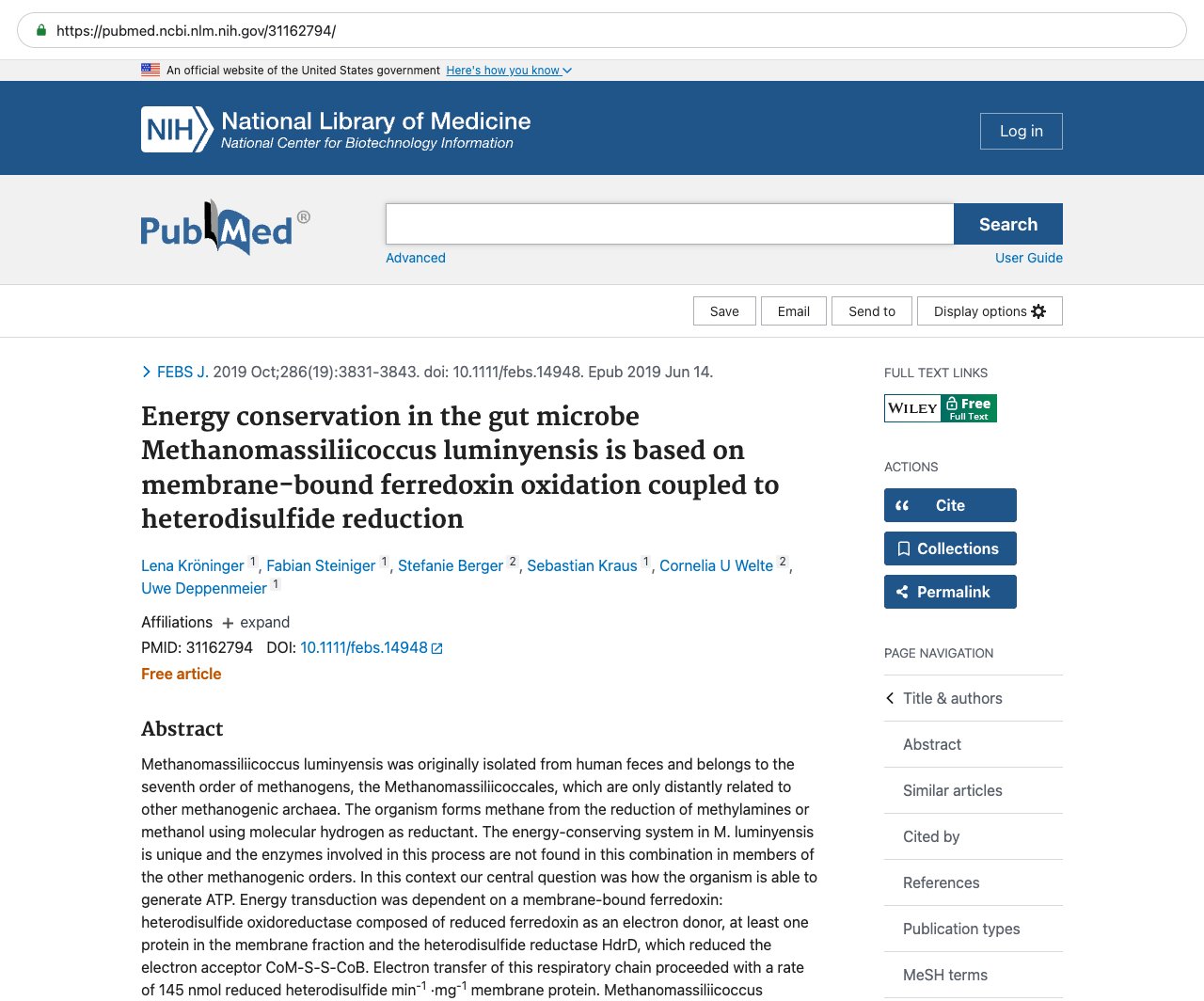
This page mirrors the published abstract (© the authors / publisher) for reference and citation. The canonical source is the PubMed record linked above. This is not medical advice.