2022 · Mizuno et al. — Antioxidant Effects of Continuous Intake of Electrolyzed Hydrogen Water in Healthy Adults
Super-Abstract
In an observational comparison, 64 healthy adults who had drunk more than 500 mL of electrolyzed hydrogen water a day on at least 5 days a week for over 6 months had lower serum d-ROMs, an oxidative stress marker, and lower blood urea nitrogen than 470 age- and sex-matched non-drinkers. In the hydrogen water group, an oxidative stress index correlated with high-sensitivity C-reactive protein and LDL cholesterol. Nobody was assigned to drink the water, so the study cannot show cause and effect, and the abstract gives no values or p-values. (Heliyon, 2022.)
Commentary
Chronic oxidative stress is linked to declining health and disease risk, and earlier studies had reported less oxidative stress with electrolyzed hydrogen water during hemodialysis. This observational study compared healthy volunteers who habitually drank the water (n = 64; more than 500 mL a day, at least 5 days a week, for longer than 6 months) with age- and sex-matched controls without this habit (n = 470). Per full text, participants were aged 30 to 59 and had no chronic illness, regular medication, vitamin supplements, pregnancy or smoking history. Also per full text, this type of water contains 100 to 1,300 ppb hydrogen, is alkaline (pH 9.0 to 10.0) and contains small amounts of platinum nanoparticles; the paper reports no measurement of the water participants drank. Blood was analysed for d-ROMs, biological antioxidant potential, an oxidative stress index (the ratio of the two), blood urea nitrogen, high-sensitivity C-reactive protein, LDL cholesterol and other routine values. The abstract does not name a primary endpoint.
Key quotes
- „The concentrations of serum reactive oxygen metabolites-derived compounds (d-ROMs) and blood urea nitrogen in healthy volunteers (n = 64) who had a habit of intake over 500 mL/day of EHW at least 5 days a week for longer than 6 months were lower than those of age- and sex-matched controls (n = 470) without the habit of EHW intake.“ — the main comparison between habitual drinkers and non-drinkers
- „Oxidation stress index which the ratio between concentrations in d-ROMs and biological antioxidant potential was correlated with the serum concentration of high-sensitivity C-reactive protein or low-density lipoprotein cholesterol in the EHW group.“ — a correlation reported within the drinker group, not a group difference
- „These results suggest that the continuous intake of EHW induces antioxidant effects and may contribute to alleviate the risk of various oxidative stress-related dysfunctions and diseases in healthy adults.“ — the authors' conclusion, which goes beyond what an observational design can show
Our assessment
The study shows that habitual drinkers of electrolyzed hydrogen water had lower d-ROMs and blood urea nitrogen than non-drinkers. It cannot show that the water caused this difference, because people who choose such a habit may differ in diet, lifestyle or health awareness. Limitations: observational design with self-selected drinkers and groups of very different size (64 and 470). The abstract gives no values, effect sizes or p-values, does not report how biological antioxidant potential compared between the groups and does not state how much hydrogen the water contained. Per full text, the water is also alkaline and contains platinum nanoparticles, so any difference could not be attributed to hydrogen alone. The correlations with C-reactive protein and LDL cholesterol are reported for the drinker group only. No disease outcomes were measured, so the authors' statement about lower disease risk is not tested here. Per full text, the study was co-funded by a company that sells water electrolysis devices.
Study design
- Type: observational comparison of habitual drinkers with matched non-drinkers, not randomised · n: 64 drinkers and 470 controls · H₂ delivery: self-chosen drinking of electrolyzed hydrogen water, more than 500 mL a day on at least 5 days a week for longer than 6 months (per full text, this water type contains 100 to 1,300 ppb hydrogen)
- Comparator: age- and sex-matched healthy adults without the habit of drinking electrolyzed hydrogen water
- Result: serum d-ROMs and blood urea nitrogen lower in drinkers than in controls (no values or p-values in the abstract). Oxidative stress index correlated with high-sensitivity C-reactive protein and LDL cholesterol in the drinker group
Abstract
Chronic oxidative stress induces deterioration of health and a risk for the onset of various diseases. Previous clinical studies revealed that electrolyzed hydrogen water (EHW) is effective to reduce oxidative stress during hemodialysis in patients with chronic dialysis. In the present observational study, we investigated the antioxidant effects of a daily continuous intake of EHW in healthy adults. The concentrations of serum reactive oxygen metabolites-derived compounds (d-ROMs) and blood urea nitrogen in healthy volunteers (n = 64) who had a habit of intake over 500 mL/day of EHW at least 5 days a week for longer than 6 months were lower than those of age- and sex-matched controls (n = 470) without the habit of EHW intake. Oxidation stress index which the ratio between concentrations in d-ROMs and biological antioxidant potential was correlated with the serum concentration of high-sensitivity C-reactive protein or low-density lipoprotein cholesterol in the EHW group. These results suggest that the continuous intake of EHW induces antioxidant effects and may contribute to alleviate the risk of various oxidative stress-related dysfunctions and diseases in healthy adults.
Source & links
Screenshot of the PubMed page
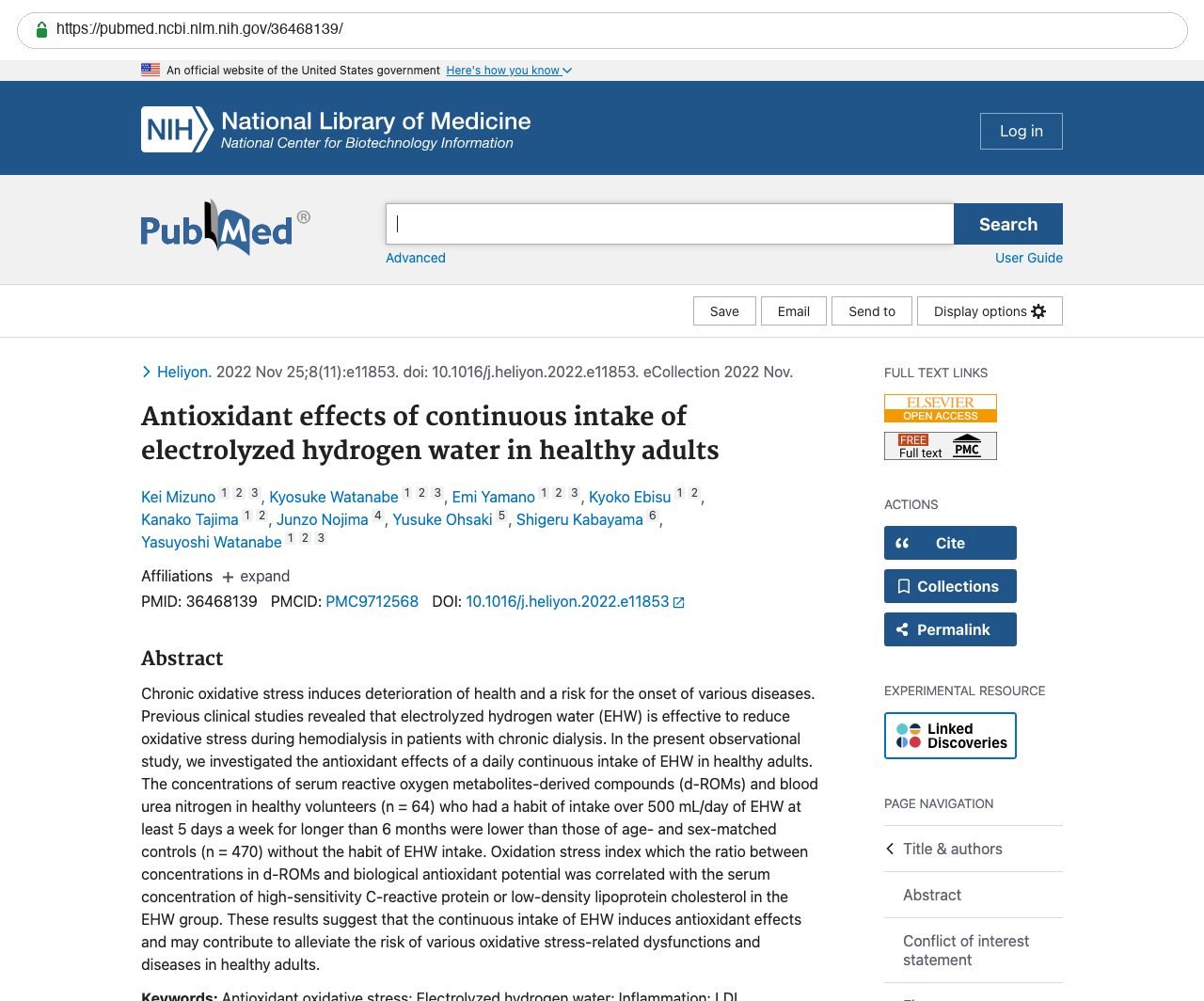
This page mirrors the published abstract (© the authors / publisher) for reference and citation. The canonical source is the PubMed record linked above. This is not medical advice.