2011 · Noda et al. — The principle and the potential approach to ROS-dependent cytotoxicity by non-pharmaceutical therapies: optimal use of medical gases with antioxidant properties.
Super-Abstract
Oxidative stress and reactive oxygen species (ROS) are implicated in many major diseases including inflammation, diabetes, glaucoma, cancer, ischemia, and neurodegeneration. This review examines how medical gases — carbon monoxide (CO), hydrogen sulfide (H₂S), and molecular hydrogen (H₂) — can act as antioxidants by directly scavenging or neutralizing harmful ROS. It also discusses how cells can produce their own ROS-resistant proteins as a complementary defense. This is a review article; no new experiments are reported.
Commentary
This review places molecular hydrogen in the broader context of „gasotransmitters" and medical gas therapy — a field that also encompasses CO and H₂S as therapeutic agents. The comparison is instructive: CO and H₂S are highly toxic at high concentrations but show therapeutic benefit at very low doses by modulating cellular signaling and reducing oxidative stress. H₂ stands out in this group for its notably favorable safety profile — it is non-toxic even at high concentrations and does not interfere with normal ROS signaling. The paper systematically reviews the molecular mechanisms of each gas and discusses how ROS-resistant proteins (like heme oxygenase-1 for CO) are induced as part of the therapeutic response. As a 2011 review, the evidence base for H₂ relies significantly on preclinical data. The review is useful for understanding the mechanistic rationale for H₂ therapy in the context of disease biology, but does not provide new clinical evidence.
Key quotes
- „Regulation of cellular redox balances is important for the homeostasis of human health.“ — the foundational premise: redox balance underlies multiple diseases
- „one can directly eliminate them by medical gases such as carbon monoxide (CO), hydrogen sulphide (H(2)S), and molecular hydrogen (H(2)).“ — H₂ positioned alongside CO and H₂S as a therapeutic gas targeting ROS
- „Targeted therapeutic modalities to scavenge or prevent ROS might be applied in the prevention and treatment of ROS-related diseases in the near future.“ — the forward-looking conclusion — expressed as a possibility, not an established fact
Our assessment
This is a narrative review covering the mechanistic rationale for medical gas therapies (CO, H₂S, and H₂) in ROS-related diseases. It provides a useful conceptual framework for understanding H₂ as an antioxidant therapeutic but does not generate new experimental evidence and should not be read as clinical proof of efficacy for any specific condition. The evidence base at the time of publication was predominantly preclinical. The comparative discussion of CO, H₂S, and H₂ is a useful distinguishing context.
Study design
- Type: narrative review · n: n/a (literature synthesis) · H₂ relevance: reviewed alongside CO and H₂S as a medical gas with antioxidant / ROS-scavenging properties
- Result: no experimental data; mechanistic review of how CO, H₂S, and H₂ act as antioxidants; discusses induction of ROS-resistant proteins; identifies ROS-related diseases as targets for gas-based therapeutic approaches
Abstract
Regulation of cellular redox balances is important for the homeostasis of human health. Thus, many important human diseases, such as inflammation, diabetes, glaucoma, cancers, ischemia and neurodegenerative diseases, have been investigated in the field of reactive oxygen species (ROS) and oxidative stress. To overcome the harmful effect of oxidative stress and ROS, one can directly eliminate them by medical gases such as carbon monoxide (CO), hydrogen sulphide (H(2)S), and molecular hydrogen (H(2)), or one can induce ROS-resistant proteins and antioxidant enzymes to antagonize oxidative stresses. This article reviews the molecular mechanisms how these medical gasses work as antioxidants, and how ROS resistant proteins are produced in the physiological context. Targeted therapeutic modalities to scavenge or prevent ROS might be applied in the prevention and treatment of ROS-related diseases in the near future.
Source & links
Screenshot of the PubMed page
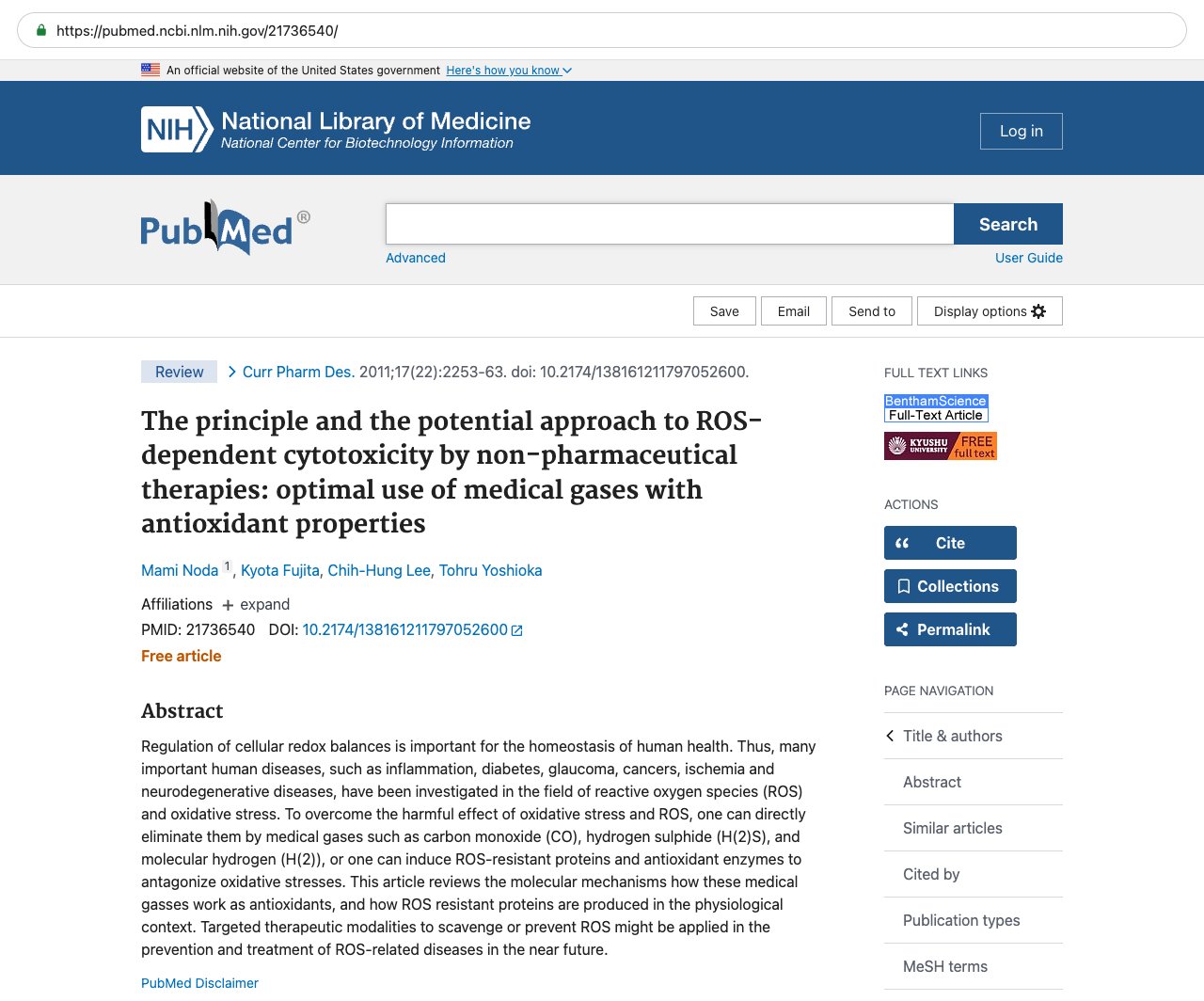
This page mirrors the published abstract (© the authors / publisher) for reference and citation. The canonical source is the PubMed record linked above. This is not medical advice.