2022 · Ogawa et al. — Electrolyzed Hydrogen-Rich Water for Oxidative Stress Suppression and Improvement of Insulin Resistance: A Multicenter Prospective Double-Blind Randomized Control Trial
Super-Abstract
In 50 people with type 2 diabetes, drinking electrolysed hydrogen-rich water showed no statistically significant difference from filtered water in the change in insulin resistance (HOMA-IR), the primary endpoint. Serum lactate fell significantly within the hydrogen water group, and this fall correlated with lower HOMA-IR, fasting glucose and fasting insulin. The abstract reports no results for the oxidative stress markers and gives neither the duration nor the daily amount of water. No treatment-related adverse effects were observed. (Diabetology International, 2022.)
Commentary
Electrolysed hydrogen-rich water (EHW) is described as suppressing oxidative stress, but its benefit in type 2 diabetes was unclear. This multicentre, prospective, double-blind, randomised controlled trial assigned 50 patients with type 2 diabetes to EHW or filtered water (FW). The abstract does not give the group sizes, the daily volume, the hydrogen concentration or the length of the intervention. The primary endpoint was the change in insulin resistance, measured with the homeostasis model assessment of insulin resistance (HOMA-IR). The investigators also measured oxidative stress markers (urinary 8-hydroxy-2'-deoxyguanosine, plasma diacron-reactive oxygen metabolites and plasma biological antioxidant potential) and other clinical data, including serum lactate. In EHW drinkers with a HOMA-IR above 1.73, lactate was also related to insulin secretion 90 minutes after a glucose load.
Key quotes
- „There were no significant differences in the changes in HOMA-IR between the EHW and FW groups.“ — the primary endpoint: no difference between hydrogen water and filtered water
- „However, lactate levels decreased significantly in the EHW group, and this decrease was significantly correlated with a reduction in HOMA-IR, fasting plasma glucose, and fasting plasma insulin level.“ — a within-group secondary finding; correlations do not show cause and effect
- „There were no significant effect of EHW in the change in HOMA-IR in this study; larger-scale and longer-term study are needed to verify the effects of EHW in T2DM patients.“ — the authors' conclusion states the null result and asks for larger trials
Our assessment
The trial was randomised, double-blind and run at several centres, with one named primary endpoint. That endpoint, the change in HOMA-IR, showed no statistically significant difference between hydrogen water and filtered water. The lactate findings are a change within the hydrogen group plus correlations. They can generate hypotheses but do not show that hydrogen water changes glucose metabolism. Limitations: 50 patients, with group sizes not given in the abstract. Duration, daily volume and hydrogen concentration are not reported in the abstract. The title names oxidative stress suppression, but the abstract gives no results for the oxidative stress markers. HOMA-IR and lactate are laboratory markers, not clinical outcomes. The abstract does not describe how the two waters were kept indistinguishable.
Study design
- Type: multicentre, prospective, double-blind, randomised controlled trial · n: 50 patients with type 2 diabetes (group sizes not stated in the abstract) · H₂ delivery: drinking electrolysed hydrogen-rich water (volume, concentration and duration not stated in the abstract)
- Comparator: filtered water
- Result: primary endpoint (change in HOMA-IR) not significantly different between groups. Serum lactate fell significantly within the hydrogen water group, and the fall correlated with lower HOMA-IR, fasting glucose and fasting insulin. No results for the oxidative stress markers in the abstract. No treatment-related adverse effects observed
Abstract
INTRODUCTION: Electrolyzed hydrogen-rich water (EHW) is known to have suppressive effects on oxidative stress (OS). However, its benefit in type 2 diabetes mellitus (T2DM) remains unclear. This study aimed to investigate the effect of EHW on T2DM. METHODS: This was a multicenter, prospective, double-blind, randomized controlled trial of 50 patients with T2DM who were assigned to the EHW or filtered water (FW) groups. The primary endpoint was changes in insulin resistance (IR) evaluated using the homeostasis model assessment of insulin resistance (HOMA-IR). OS markers such as urinary 8-hydroxy-2'-deoxyguanosine excretion (8-OHdG), plasma diacron-reactive oxygen metabolites (d-ROM), and plasma biological antioxidant potential (BAP) and other clinical data, including serum lactate concentration (lactate), were evaluated. RESULTS: There were no significant differences in the changes in HOMA-IR between the EHW and FW groups. However, lactate levels decreased significantly in the EHW group, and this decrease was significantly correlated with a reduction in HOMA-IR, fasting plasma glucose, and fasting plasma insulin level. Serum lactate level also significantly correlated to decreased insulin bolus secretion after 90 min with glucose loading in the EHW subjects with HOMA-IR > 1.73. No EHW treatment-related adverse effects were observed. CONCLUSION: There were no significant effect of EHW in the change in HOMA-IR in this study; larger-scale and longer-term study are needed to verify the effects of EHW in T2DM patients. SUPPLEMENTARY INFORMATION: The online version contains supplementary material available at 10.1007/s13340-021-00524-3.
Source & links
Screenshot of the PubMed page
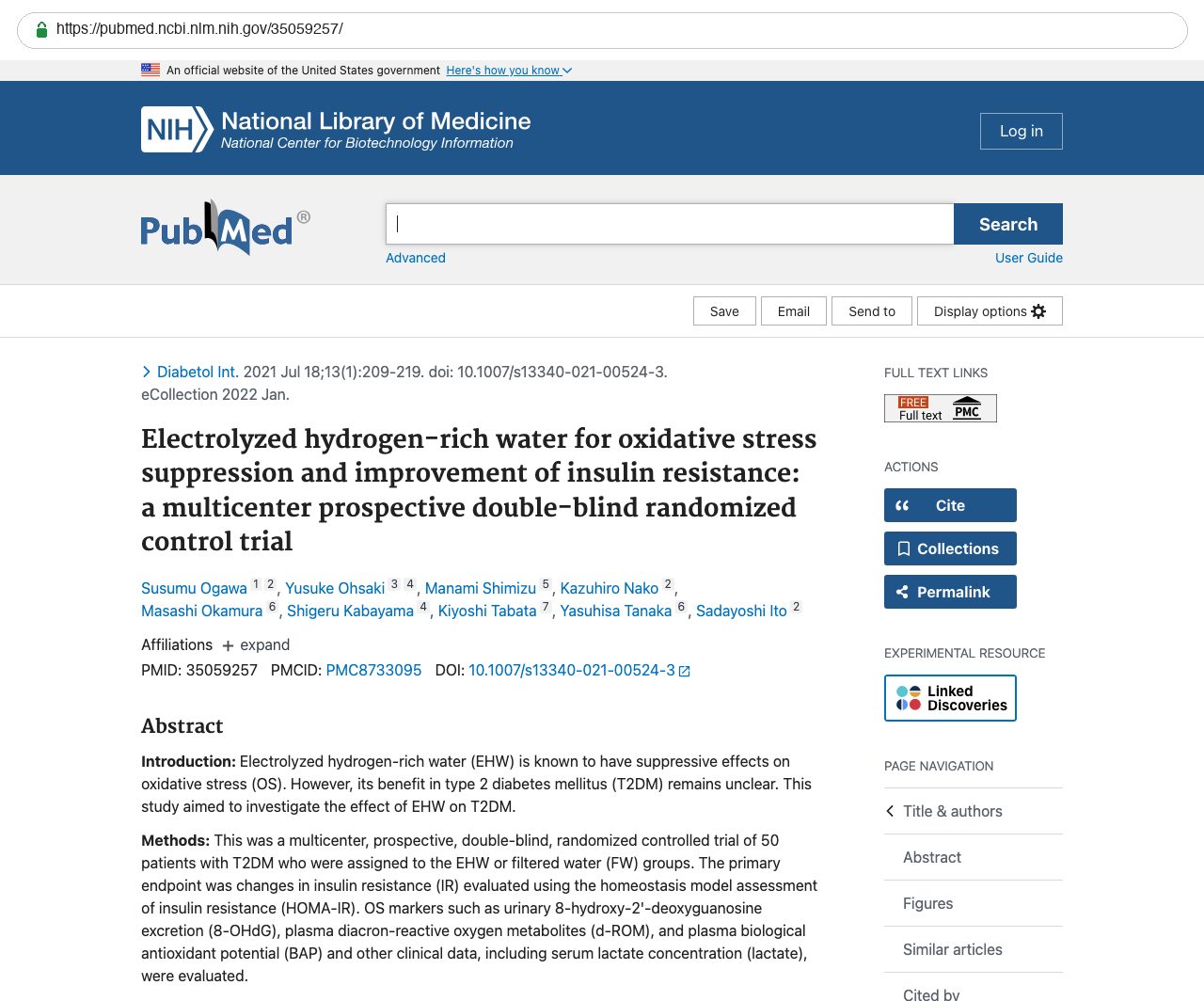
This page mirrors the published abstract (© the authors / publisher) for reference and citation. The canonical source is the PubMed record linked above. This is not medical advice.