2020 · Ostojic — COVID-19 and Molecular Hydrogen Inhalation
Super-Abstract
This is a brief theoretical commentary exploring whether molecular hydrogen inhalation could play a supportive role in COVID-19 management, based on H₂'s known anti-inflammatory and antioxidant properties. No abstract text was available for this publication; the entry is based solely on the article's metadata and title. No clinical or experimental data are cited here. (Therapeutic Advances in Respiratory Disease, 2020.)
Commentary
This article appears to be a short theoretical commentary or opinion piece published early in the COVID-19 pandemic, when clinicians and researchers were exploring a wide range of potential supportive interventions. The rationale for H₂ inhalation would rest on its established anti-inflammatory and antioxidant properties, which were being studied in acute lung injury and respiratory disease contexts at the time. However, with no abstract available, it is not possible to assess the specific claims, evidence cited, or conclusions drawn. For the full content, please refer to the original article via the DOI: 10.1177/1753466620951051.
Key quotes
- „COVID-19 and molecular hydrogen inhalation.“ — title only — no abstract available for verbatim citation
Our assessment
This is a theoretical commentary with no available abstract. Its subject classification as „theory“ and evidence level (ev=1) reflect that it presents a hypothesis or early conceptual discussion rather than experimental or clinical data. No conclusions about H₂ efficacy in COVID-19 can be drawn from this entry. The original article should be consulted for its full argument. This type of commentary is common early in emerging situations and is best treated as a hypothesis-generating document, not as evidence of therapeutic benefit.
Study design
- Type: theoretical commentary / opinion piece · n: n/a · H₂ delivery: inhalation (proposed/discussed)
- Result: no abstract available — full article accessible via DOI 10.1177/1753466620951051
Source & links
Screenshot of the PubMed page
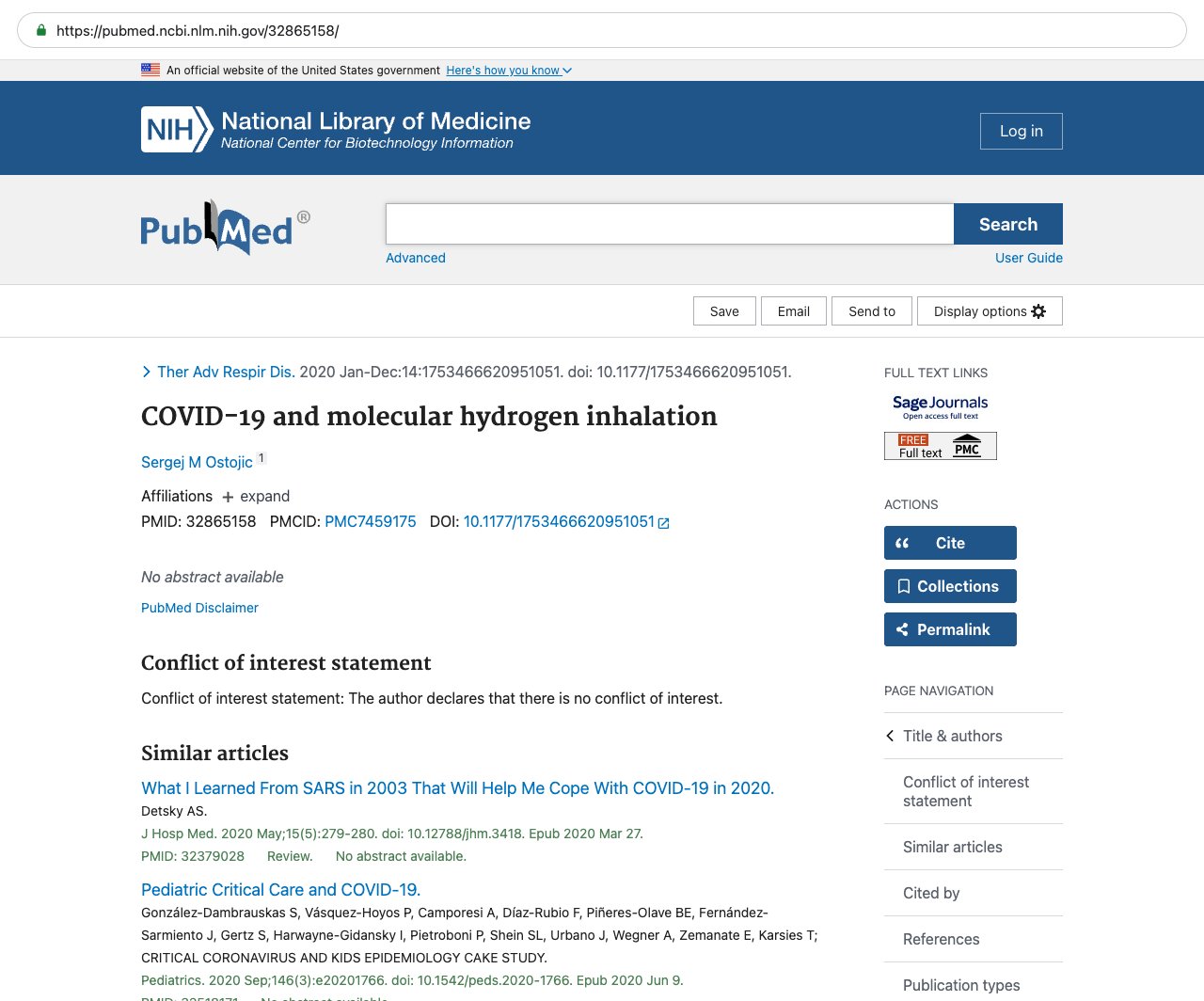
This page mirrors the published abstract (© the authors / publisher) for reference and citation. The canonical source is the PubMed record linked above. This is not medical advice.