1994 · Parnes et al. — Chemotherapy-induced lactose intolerance in adults
Super-Abstract
Chemotherapy caused measurable lactose malabsorption in 30% of cancer patients, but symptomatic lactose intolerance developed in only 11%. The lactose breath hydrogen test was used as the diagnostic tool, not as a therapeutic intervention. Conclusion: routine restriction of dairy in chemotherapy patients is not warranted unless symptoms actually occur. (Cancer, 1994.)
Commentary
This study addresses a practical clinical nutrition question: does chemotherapy damage the intestinal mucosa enough to cause lactose intolerance, and should dairy be restricted? The breath hydrogen test is the standard clinical tool for detecting lactose malabsorption — hydrogen exhaled after a lactose load signals insufficient intestinal lactase activity. The finding is reassuring: while chemotherapy does measurably affect lactose metabolism (elevated breath hydrogen), symptomatic intolerance is uncommon and does not justify blanket dietary restriction. Molecular hydrogen therapy is not involved.
Key quotes
- „Of the 27 patients studied, 8 (30%) had an abnormal postchemotherapy LBHT results, and for the population as a whole, postchemotherapy LBHT values were significantly greater than prechemotherapy values (P = 0.04).“ — measurable effect of chemotherapy on lactose metabolism
- „Only three patients (11%) showed clinical symptoms of lactose intolerance during the post-chemotherapy LBHT.“ — biochemical change does not equal clinical symptoms
- „Dietary restriction of milk products in patients receiving chemotherapy therefore is not warranted unless clinical symptoms of lactose intolerance are observed.“ — practical clinical recommendation: do not restrict dairy by default
Our assessment
Important context: this study does not investigate molecular hydrogen (H₂) as a therapeutic intervention. The lactose breath hydrogen test (LBHT) is a standard gastroenterological diagnostic method that measures exhaled hydrogen produced by colonic bacteria fermenting undigested lactose. The study topic is clinical oncology nutrition. Design: prospective with pre/post comparison (n = 27 chemotherapy patients). Limitations: heterogeneous cancer diagnoses and chemotherapy regimens; small sample; no long-term follow-up; no control group. Not relevant to H₂ therapy.
Study design
- Type: prospective pre/post comparison · n: 27 adult cancer patients receiving chemotherapy · H₂ delivery: none — lactose breath hydrogen test (LBHT) used as diagnostic malabsorption marker
- Result: 30% abnormal post-chemotherapy LBHT; population-level increase in breath H₂ (p = 0.04); only 11% symptomatic; routine dairy restriction not recommended
Abstract
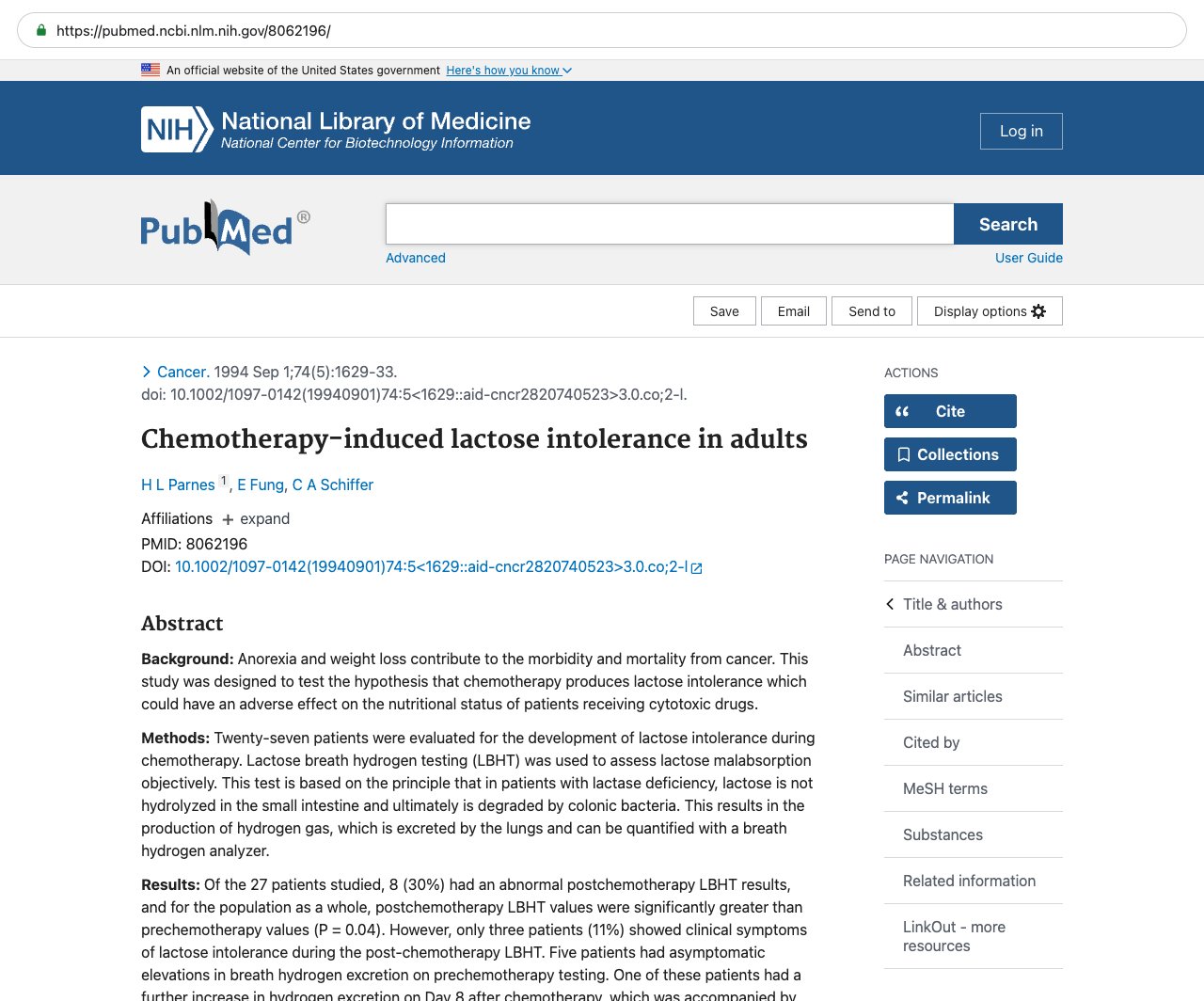
BACKGROUND: Anorexia and weight loss contribute to the morbidity and mortality from cancer. This study was designed to test the hypothesis that chemotherapy produces lactose intolerance which could have an adverse effect on the nutritional status of patients receiving cytotoxic drugs. METHODS: Twenty-seven patients were evaluated for the development of lactose intolerance during chemotherapy. Lactose breath hydrogen testing (LBHT) was used to assess lactose malabsorption objectively. This test is based on the principle that in patients with lactase deficiency, lactose is not hydrolyzed in the small intestine and ultimately is degraded by colonic bacteria. This results in the production of hydrogen gas, which is excreted by the lungs and can be quantified with a breath hydrogen analyzer. RESULTS: Of the 27 patients studied, 8 (30%) had an abnormal postchemotherapy LBHT results, and for the population as a whole, postchemotherapy LBHT values were significantly greater than prechemotherapy values (P = 0.04). However, only three patients (11%) showed clinical symptoms of lactose intolerance during the post-chemotherapy LBHT. Five patients had asymptomatic elevations in breath hydrogen excretion on prechemotherapy testing. One of these patients had a further increase in hydrogen excretion on Day 8 after chemotherapy, which was accompanied by symptoms of lactose intolerance. Twenty-two patients had normal prechemotherapy LBHT results. Two of these patients had abnormal post-chemotherapy LBHT results, which were associated with symptoms of lactose intolerance. CONCLUSION: Although chemotherapy may interfere with lactose metabolism, the development of symptomatic lactose intolerance is uncommon. Dietary restriction of milk products in patients receiving chemotherapy therefore is not warranted unless clinical symptoms of lactose intolerance are observed.
Source & links
Screenshot of the PubMed page
This page mirrors the published abstract (© the authors / publisher) for reference and citation. The canonical source is the PubMed record linked above. This is not medical advice.