1983 · Peel — The fatty acyl chain composition of human normal and leukaemic lymphocytes and its modulation by specialised hydrogenation.
Super-Abstract
The fatty acid profiles of lymphocytes from chronic lymphocytic leukaemia (CLL) patients show a characteristic pattern — higher oleic acid, lower arachidonic acid — consistent with other cancer cell types. This in-vitro study also attempted to alter membrane fluidity by catalytic hydrogenation of lymphocyte membranes using high-pressure hydrogen gas, but found that the cells did not survive the process. (Leukaemia Research, 1983.)
Commentary
This in-vitro study characterised the fatty acid composition of lymphocytes from healthy donors and CLL patients, finding a consistent abnormal pattern in cancer cells. It then attempted to use catalytic hydrogenation — exposing cells to high-pressure molecular hydrogen (9 atm) with a rhodium catalyst — to reduce membrane unsaturation and lower membrane fluidity as a potential way to influence cell behaviour. However, the combined treatment killed all cells. The paper found that cells could withstand either high-pressure H₂ alone or the catalyst alone, but not the combination under the conditions tested. This is a basic cancer cell biology study; the high-pressure H₂ used here bears no resemblance to dissolved molecular hydrogen at physiological concentrations used therapeutically.
Key quotes
- „A consistently abnormal pattern exhibited by the patients was a rise in oleic acid and a fall in arachidonic acid content.“ — characteristic lipid fingerprint of CLL lymphocytes
- „reaction conditions for catalytic hydrogenation at physiological temperature and pH have been established that effect reduction of the unsaturated species, but this has not yet been accomplished without killing the cells.“ — honest statement of failure: hydrogenation worked chemically but killed cells
- „the lymphocytes are capable of withstanding hydrogen gas at the requisite high pressure (9 atm.) or exposure alone to the rhodium catalyst … It remains feasible that future use of these two agents in combination under milder conditions … will permit the cells to survive.“ — cautious optimism about future refinement — but no therapeutic application achieved
Our assessment
This is an in-vitro cancer cell biology study. The molecular hydrogen used here is high-pressure H₂ gas (9 atm) as a catalytic hydrogenation agent to chemically modify cell membranes — this is entirely different from the dissolved H₂ at ppm concentrations used in molecular hydrogen therapy. The study found that catalytic hydrogenation killed lymphocytes under the tested conditions, representing a negative result for this approach. No therapeutic conclusion can be drawn for H₂ use in humans or animals.
Study design
- Type: in-vitro study · Cells: lymphocytes from 4 healthy donors and 8 CLL patients · H₂ role: high-pressure H₂ gas (9 atm) as catalytic hydrogenation agent with rhodium catalyst — completely different from therapeutic dissolved H₂
- Result: CLL lymphocytes show consistently elevated oleic acid and reduced arachidonic acid vs. healthy controls; catalytic hydrogenation chemically succeeded but killed all cells; high-pressure H₂ alone or catalyst alone was tolerated; combination lethal under tested conditions
Abstract
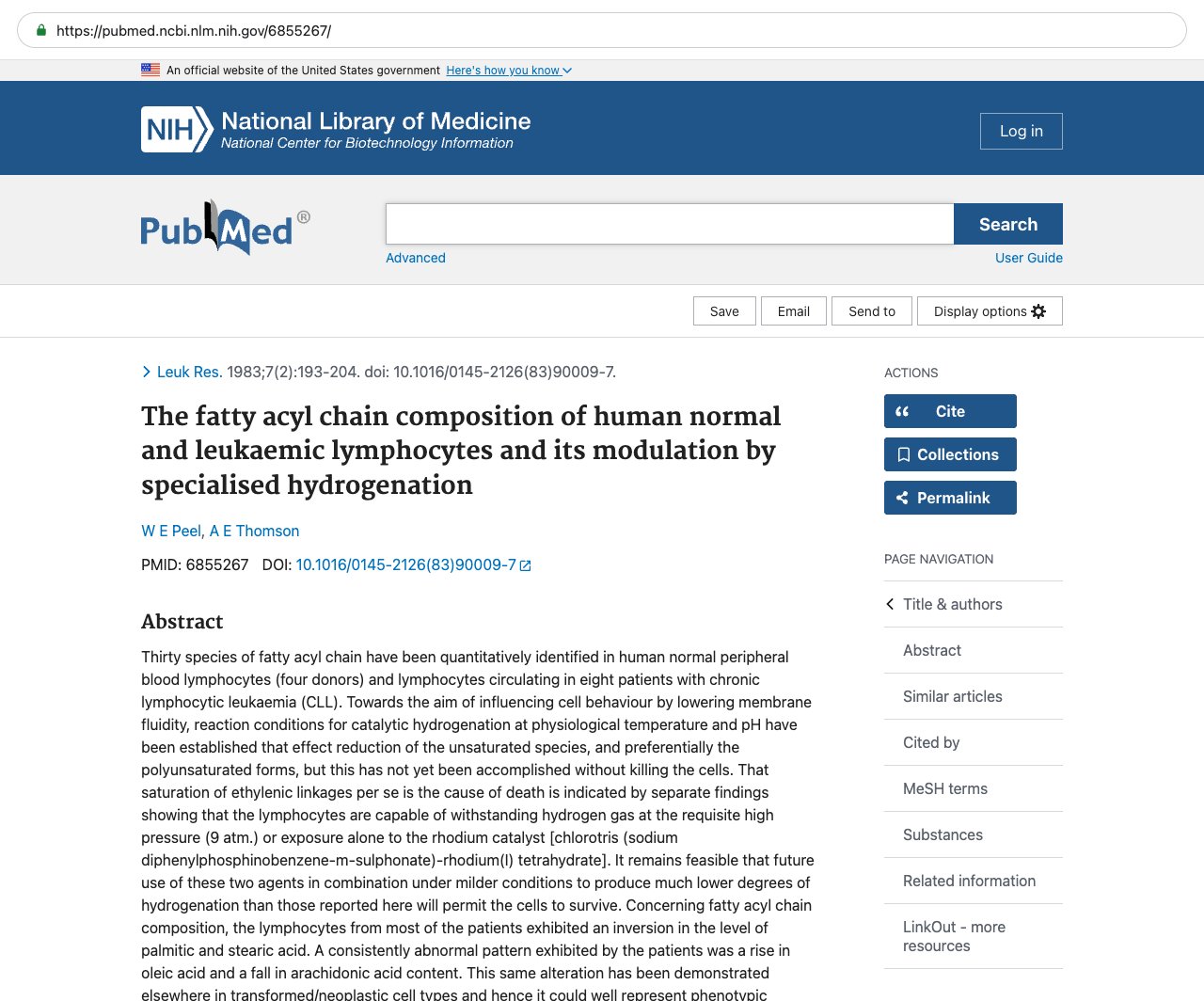
Thirty species of fatty acyl chain have been quantitatively identified in human normal peripheral blood lymphocytes (four donors) and lymphocytes circulating in eight patients with chronic lymphocytic leukaemia (CLL). Towards the aim of influencing cell behaviour by lowering membrane fluidity, reaction conditions for catalytic hydrogenation at physiological temperature and pH have been established that effect reduction of the unsaturated species, and preferentially the polyunsaturated forms, but this has not yet been accomplished without killing the cells. That saturation of ethylenic linkages per se is the cause of death is indicated by separate findings showing that the lymphocytes are capable of withstanding hydrogen gas at the requisite high pressure (9 atm.) or exposure alone to the rhodium catalyst [chlorotris (sodium diphenylphosphinobenzene-m-sulphonate)-rhodium(I) tetrahydrate]. It remains feasible that future use of these two agents in combination under milder conditions to produce much lower degrees of hydrogenation than those reported here will permit the cells to survive. Concerning fatty acyl chain composition, the lymphocytes from most of the patients exhibited an inversion in the level of palmitic and stearic acid. A consistently abnormal pattern exhibited by the patients was a rise in oleic acid and a fall in arachidonic acid content. This same alteration has been demonstrated elsewhere in transformed/neoplastic cell types and hence it could well represent phenotypic expression in the CLL lymphocyte of malignant change. Fatty acyl chain composition remained unchanged in lymphocytes reconstituted after cryopreservation in liquid nitrogen.
Source & links
Screenshot of the PubMed page
This page mirrors the published abstract (© the authors / publisher) for reference and citation. The canonical source is the PubMed record linked above. This is not medical advice.