2021 · Shi et al. — Hydrogen treatment: a novel option in liver diseases.
Super-Abstract
Hydrogen therapy shows promise in a range of liver conditions — from fatty liver disease to hepatitis B and chemotherapy-induced liver dysfunction — acting through antioxidant, anti-inflammatory, and anti-apoptotic mechanisms. This review maps the available evidence and identifies key open questions for future research. (Clinical Medicine, 2021.)
Commentary
This review by Shi and colleagues provides a structured overview of how H₂ may protect or support the liver, covering both in-vivo animal models and some early human data. The mechanisms discussed — modulation of reactive oxygen species, autophagy, apoptosis, inflammation, and mitochondrial function — are consistent with the broader H₂ research literature. The authors also address ex-vivo applications, such as H₂-supplemented organ preservation solutions. The review honestly acknowledges that the field is still developing and that clinical evidence, while encouraging, remains limited. No single administration route is singled out as superior; the review is method-agnostic.
Key quotes
- „Hydrogen therapy is a very promising treatment against several diseases due to its mild attributes, high affinity and inherent biosafety.“ — the authors' general characterisation of H₂ therapy
- „The major focus is clinical hydrogen use and related mechanisms in liver dysfunction or diseases, including non-alcoholic fatty liver disease, hepatitis B, liver dysfunction caused by liver tumour and colorectal tumour chemotherapy.“ — scope of conditions covered in this review
- „The article discusses the current and future challenges of hydrogen therapy in liver diseases, aiming to improve knowledge of hydrogen therapy and provide some insights into this burgeoning field.“ — honest acknowledgement that the field is still maturing
Our assessment
This is a review article, not an original trial. Its value is as a synthesis of scattered findings across liver-related H₂ research up to 2021. The evidence base is heterogeneous — different disease models, different H₂ delivery methods, different outcome measures — which limits firm conclusions. The cautious framing by the authors is appropriate. Honest note: most of the mechanistic evidence cited derives from animal or in-vitro studies; direct clinical evidence in humans is still sparse for most liver indications discussed.
Study design
- Type: narrative review · n: n/a (literature synthesis) · H₂ delivery: various (unspecified across cited studies)
- Result: narrative synthesis supports plausible hepatoprotective mechanisms for H₂; clinical evidence exists for some indications but is limited; challenges and knowledge gaps explicitly named
Abstract
Hydrogen therapy is a very promising treatment against several diseases due to its mild attributes, high affinity and inherent biosafety. However, there is little elaboration about current hydrogen treatment in liver diseases. This article introduces the administration of hydrogen and mechanisms of hydrogen therapy in vivo, including modulating reactive oxygen species, apoptosis and autophagy, and inflammation, affecting mitochondria, as well as protein transporters. The major focus is clinical hydrogen use and related mechanisms in liver dysfunction or diseases, including non-alcoholic fatty liver disease, hepatitis B, liver dysfunction caused by liver tumour and colorectal tumour chemotherapy. Further, the article reveals ex vivo hydrogen application in liver protection. Finally, the article discusses the current and future challenges of hydrogen therapy in liver diseases, aiming to improve knowledge of hydrogen therapy and provide some insights into this burgeoning field.
Source & links
Screenshot of the PubMed page
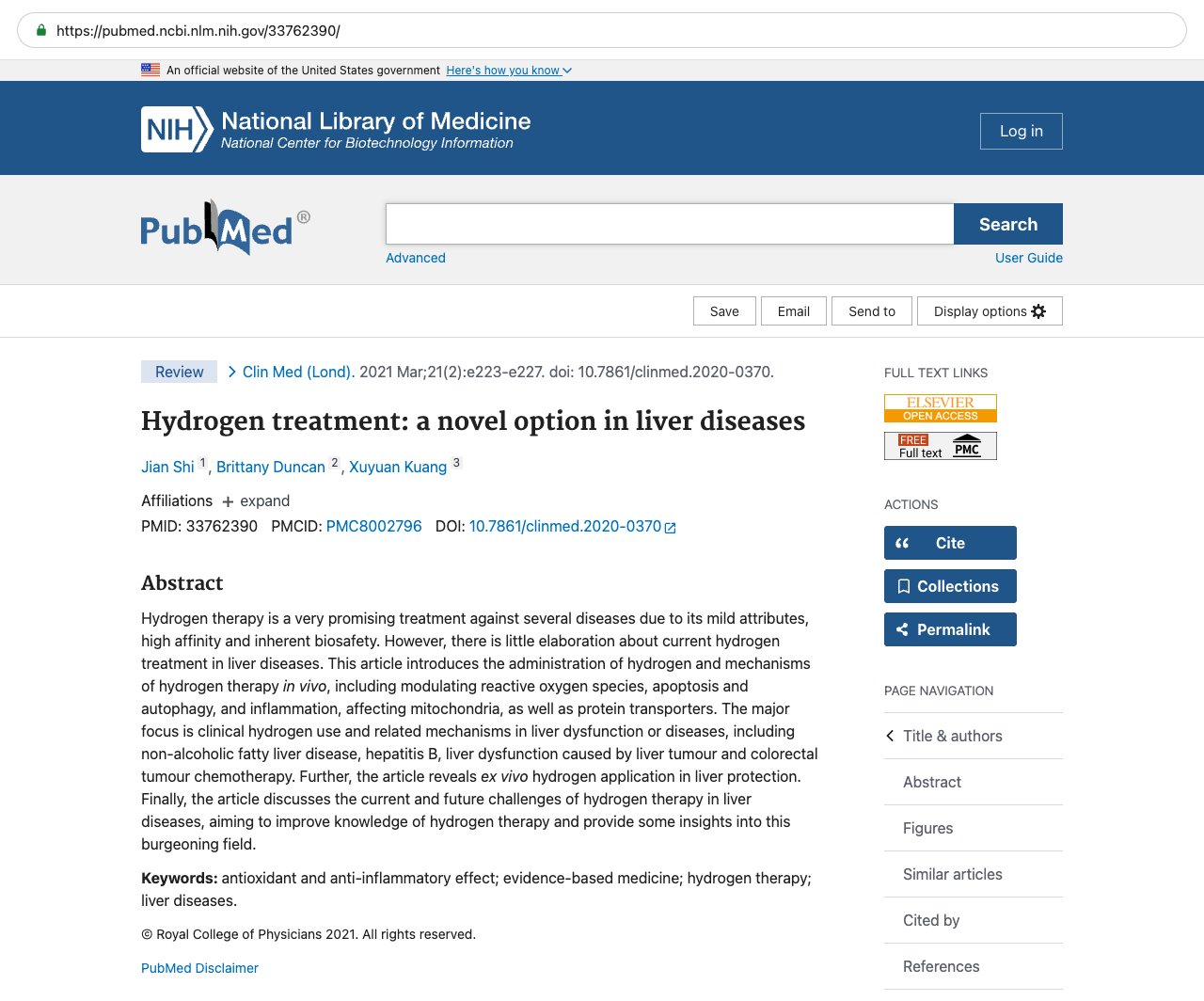
This page mirrors the published abstract (© the authors / publisher) for reference and citation. The canonical source is the PubMed record linked above. This is not medical advice.