2023 Journal of clinical biochemistry and nutrition RCT Human H₂ therapy Inhalation Respiratory / COVID
2023 · Shi et al. — The Efficacy of Hydrogen/Oxygen Therapy Favored the Recovery of Omicron SARS-CoV-2 Variant Infection: Results of a Multicenter, Randomized, Controlled Trial
Super-Abstract
In 64 patients with Omicron SARS-CoV-2 infection, the average duration of viral shedding was shorter with hydrogen/oxygen inhalation than with oxygen inhalation, but the abstract gives no numbers or p-values for this comparison. IL-6 fell by 22.8% from baseline in the hydrogen/oxygen group, and more patients in that group had resolution of lung lesions. The abstract names no primary endpoint and does not describe dose, duration or blinding. (Journal of Clinical Biochemistry and Nutrition, 2023.)
Commentary
Earlier clinical studies had reported that hydrogen/oxygen inhalation eased respiratory symptoms as an add-on treatment in COVID-19. This trial looked at recovery from infection with the Omicron variant. According to the title it was multicentre, randomised and controlled. Sixty-four patients were randomly assigned to hydrogen/oxygen inhalation (32 patients) or oxygen inhalation (32 patients). Outcomes reported in the abstract are the duration of Omicron shedding, the cumulative negative conversion rate, IL-6 levels, lymphocyte count and the resolution of pulmonary lesions. The abstract does not name a primary endpoint. It gives no details on the gas mixture, flow rate or treatment duration, and it does not say whether patients or assessors were blinded. Disease severity and the treatment setting are not described.
Key quotes
- „The average shedding duration of Omicron in hydrogen/oxygen group was shorter than oxygen group.“ — the main reported result, given without numbers or a p-value
- „The IL-6 levels in hydrogen/oxygen group decreased by 22.8% compared with the baseline.“ — a change within the hydrogen group, not a comparison with oxygen
- „Our study showed the beneficial trends of molecular hydrogen in treating patients with COVID-19, which may offer a prospective solution to adjuvant therapy for COVID-19 Patients.“ — the authors themselves speak of trends, not of proven effects
Our assessment
The trial is randomised, but the abstract reports its results as directions without effect sizes, confidence intervals or p-values. From the abstract alone it is not possible to judge whether any difference between the groups was statistically significant. The authors themselves describe beneficial trends. The IL-6 decrease (22.8%) and the lymphocyte change are within-group changes from baseline, not comparisons with the oxygen group. Limitations: 64 patients, no primary endpoint named, no statistical tests reported and no information on blinding, dose or duration. The outcomes are laboratory and imaging markers, and clinical outcomes are not reported. The wording on lymphocytes (increased to 61.1% of the baseline) is unclear. The results can generate hypotheses but do not establish a benefit.
Study design
- Type: multicentre randomised controlled trial (per title), blinding not reported · n: 64 (32 hydrogen/oxygen, 32 oxygen) · H₂ delivery: inhaled hydrogen/oxygen mixture (ratio, flow and duration not stated)
- Comparator: oxygen inhalation
- Result: no primary endpoint named. Average Omicron shedding duration shorter with hydrogen/oxygen (no numbers given). Cumulative negative conversion rate rising after day 3. IL-6 down 22.8% from baseline in the hydrogen/oxygen group. Lymphocyte count increased to 61.1% of baseline on day 3 (as worded in the abstract). More patients with resolution of pulmonary lesions. No p-values reported
Abstract
Clinical studies had found that hydrogen/oxygen mixed inhalation was beneficial to ameliorate the respiratory symptoms in the adjuvant treatment of patients with COVID-19. We aimed to explore the efficacy of hydrogen/oxygen therapy in favoring the recovery of Omicron SARS-CoV-2 variant infection. There were 64 patients who randomly assigned to receive hydrogen/oxygen inhalation (32 patients) and oxygen inhalation (32 patients). The average shedding duration of Omicron in hydrogen/oxygen group was shorter than oxygen group. The trend of cumulative negative conversion rate of Omicron increased gradually after the third day. The IL-6 levels in hydrogen/oxygen group decreased by 22.8% compared with the baseline. After hydrogen/oxygen mixed gas inhalation, the lymphocyte count increased to 61.1% of the baseline on the 3rd day in the hydrogen/oxygen group. More patients in the hydrogen/oxygen group had resolution of pulmonary lesions. Our study showed the beneficial trends of molecular hydrogen in treating patients with COVID-19, which may offer a prospective solution to adjuvant therapy for COVID-19 Patients.
Source & links
Screenshot of the PubMed page
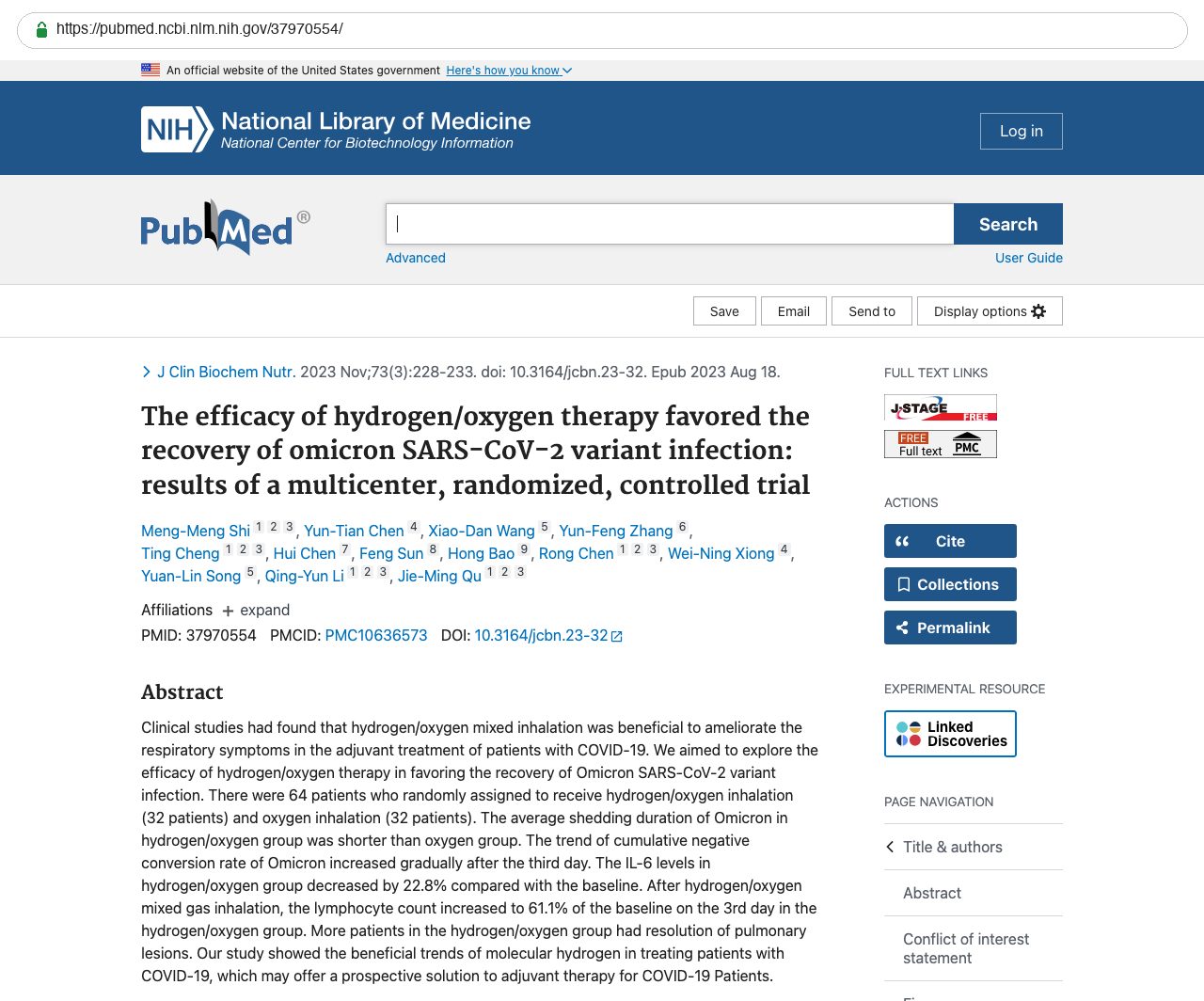
This page mirrors the published abstract (© the authors / publisher) for reference and citation. The canonical source is the PubMed record linked above. This is not medical advice.