2013 · Takaki — Multiple hits, including oxidative stress, as pathogenesis and treatment target in non-alcoholic steatohepatitis (NASH)
Super-Abstract
Non-alcoholic steatohepatitis (NASH) progresses through multiple simultaneous pathways — including insulin resistance, gut microbiota, and oxidative stress — and conventional antioxidants have failed in long-term trials because they act non-selectively. This review argues that molecular hydrogen, which selectively reduces only cytotoxic reactive oxygen species, represents a more targeted approach, citing animal evidence that hydrogen-rich water can slow the progression from NASH to hepatocellular carcinoma. (International Journal of Molecular Sciences, 2013.)
Commentary
This review situates H₂ within the broader „multiple hits“ model of NASH pathogenesis. The authors highlight a fundamental problem with conventional antioxidant trials for liver disease and cancer prevention: they failed in large long-term studies, possibly because non-selective antioxidants disrupt normal ROS signaling alongside the harmful species. H₂ is proposed as a solution because it targets specifically ·OH and ONOO⁻ — the most toxic ROS — without neutralizing the ROS needed for immune function and redox signaling. The review cites animal evidence for H₂-rich water slowing NASH-to-HCC progression, but does not report human clinical trials. As a literature review, it cannot establish causality or clinical efficacy — and the authors appropriately call for long-term clinical intervention studies.
Key quotes
- „Molecular hydrogen is an effective antioxidant that reduces only cytotoxic reactive oxygen species (ROS) and several diseases associated with oxidative stress are sensitive to hydrogen.“ — the key H₂ selectivity argument in the NASH context
- „The progress of NASH to hepatocellular carcinoma can be controlled using hydrogen-rich water.“ — animal-model finding — not yet confirmed in humans at time of publication
- „Long term clinical intervention is needed to control this complex lifestyle-related disease.“ — authors' honest call for human evidence — none existed yet
Our assessment
This is a narrative review addressing NASH pathogenesis and the potential role of H₂. The mechanistic argument is coherent. The animal evidence for H₂ slowing NASH progression is cited but not detailed here. No human clinical data are presented for H₂ in NASH. The authors call for long-term clinical studies — an honest acknowledgment that human evidence was lacking in 2013. This review is useful as a mechanistic background paper, not as clinical proof of effect. NASH is a complex multifactorial disease; no single intervention, including H₂, has yet demonstrated conclusive long-term benefit in humans.
Study design
- Type: narrative review · n: n/a (literature synthesis) · H₂ delivery cited: hydrogen-rich water (drinking)
- Scope: NASH „multiple hits“ model (insulin resistance, gut microbiota, ER stress, oxidative stress, fibrosis) · H₂ proposed as targeted mitochondrial antioxidant strategy · NASH-to-HCC progression cited from animal models
Abstract
Multiple parallel hits, including genetic differences, insulin resistance and intestinal microbiota, account for the progression of non-alcoholic steatohepatitis (NASH). Multiple hits induce adipokine secretion, endoplasmic reticulum (ER) and oxidative stress at the cellular level that subsequently induce hepatic steatosis, inflammation and fibrosis, among which oxidative stress is considered a key contributor to progression from simple fatty liver to NASH. Although several clinical trials have shown that anti-oxidative therapy can effectively control hepatitis activities in the short term, the long-term effect remains obscure. Several trials of long-term anti-oxidant protocols aimed at treating cerebrovascular diseases or cancer development have failed to produce a benefit. This might be explained by the non-selective anti-oxidative properties of these drugs. Molecular hydrogen is an effective antioxidant that reduces only cytotoxic reactive oxygen species (ROS) and several diseases associated with oxidative stress are sensitive to hydrogen. The progress of NASH to hepatocellular carcinoma can be controlled using hydrogen-rich water. Thus, targeting mitochondrial oxidative stress might be a good candidate for NASH treatment. Long term clinical intervention is needed to control this complex lifestyle-related disease.
Source & links
Screenshot of the PubMed page
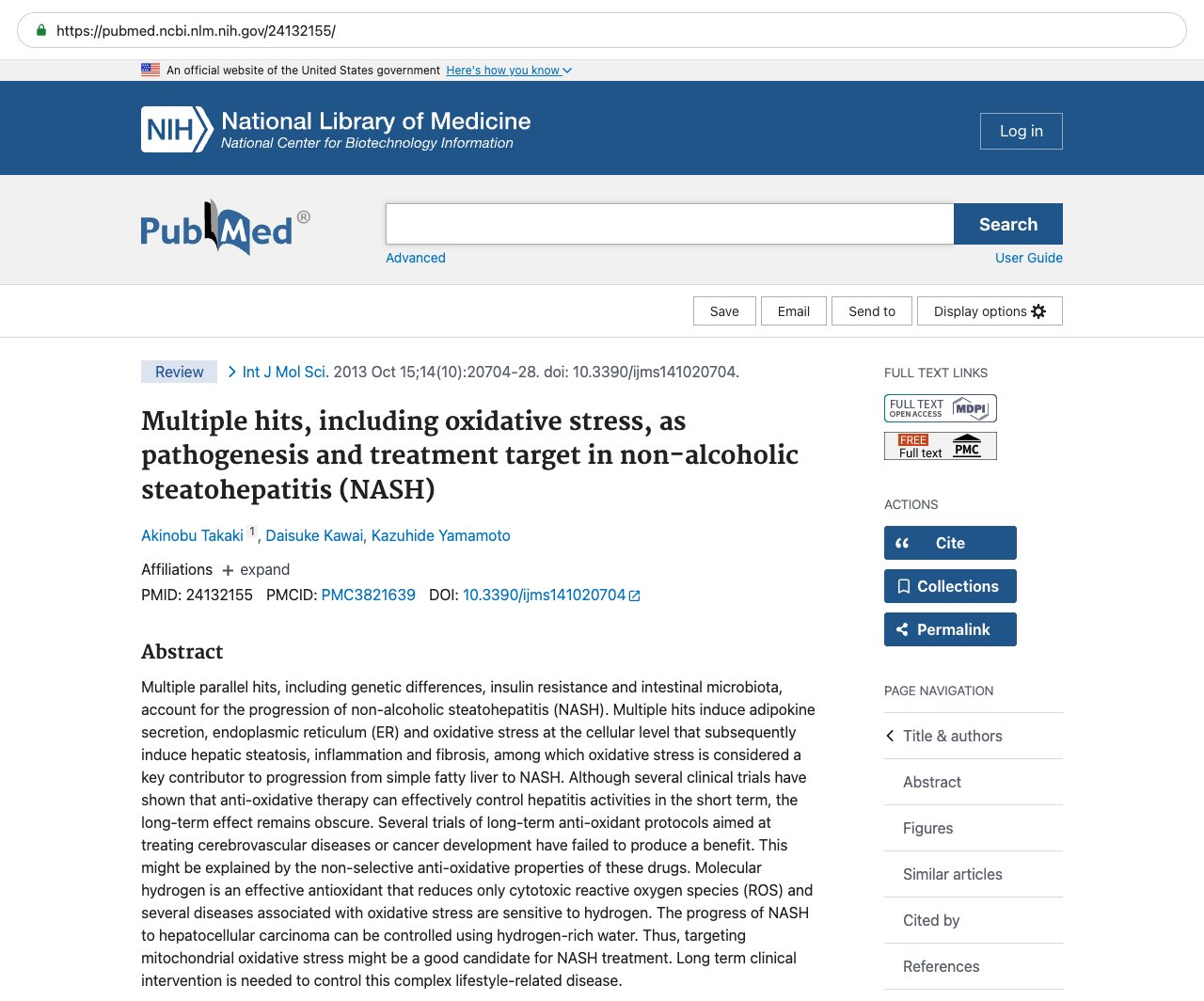
This page mirrors the published abstract (© the authors / publisher) for reference and citation. The canonical source is the PubMed record linked above. This is not medical advice.