1999 · Tomita — Oxygen and hydrogen gas transport through living C6 cell suspensions is faster than that in dead cells.
Super-Abstract
This in-vitro study demonstrates that living C6 (rat glioma) cell suspensions transport both oxygen and molecular hydrogen gas more rapidly than dead cell suspensions. The finding suggests that active biological processes in living cells facilitate gas diffusion, which has implications for understanding how dissolved H₂ moves through biological tissues. (Advances in Experimental Medicine and Biology, 1999.)
Commentary
This study by Tomita and colleagues measures how quickly oxygen and molecular hydrogen diffuse through suspensions of living versus dead C6 cells. The observation that living cells transport these gases faster than dead ones implies that active cellular mechanisms — beyond simple diffusion — are involved. This is relevant basic biology for understanding how dissolved H₂ reaches its cellular targets in vivo. However, the study itself provides no therapeutic data, no disease models, and no animal or human outcomes. No abstract is available in the indexed record; detailed content is based on the title and publication context alone.
Key quotes
- „Oxygen and hydrogen gas transport through living C6 cell suspensions is faster than that in dead cells.“ — from the title — the core finding: living cells enhance gas transport
Our assessment
This is a basic in-vitro biophysics study on gas transport in cell suspensions — it is not a therapeutic study. The finding that living cells facilitate H₂ transport faster than dead cells is mechanistically interesting for understanding H₂ bioavailability, but the paper provides no evidence for clinical effects of H₂ in any therapeutic context. No abstract is available in the database record; detailed assessment requires the original publication (DOI: 10.1007/978-1-4615-4717-4_85).
Study design
- Type: in-vitro biophysics · Model: C6 rat glioma cell suspensions (living vs. dead) · H₂ relevance: measurement of molecular H₂ and O₂ transport kinetics through cell suspensions
- Note: no abstract available in the indexed record; full assessment requires access to the original publication
Source & links
Screenshot of the PubMed page
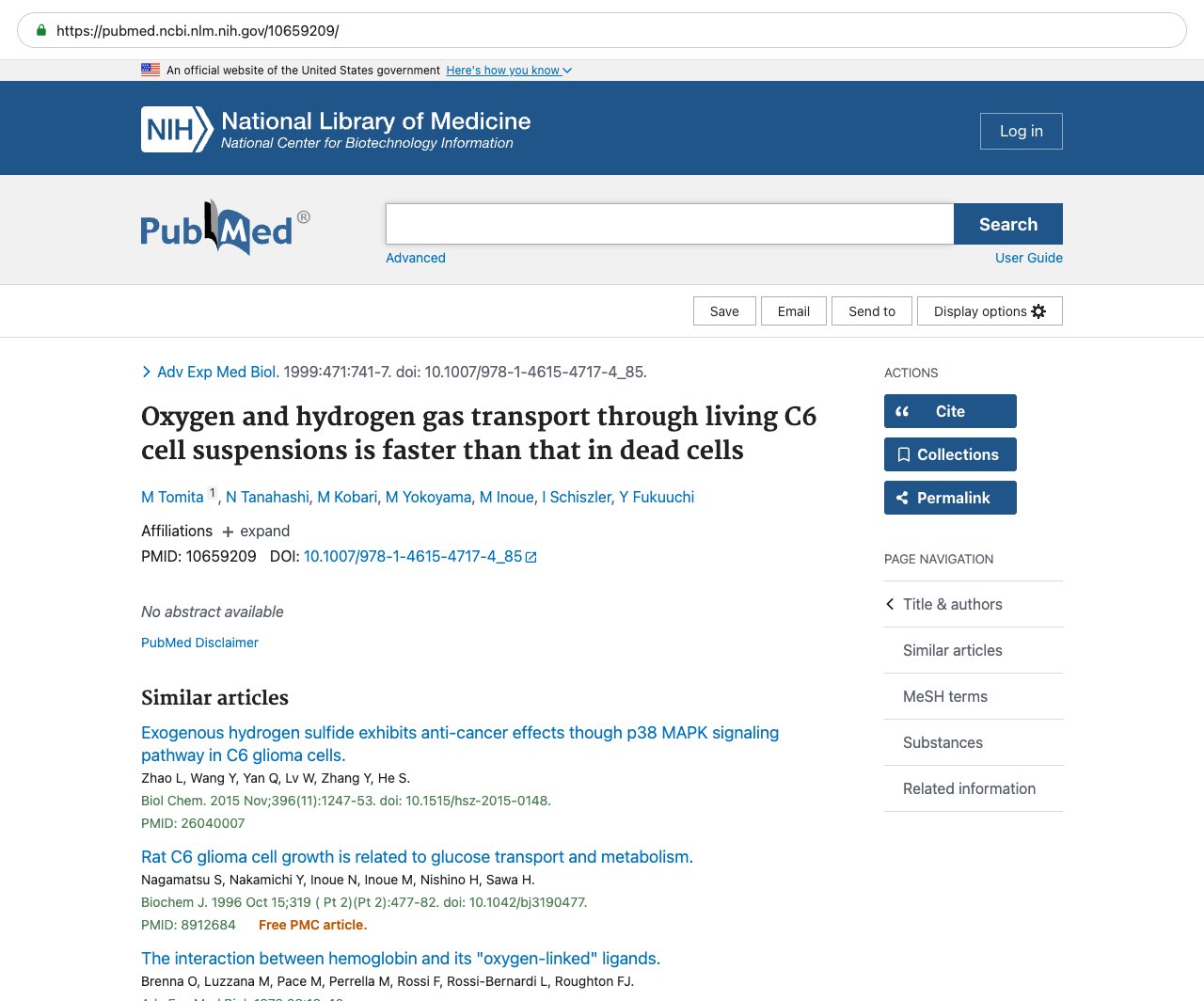
This page mirrors the published abstract (© the authors / publisher) for reference and citation. The canonical source is the PubMed record linked above. This is not medical advice.