2019 · Wu — Hydrogen gas protects against ovariectomy-induced osteoporosis by inhibiting NF-κB activation.
Super-Abstract
In mice with surgically induced estrogen deficiency (ovariectomy model of postmenopausal osteoporosis), inhalation of 60 % molecular hydrogen (H₂) markedly reduced bone loss. Trabecular bone density rose by more than 40 % and pro-inflammatory cytokines fell by more than 50 % compared to untreated ovariectomized animals. The proposed mechanism runs through inhibition of the NF-κB signaling pathway, which drives osteoclast differentiation. (Menopause, 2019.)
Commentary
This animal study attacks the mechanistic question of how H₂ might counteract estrogen-deficiency bone loss. Using Raw264.7 cell cultures stimulated with RANKL — a key driver of osteoclastogenesis — the researchers showed that 60 % H₂ reduced osteoclast numbers and resorption-pit size by a factor of three to four, and suppressed NF-κB nuclear translocation and transcriptional activity. The in-vivo ovariectomy mouse model then replicated those findings at the tissue level: micro-CT confirmed markedly higher trabecular bone volume. The NF-κB pathway is indeed a well-established driver of inflammatory osteoclastogenesis, so the mechanistic story is biologically plausible. However, the jump from mice and cultured macrophage precursors to postmenopausal women is large: bone remodeling differs between species, the H₂ dose used (60 %) is far above any practically achievable therapeutic inhalation concentration in humans, and the study was not designed to assess fracture risk or bone quality endpoints that matter clinically.
Key quotes
- „The number of osteoclasts and size of resorption pits of RANKL+H2-treated cells were 3 to 4 times less than RANKL treated cells.“ — H₂ strongly suppressed osteoclast formation in cell culture
- „H2 markedly inhibited RANKL-induced activation, nuclear translocation, and transcriptional activity of NF-κB.“ — the proposed molecular mechanism: blockade of NF-κB signaling
- „The amount of trabecular bone and bone mineral density of OVX mice that inhaled H2 were more than 40% higher … the levels of serum proinflammatory cytokine interleukin 1β, IL-6, and tumor necrosis factor-α were more than 50% lower than those of OVX mice.“ — key in-vivo result: bone preserved, inflammation reduced
Our assessment
An interesting mechanistic animal study, but not a proof of efficacy in humans. The results are derived entirely from a mouse model and cell culture — no human subjects were included. The H₂ concentration used (60 %) is a pharmacological dose in an experimental setting that cannot be translated directly to practical human application. NF-κB inhibition as a mechanism is plausible and supported by other H₂ literature, but clinical translation requires dose-finding, safety data, and controlled trials in postmenopausal women. The authors' conclusion that „H₂ could be an effective therapeutic agent” is a hypothesis, not an established fact.
Study design
- Type: preclinical animal + cell-culture study · Model: ovariectomized C57BL/6 mice; Raw264.7 macrophage cell line (RANKL-stimulated) · H₂ delivery: 60 % H₂ inhalation (in vivo); 60 % H₂ atmosphere (in vitro)
- Result: 40 % higher trabecular bone mass and mineral density in H₂-inhaling OVX mice vs. untreated OVX mice; 3–4× fewer osteoclasts and smaller resorption pits in vitro; NF-κB nuclear translocation and transcriptional activity markedly reduced; pro-inflammatory cytokines (IL-1β, IL-6, TNF-α) ↓ >50 %
Abstract
OBJECTIVES: Osteoporosis is a prevalent condition among postmenopausal women, and lacks satisfactory therapeutic options. Hydrogen (H2) has been shown to be effective in alleviating many diseases. This study aimed to investigate the effects of H2 on inhibiting osteoclastogenesis and bone loss in ovariectomized mice. METHODS: Osteoclast differentiation from Raw264.7 cells was induced with receptor activator NF-κB ligand (RANKL) with or without 60% H2. The number and resorption activity of osteocalsts were assessed by tartrate-resistant acid phosphatase staining and pit formation assay, respectively. The expression of osteoclast markers and NF-κB phosphorylation were detected by western blot. NF-κB nuclear translocation was assessed by immunofluorescence. NF-κB transcriptional activity was analyzed by luciferase assay. Bone loss in mice was induced by ovariectomy (OVX). OVX mice were given either regular air or 60% H2. Bone structure was analyzed by micro-computed tomography and hematoxylin and eosin staining. Cytokine levels were measured by enzyme-linked immunosorbent assay. The data were analyzed with one-way or two-way ANOVA followed by Bonferroni post hoc tests. RESULTS: H2 did not have any measurable effect on the proliferation of Raw264.7 cells. The number of osteoclasts and size of resorption pits of RANKL+H2-treated cells were 3 to 4 times less than RANKL treated cells. The expression of osteoclast marker genes of RANKL+H2-treated cells was 30% to 60% lower than RANKL-treated cells (P < 0.05). H2 markedly inhibited RANKL-induced activation, nuclear translocation, and transcriptional activity of NF-κB (P < 0.05, RANKL+H2 vs RANKL). The amount and density of trabecular bone and bone mineral density of ovariectomized mice were significantly less than sham-operated mice (P < 0.05 OVX vs sham). The amount of trabecular bone and bone mineral density of OVX mice that inhaled H2 were more than 40% higher, whereas the levels of serum proinflammatory cytokine interleukin 1β, IL-6, and tumor necrosis factor-α were more than 50% lower than those of OVX mice (P < 0.05). CONCLUSIONS: These results demonstrated that H2 could be an effective therapeutic agent of postmenopausal osteoporosis.
Source & links
Screenshot of the PubMed page
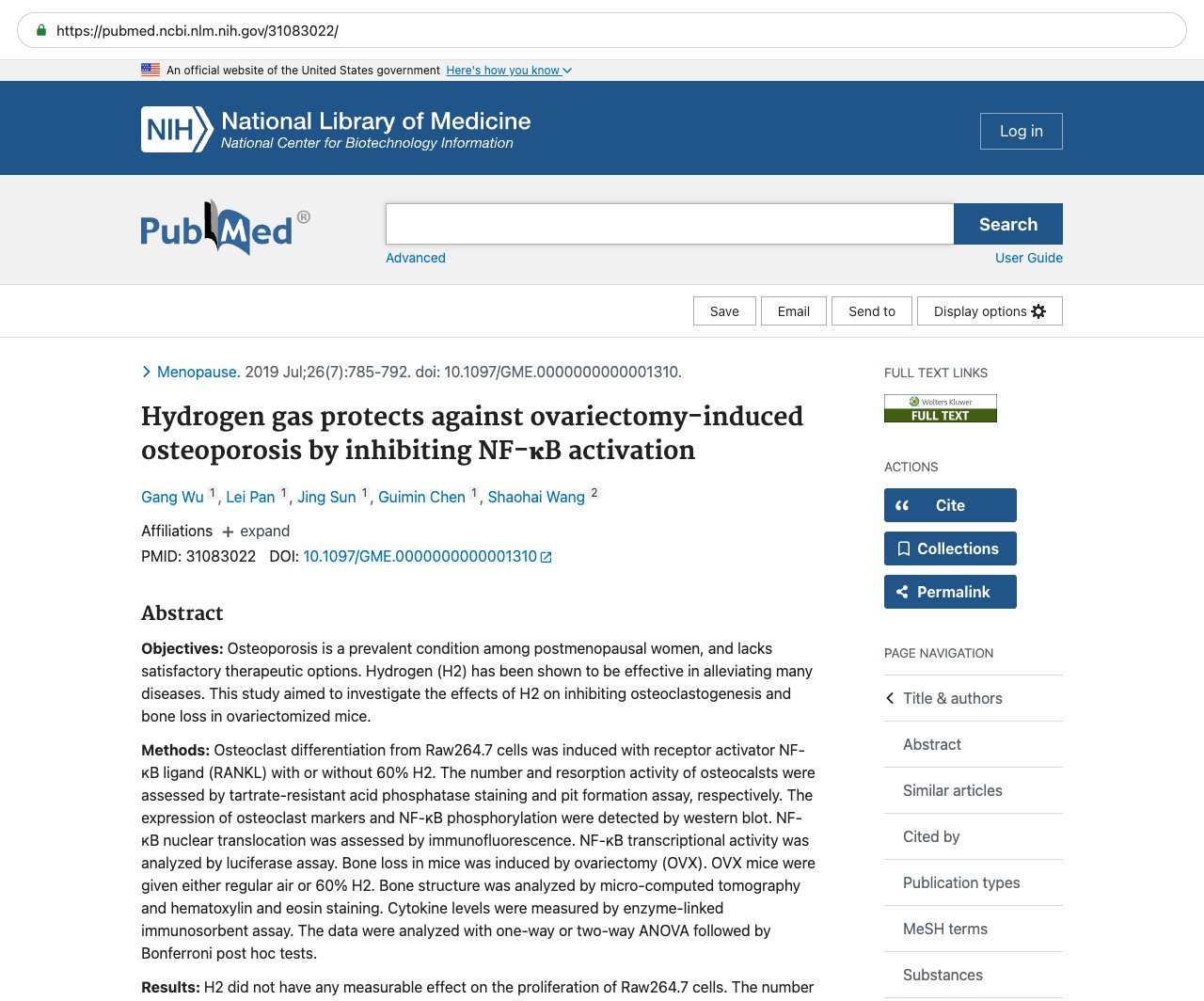
This page mirrors the published abstract (© the authors / publisher) for reference and citation. The canonical source is the PubMed record linked above. This is not medical advice.