2013 · Xia et al. — Effect of hydrogen-rich water on oxidative stress, liver function, and viral load in patients with chronic hepatitis B.
Super-Abstract
In 60 patients with chronic hepatitis B, adding hydrogen-rich water (1,200–1,800 mL/day for 6 weeks) to routine antiviral treatment markedly reduced oxidative stress markers — while liver function and HBV DNA levels improved similarly in both groups. HRW showed a specific anti-oxidative effect without a detectable antiviral advantage in this short trial. (Clinical and Translational Science, 2013.)
Commentary
Chronic hepatitis B is one of the world's most prevalent liver diseases and a leading cause of cirrhosis and hepatocellular carcinoma. Oxidative stress plays a central role in hepatic inflammation and fibrosis progression. This study is among the first to test H₂ in a liver disease population. The antioxidant effect of HRW was clear and significant: after 6 weeks, oxidative stress markers that remained unchanged with standard treatment alone improved markedly when HRW was added. However — and this is the honest finding — liver function tests and HBV DNA levels improved in both groups equally, without a significant difference between them. The authors are appropriately cautious: they call for longer-term study to determine whether the oxidative stress reduction translates into sustained liver function or virological benefits. The study population (30 HRW + 30 control) and 6-week duration are short for a chronic disease, but the design — randomized with healthy controls as a reference — is reasonable.
Key quotes
- „After treatment, the oxidative stress remained unchanged in routine treatment group, but markedly improved in hydrogen treatment group.“ — clear differential effect on oxidative stress: only HRW group improved
- „Although a significant difference was noted in the oxidative stress between two groups after treatment, the liver function and HBV DNA level were comparable after treatment and both had improved tendencies.“ — honest null finding: no added benefit for liver function or viral load above standard care
- „HRW significantly attenuates oxidative stress in CHB patients, but further study with long-term treatment is required to confirm the effect of HRW on liver function and HBV DNA level.“ — authors' balanced conclusion
Our assessment
An honest and informative study. The positive finding — HRW reduces oxidative stress in hepatitis B patients — is clear and statistically significant. The null finding — no additional benefit over standard treatment for liver enzymes or HBV viral load — must be reported with equal prominence. Whether oxidative stress reduction in 6 weeks would translate into clinically meaningful outcomes (fibrosis reduction, virological control) over years remains unknown. Limitations: short duration (6 weeks), relatively small n (30 per group), no long-term follow-up, the antiviral mechanism of action is biologically implausible (H₂ is not an antiviral agent).
Study design
- Type: randomized controlled trial · n: 60 chronic hepatitis B patients (30 HRW + routine, 30 routine only) + 30 healthy controls as reference · H₂ delivery: 1,200–1,800 mL/day HRW orally for 6 weeks
- Outcomes: serum oxidative stress markers, liver function tests (ALT, AST etc.), HBV DNA viral load
- Result: oxidative stress significantly improved in HRW group only (p<0.05); liver function and HBV DNA improved in both groups equally — no significant between-group difference for these endpoints
Abstract
OBJECTIVE: To investigate effects of hydrogen-rich water (HRW) on oxidative stress, liver function and HBV DNA in patients with chronic hepatitis B (CHB). METHODS: Sixty patients with CHB were randomly assigned into routine treatment group or hydrogen treatment group in which patients received routine treatment alone or additional oral HRW (1200-1800 mL/day, twice daily), respectively, for 6 consecutive weeks. Serum oxidative stress, liver function, and HBV DNA level were detected before and after treatment. Thirty healthy subjects served as controls. RESULTS: When compared with controls, oxidative stress was obvious in CHB patients, and the liver function also significantly impaired. After treatment, the oxidative stress remained unchanged in routine treatment group, but markedly improved in hydrogen treatment group. The liver function was improved significantly and the HBV DNA reduced markedly after corresponding treatments. Although a significant difference was noted in the oxidative stress between two groups after treatment, the liver function and HBV DNA level were comparable after treatment and both had improved tendencies. CONCLUSION: HRW significantly attenuates oxidative stress in CHB patients, but further study with long-term treatment is required to confirm the effect of HRW on liver function and HBV DNA level.
Source & links
Screenshot of the PubMed page
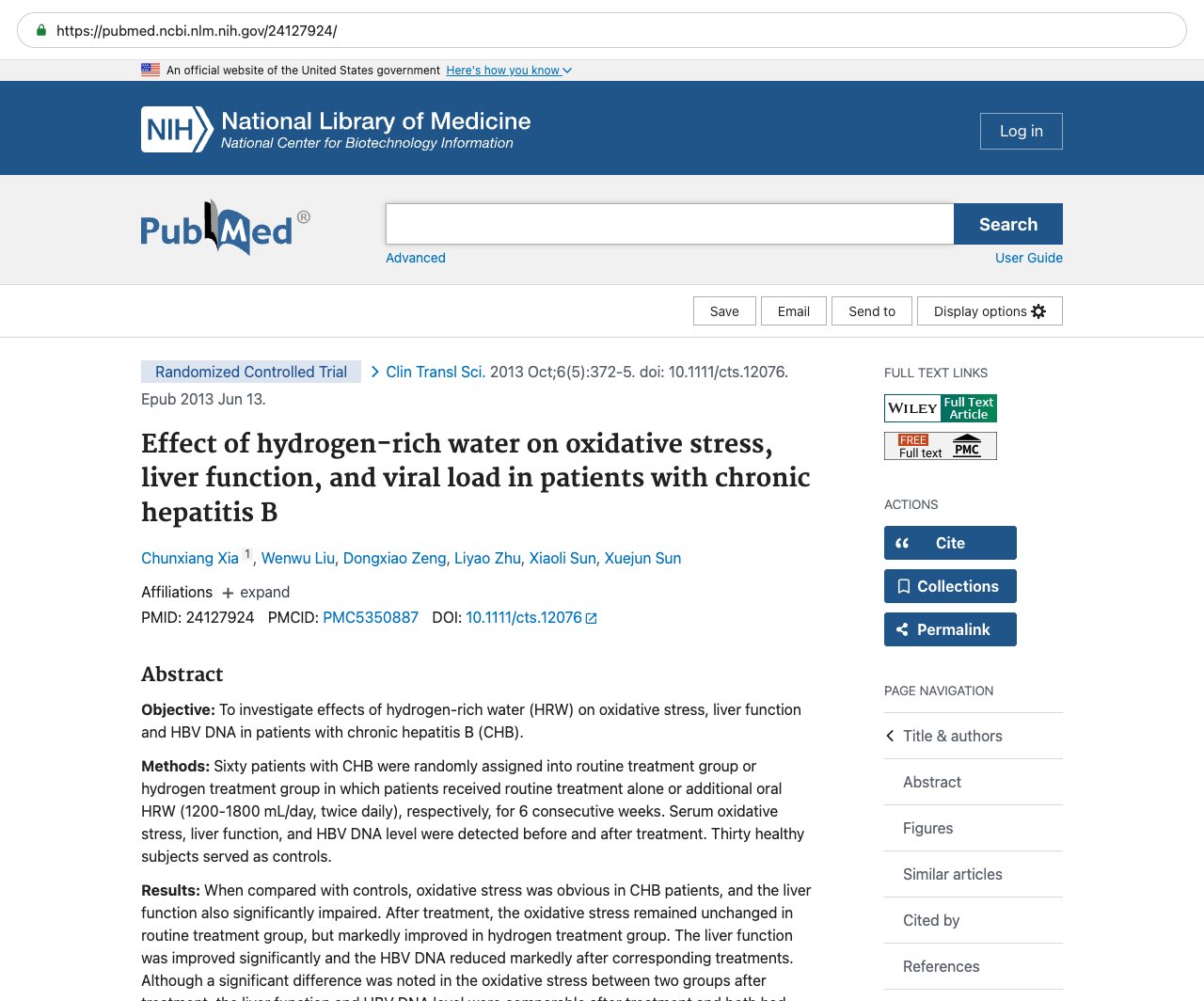
This page mirrors the published abstract (© the authors / publisher) for reference and citation. The canonical source is the PubMed record linked above. This is not medical advice.