2025 · Zhu — Molecular mechanisms associated with effects of hydrogen molecule in liver diseases: the review of current evidence
Super-Abstract
Oxidative stress and inflammation drive liver disease progression from inflammation to fibrosis and cancer — this review summarises how molecular hydrogen selectively neutralises harmful free radicals and modulates inflammatory signalling to potentially slow this cascade. Both animal studies and early clinical trials in chronic liver conditions are covered. (European Journal of Medical Research, 2025.)
Commentary
Chronic liver diseases — from non-alcoholic fatty liver disease to fibrosis and hepatocellular carcinoma — share a common pathophysiological thread: excessive oxidative stress and chronic inflammation. This review maps how H₂ addresses that thread through selective scavenging of hydroxyl radicals and peroxynitrite, modulation of redox-sensitive inflammatory signalling (NF-κB, Nrf2), and emerging evidence for effects on gut microbiota and glucolipid metabolism. The authors situate animal and clinical findings side-by-side, a methodological strength, but also acknowledge a central gap: the precise molecular targets of H₂ in the liver microenvironment are not yet fully characterised. The review appropriately calls for mechanistic studies and larger randomised trials before clinical recommendations can be made.
Key quotes
- „The unique biological properties of molecular hydrogen's selective scavenging of pathological free radicals have shown therapeutic potential in animal studies and clinical trials of chronic liver diseases.“ — the core rationale: selective antioxidant activity supported by both animal and early clinical data
- „focusing on its mechanisms of action in regulating redox and inflammatory cascade signal transduction and specifically discussing its potential for glucolipid metabolic homeostasis and intestinal microbiota remodeling, as well as cell protection.“ — the multi-level mechanisms through which H₂ may benefit liver health
- „Future studies are needed to further identify the unknown mechanisms by which molecular hydrogen improves the beneficial role of the liver microenvironment and advance the clinical application of hydrogen therapy.“ — honest acknowledgement of remaining knowledge gaps
Our assessment
This is a literature review, not a clinical trial. It synthesises existing animal and early clinical data and does not generate new evidence. The authors' conclusion that H₂ has „therapeutic potential” is supported by preclinical findings and a limited number of clinical observations, but standardised human trials in liver disease are still lacking. The review is scientifically balanced — it identifies open mechanistic questions and explicitly calls for more rigorous research. Readers should not interpret the presented findings as confirmed clinical efficacy.
Study design
- Type: narrative review · n: n/a (literature synthesis) · H₂ delivery: various (hydrogen-rich water, hydrogen gas inhalation — as reported in source studies)
- Result: narrative synthesis; H₂ shown to reduce oxidative stress markers, inflammatory cytokines, and fibrosis indicators in animal liver disease models; limited clinical evidence reviewed for chronic hepatitis and metabolic liver disease; mechanistic gaps acknowledged
Abstract
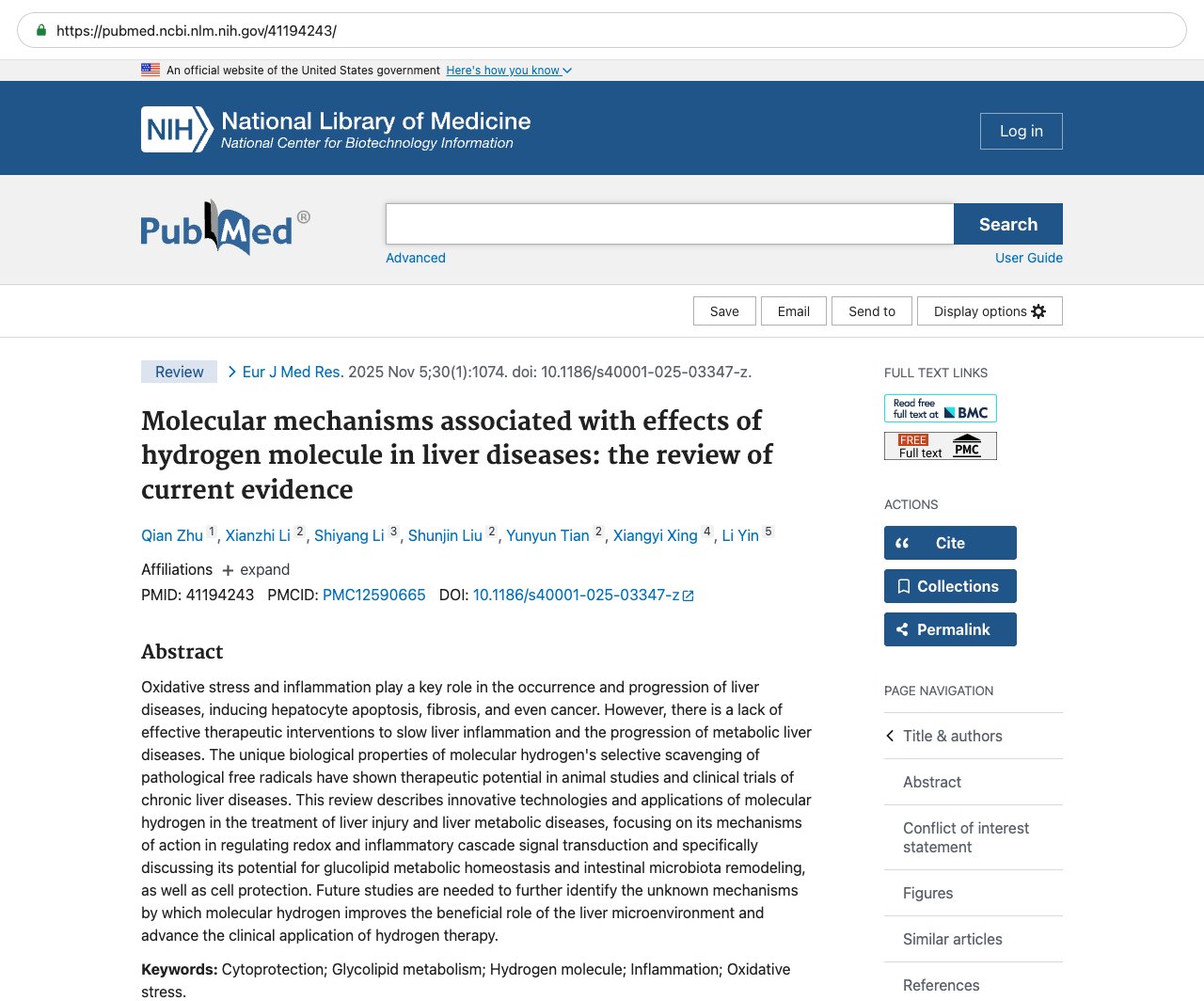
Oxidative stress and inflammation play a key role in the occurrence and progression of liver diseases, inducing hepatocyte apoptosis, fibrosis, and even cancer. However, there is a lack of effective therapeutic interventions to slow liver inflammation and the progression of metabolic liver diseases. The unique biological properties of molecular hydrogen's selective scavenging of pathological free radicals have shown therapeutic potential in animal studies and clinical trials of chronic liver diseases. This review describes innovative technologies and applications of molecular hydrogen in the treatment of liver injury and liver metabolic diseases, focusing on its mechanisms of action in regulating redox and inflammatory cascade signal transduction and specifically discussing its potential for glucolipid metabolic homeostasis and intestinal microbiota remodeling, as well as cell protection. Future studies are needed to further identify the unknown mechanisms by which molecular hydrogen improves the beneficial role of the liver microenvironment and advance the clinical application of hydrogen therapy.
Source & links
Screenshot of the PubMed page
This page mirrors the published abstract (© the authors / publisher) for reference and citation. The canonical source is the PubMed record linked above. This is not medical advice.