2023 Diabetes, metabolic syndrome and obesity : targets and therapy Pilot / Observational Human H₂ therapy Inhalation DiabetesMetabolic
2023 · Ji et al. — Real-World Effectiveness and Safety of Hydrogen Inhalation in Chinese Patients with Type 2 Diabetes: A Single-Arm, Retrospective Study
Super-Abstract
In 431 patients with type 2 diabetes who added hydrogen inhalation to their treatment, HbA1c fell from 9.04% at baseline to 8.00% after 6 months (p < 0.001), in a retrospective single-arm study without a control group. Fasting glucose, weight and daily insulin dose also decreased, and hypoglycaemia was the most common adverse event. Because there was no control group and, per full text, other diabetes drugs were changed during the study, the changes cannot be attributed to hydrogen. (Diabetes, Metabolic Syndrome and Obesity, 2023.)
Commentary
The study asked how well hydrogen inhalation works as an add-on treatment for type 2 diabetes in routine care in China. It is a retrospective, multicentre, observational analysis over 6 months of patients who kept up hydrogen inhalation. Per full text, the records came from hydrogen inhalation departments in Qingdao between October 2019 and October 2021, and patients inhaled pure hydrogen gas through a nasal cannula at 3.0 L/h. Time and frequency were up to each patient, with at least 1 hour per day required. The average was 4.9 hours per day. There was no control group. Data were taken at 4 visits, per full text the last prescription before the study, baseline, 3 months and 6 months. The primary outcome was the mean change in HbA1c from baseline to the end of the study. Secondary outcomes were fasting plasma glucose, weight, lipid profile, insulin dose and homeostasis model assessment (HOMA). Regression analyses looked for predictors of a larger HbA1c fall.
Key quotes
- „Of the 431 patients comprised, it is observed a significant decrease in HbA1c level (9.04±0.82% at baseline to 8.30±0.99% and 8.00±0.80% at the end, p<0.001)“ — the primary outcome, measured in one group without a control
- „The most common adverse event is hypoglycemia.“ — the only safety statement in the abstract, given without numbers
- „HI therapy significantly improves glycemic control, weight, insulin dose, lipid metabolism, β-cell function and insulin resistance of patients with type 2 diabetes after 6 months.“ — the authors' conclusion; its causal wording goes beyond a single-arm design
Our assessment
The study describes changes in routine care over 6 months. The main measured values improved, but without a control group these changes cannot be attributed to hydrogen. Per full text, HbA1c at baseline was higher than at the pre-study visit, so part of the later fall may be a return towards earlier values. The use of other diabetes drugs also changed during the study, for example SGLT-2 inhibitors from 5.1% to 12.3% of patients. The authors themselves list the missing control group and the uncontrolled medication as limitations. Limitations: retrospective single-arm design, no blinding, self-chosen inhalation time, data from medical records, Chinese patients only. The conclusion claims better lipids, β-cell function and insulin resistance, but the abstract gives no figures for them. Per full text, 23 of 431 patients (5.3%) had adverse events, 14 of them hypoglycaemia, and no serious adverse events were recorded.
Study design
- Type: retrospective, multicentre, observational single-arm study based on medical records, 6 months · n: 431 · H₂ delivery: inhaled pure hydrogen gas by nasal cannula at 3.0 L/h, at least 1 hour per day, mean 4.9 hours per day (per full text)
- Comparator: none; values compared with baseline
- Result: primary: HbA1c 9.04 ± 0.82% at baseline, 8.30 ± 0.99% at 3 months (per full text) and 8.00 ± 0.80% at the end (p < 0.001). Fasting glucose 165.6 to 143.6 mg/dL, weight 74.7 to 73.6 kg, insulin dose 49.3 to 45.2 U/d (all p < 0.001). Larger HbA1c fall with higher baseline HbA1c and shorter diabetes duration. Most common adverse event: hypoglycaemia
Abstract
AIM: To evaluate the real-life effectiveness and safety of Chinese patients with type 2 diabetes mellitus (T2DM) receiving hydrogen inhalation (HI) treatment as a supplementary treatment. METHODS: This retrospective, multicenter, observational 6-months clinical study included T2DM patients maintaining HI, visited at 4 time points. The primary outcome is the mean change in glycated hemoglobin (HbA1c) at the end of the study compared to baseline. The secondary outcome is analyzing the mean change of fasting plasma glucose (FPG), weight, lipid profile, insulin dose and homeostasis model assessment. Linear regression and logistics regression are applied to evaluate the effect of HI after the treatment. RESULTS: Of the 431 patients comprised, it is observed a significant decrease in HbA1c level (9.04±0.82% at baseline to 8.30±0.99% and 8.00±0.80% at the end, p<0.001), FPG (165.6±40.2 mg/dL at baseline to 157.1±36.3mg/dL and 143.6±32.3mg/dL at the end, p<0.001), weight (74.7±7.1kg at baseline to 74.8±10.0kg and 73.6±8.1kg at the end, p<0.001), insulin dose (49.3±10.8U/d at baseline to 46.7±8.0U/d and 45.2±8.7U/d, p<0.001). The individuals in subgroup with higher baseline HbA1c and longer daily HI time duration gain greater HbA1c decrease after 6 months. Linear regression shows that higher baseline HbA1c level and shorter diabetes duration are significantly in relation to greater HbA1c reduction. Logistics regression reveals that lower weight is associated with a higher possibility of reaching HbA1c<7%. The most common adverse event is hypoglycemia. CONCLUSION: HI therapy significantly improves glycemic control, weight, insulin dose, lipid metabolism, β-cell function and insulin resistance of patients with type 2 diabetes after 6 months. Higher baseline HbA1c level and shorter diabetes duration is related to greater clinical response to HI.
Source & links
Screenshot of the PubMed page
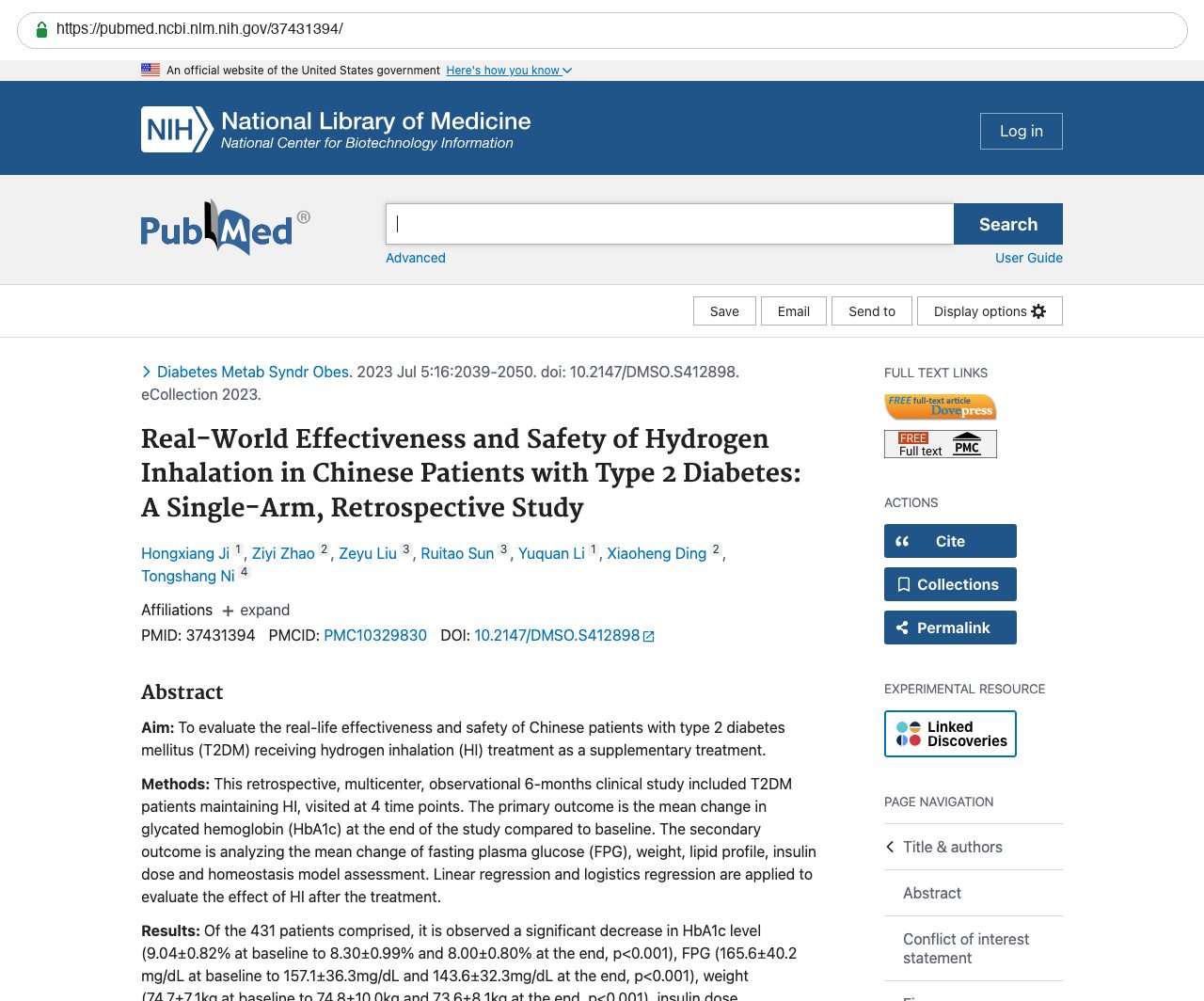
This page mirrors the published abstract (© the authors / publisher) for reference and citation. The canonical source is the PubMed record linked above. This is not medical advice.