2011 · Kang et al. — Effects of Drinking Hydrogen-Rich Water on the Quality of Life of Patients Treated with Radiotherapy for Liver Tumors
Super-Abstract
In 49 patients receiving radiotherapy for malignant liver tumors, those who drank hydrogen-rich water for 6 weeks had significantly better quality-of-life scores during radiotherapy than those given placebo water. The abstract reports lower reactive oxygen metabolites in the blood with hydrogen-rich water, and tumor response to radiotherapy did not differ between the groups. It gives no p-values, group sizes or blinding details and does not name a primary endpoint. (Medical Gas Research, 2011.)
Commentary
Patients receiving radiotherapy often report fatigue and reduced quality of life, and the authors link many side effects of radiotherapy to oxidative stress and inflammation. This randomized, placebo-controlled study included 49 patients receiving radiotherapy for malignant liver tumors. One group drank hydrogen-rich water, made by placing metallic magnesium in drinking water, with a final hydrogen concentration of 0.55 to 0.65 mM. The other group drank placebo water. Drinking lasted 6 weeks. The abstract does not state the daily amount, the number of patients per group, whether the study was blinded or which endpoint was primary. Global health status and quality of life were measured with the Korean version of the EORTC QLQ-C30 questionnaire. Blood samples were analysed for derivatives of reactive oxidative metabolites and for biological antioxidant power. Tumor response to radiotherapy was also compared between the groups.
Key quotes
- „QOL scores during radiotherapy were significantly improved in patients treated with hydrogen-rich water compared to patients receiving placebo water.“ — the main result; the abstract gives no p-value or effect size
- „There was no difference in tumor response to radiotherapy between the two groups.“ — tumor response did not differ, a check that matters for any add-on during cancer treatment
- „Consumption of hydrogen-rich water reduces the biological reaction to radiation-induced oxidative stress without compromising anti-tumor effects.“ — the authors' conclusion, based on blood markers in a small sample
Our assessment
In this sample, patients drinking hydrogen-rich water reported better quality of life during radiotherapy, but the abstract gives too little detail to judge how large the effect was. Hydrogen-rich water was tested as an add-on to radiotherapy to reduce side effects, not as a treatment for the tumors. Limitations: 49 patients; no p-values, effect sizes or group sizes in the abstract; blinding not described; no primary endpoint named. Quality of life is self-reported and therefore sensitive to expectation if patients could tell the two waters apart. The blood oxidation markers are surrogate measures, and the abstract does not say whether their reduction was compared with placebo or only over time. The lack of a difference in tumor response comes from a small sample and cannot rule out smaller effects in either direction. Adverse events are not reported in the abstract.
Study design
- Type: randomized, placebo-controlled study (blinding not described) · n: 49 patients receiving radiotherapy for malignant liver tumors · H₂ delivery: drinking hydrogen-rich water (0.55 to 0.65 mM, made with metallic magnesium) for 6 weeks, amount not reported
- Comparator: placebo water
- Result: quality-of-life scores (QLQ-C30) significantly better with hydrogen-rich water than with placebo water (no p-value given). Reactive oxygen metabolites in the blood reduced, blood oxidation potential maintained. No difference in tumor response to radiotherapy
Abstract
BACKGROUND: Cancer patients receiving radiotherapy often experience fatigue and impaired quality of life (QOL). Many side effects of radiotherapy are believed to be associated with increased oxidative stress and inflammation due to the generation of reactive oxygen species during radiotherapy. Hydrogen can be administered as a therapeutic medical gas, has antioxidant properties, and reduces inflammation in tissues. This study examined whether hydrogen treatment, in the form of hydrogen-supplemented water, improved QOL in patients receiving radiotherapy. METHODS: A randomized, placebo-controlled study was performed to evaluate the effects of drinking hydrogen-rich water on 49 patients receiving radiotherapy for malignant liver tumors. Hydrogen-rich water was produced by placing a metallic magnesium stick into drinking water (final hydrogen concentration; 0.55~0.65 mM). The Korean version of the European Organization for Research and Treatment of Cancer's QLQ-C30 instrument was used to evaluate global health status and QOL. The concentration of derivatives of reactive oxidative metabolites and biological antioxidant power in the peripheral blood were assessed. RESULTS: The consumption of hydrogen-rich water for 6 weeks reduced reactive oxygen metabolites in the blood and maintained blood oxidation potential. QOL scores during radiotherapy were significantly improved in patients treated with hydrogen-rich water compared to patients receiving placebo water. There was no difference in tumor response to radiotherapy between the two groups. CONCLUSIONS: Daily consumption of hydrogen-rich water is a potentially novel, therapeutic strategy for improving QOL after radiation exposure. Consumption of hydrogen-rich water reduces the biological reaction to radiation-induced oxidative stress without compromising anti-tumor effects.
Source & links
Screenshot of the PubMed page
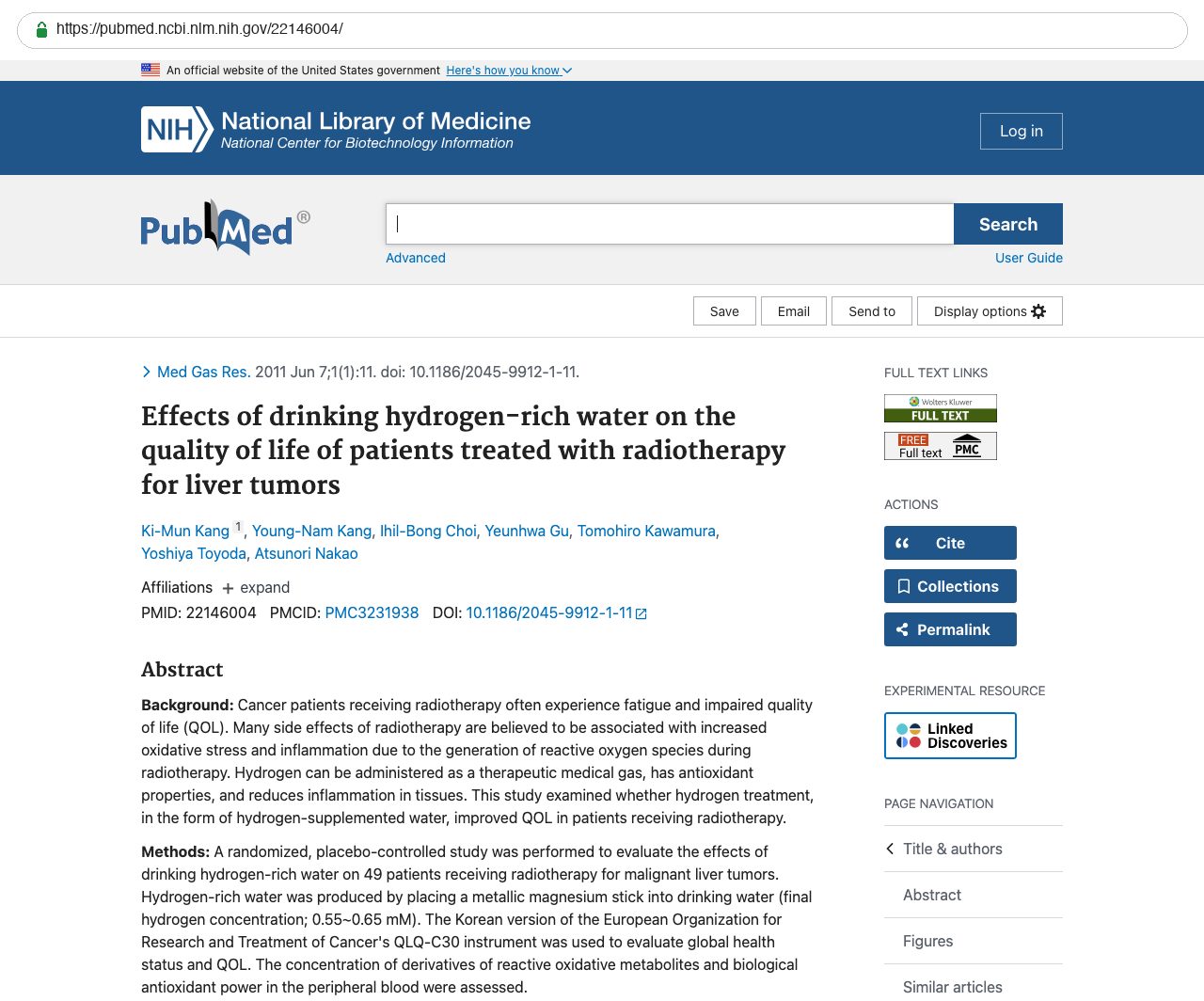
This page mirrors the published abstract (© the authors / publisher) for reference and citation. The canonical source is the PubMed record linked above. This is not medical advice.