2020 Journal of clinical biochemistry and nutrition Pilot / Observational Human H₂ therapy Inhalation CardiovascularOxidative stressNeurology
2020 · Tamura et al. — Hydrogen Gas Inhalation Alleviates Oxidative Stress in Patients with Post-Cardiac Arrest Syndrome
Super-Abstract
In five comatose patients after cardiac arrest who inhaled 2% hydrogen with oxygen for 18 hours, oxidative stress was reduced and cytokine levels did not change in the four with a cardiac cause, while the one patient with sepsis showed the opposite pattern. Arterial hydrogen levels matched the inhaled concentration. Per full text, there was no control group. The authors themselves call the effect on oxidative stress and cytokines indefinite because of methodological weaknesses. (Journal of Clinical Biochemistry and Nutrition, 2020.)
Commentary
Oxidative stress plays a key role in the injury that follows resuscitation from cardiac arrest, and hydrogen had reduced it in an animal model. The study enrolled five consecutive comatose patients after cardiac arrest (three men, mean age 65 ± 15 years). Four arrests had a cardiac cause and one was caused by sepsis. Per full text, the analysis used the patients of a feasibility and safety study of hydrogen inhalation run at one centre, without blinding and without a control group. The patients are those of the 2016 first-in-human feasibility study; the same research group later ran the multicentre, double-blind, randomised HYBRID II trial. All patients received targeted temperature management. Inhalation of 2% hydrogen with titrated oxygen started on admission and lasted 18 hours. Blood hydrogen, oxidative stress markers in plasma and urine (including d-ROMs, biological antioxidant potential and 8-OHdG) and the cytokines interleukin-6 and TNF-α were measured before and 3, 9, 18 and 24 hours after the start. The abstract does not name a primary endpoint.
Key quotes
- „Oxidative stress was reduced and cytokine levels were unchanged in cardiogenic patients, whereas oxidative stress was unchanged and cytokine levels were diminished in the septic patient.“ — the main result, which differed between cardiac and septic causes of arrest
- „Arterial hydrogen concentration was measurable and it was equilibrated with inhaled hydrogen.“ — inhaled hydrogen reached the arterial blood at a matching level
- „The effect of inhaled hydrogen on oxidative stress and cytokines in comatose post-cardiac arrest patients remains indefinite because of methodological weaknesses.“ — the authors' own conclusion, which leaves the effect open
Our assessment
This small case series shows that inhaled hydrogen reached the arterial blood and that marker changes could be followed over 24 hours. It cannot show whether hydrogen changed oxidative stress or inflammation. Limitations: five patients at one hospital, and per full text no control group and no blinding. All patients also received targeted temperature management, so marker changes cannot be separated from that treatment or from the natural course after resuscitation. The abstract reports no numbers or p-values for the markers and names no primary endpoint. The results differ by cause of arrest, and the septic group consists of a single patient. Measurements stopped at 24 hours. The title says hydrogen alleviates oxidative stress, while the abstract's own conclusion calls the effect indefinite.
Study design
- Type: prospective case series of consecutive patients at one centre, per full text part of an open feasibility study without a control group · n: 5 (4 cardiac, 1 septic cardiac arrest) · H₂ delivery: inhaled 2% hydrogen with titrated oxygen for 18 hours from admission
- Comparator: none; changes over time within the same patients (per full text, no control group)
- Result: no primary endpoint named. Arterial hydrogen equilibrated with inhaled hydrogen. Cardiac cause (4 patients): oxidative stress reduced, cytokines unchanged. Septic cause (1 patient): oxidative stress unchanged, cytokines diminished. No numbers or p-values in the abstract
Abstract
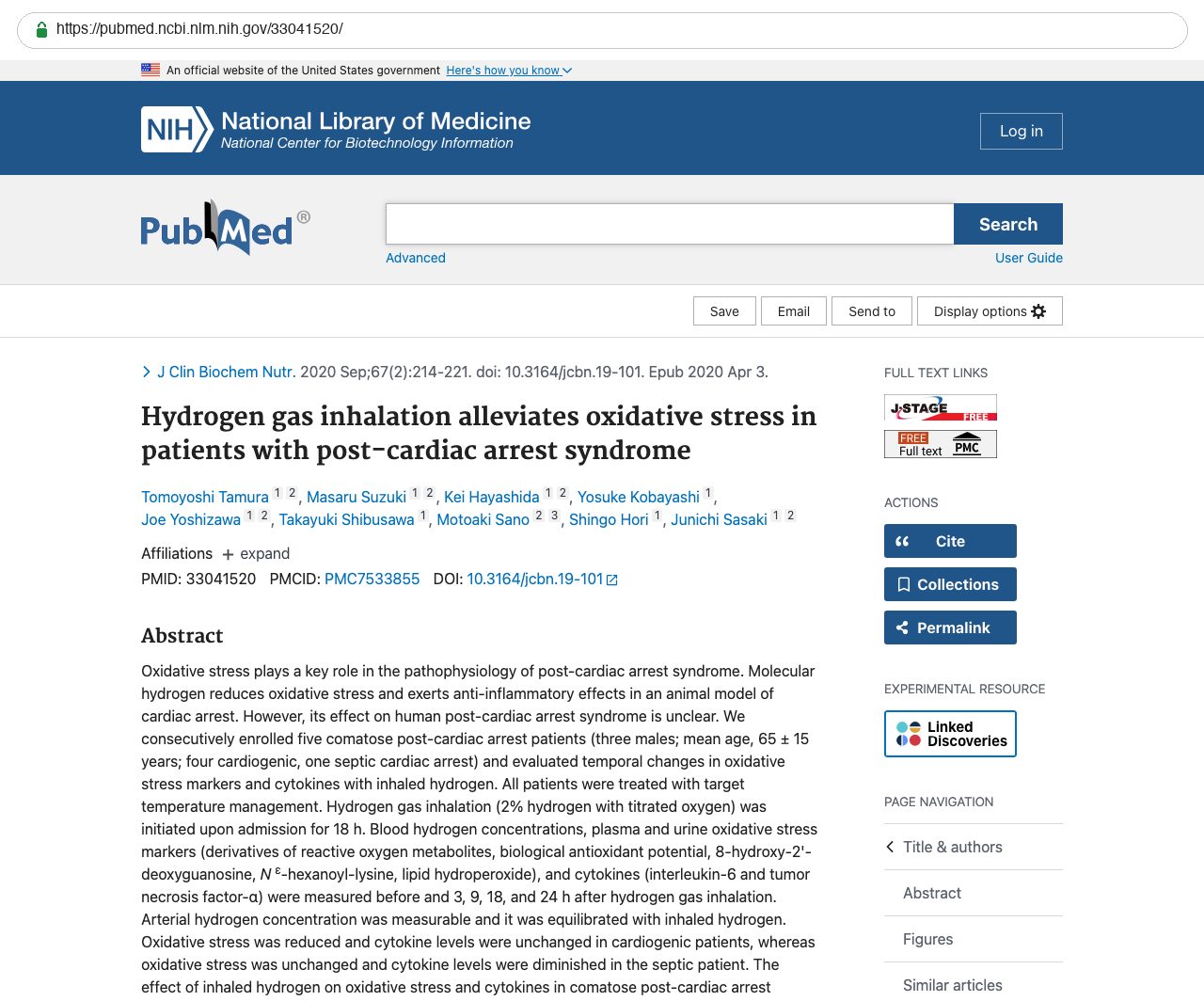
Oxidative stress plays a key role in the pathophysiology of post-cardiac arrest syndrome. Molecular hydrogen reduces oxidative stress and exerts anti-inflammatory effects in an animal model of cardiac arrest. However, its effect on human post-cardiac arrest syndrome is unclear. We consecutively enrolled five comatose post-cardiac arrest patients (three males; mean age, 65 ± 15 years; four cardiogenic, one septic cardiac arrest) and evaluated temporal changes in oxidative stress markers and cytokines with inhaled hydrogen. All patients were treated with target temperature management. Hydrogen gas inhalation (2% hydrogen with titrated oxygen) was initiated upon admission for 18 h. Blood hydrogen concentrations, plasma and urine oxidative stress markers (derivatives of reactive oxygen metabolites, biological antioxidant potential, 8-hydroxy-2'-deoxyguanosine, N ɛ-hexanoyl-lysine, lipid hydroperoxide), and cytokines (interleukin-6 and tumor necrosis factor-α) were measured before and 3, 9, 18, and 24 h after hydrogen gas inhalation. Arterial hydrogen concentration was measurable and it was equilibrated with inhaled hydrogen. Oxidative stress was reduced and cytokine levels were unchanged in cardiogenic patients, whereas oxidative stress was unchanged and cytokine levels were diminished in the septic patient. The effect of inhaled hydrogen on oxidative stress and cytokines in comatose post-cardiac arrest patients remains indefinite because of methodological weaknesses.
Source & links
Screenshot of the PubMed page
This page mirrors the published abstract (© the authors / publisher) for reference and citation. The canonical source is the PubMed record linked above. This is not medical advice.